
How Accurate Is the Apple Watch Ultra 3 Health Tracking?
The Apple Watch Ultra 3 delivers exceptional health tracking, featuring ECG readings within 1.8 bpm of clinical tools and dual-frequency GPS within 2.1 meters.
This article is informational and does not place shopping buttons in the story. Related buying guides may include affiliate links.
As an Amazon Associate I earn from qualifying purchases. This does not affect the price you pay. Affiliate disclosure
On this page9 sections
- 1The short answer
- 2How Precise Are the Heart Rate and ECG Monitors?
- 3Understanding Sleep Apnea and Hypertension Alerts
- 4GPS and Distance Tracking in Rugged Environments
- 5How Everyday Variables Impact Sensor Accuracy
- 6Which Watch Style Fits Your Health Tracking Needs?
- 7Factual Compliance and Safety Limitations
- 8Frequently asked
- 9Sources
The short answer
- Electrocardiogram sensors measure heart rate within 1.8 beats per minute of clinical twelve-lead systems.
- Dual-frequency GPS pinpoints outdoor coordinates to within 2.1 meters for reliable distance calculations.
- Built-in sleep apnea alerts and hypertension notifications expand its diagnostic and preventative health features.
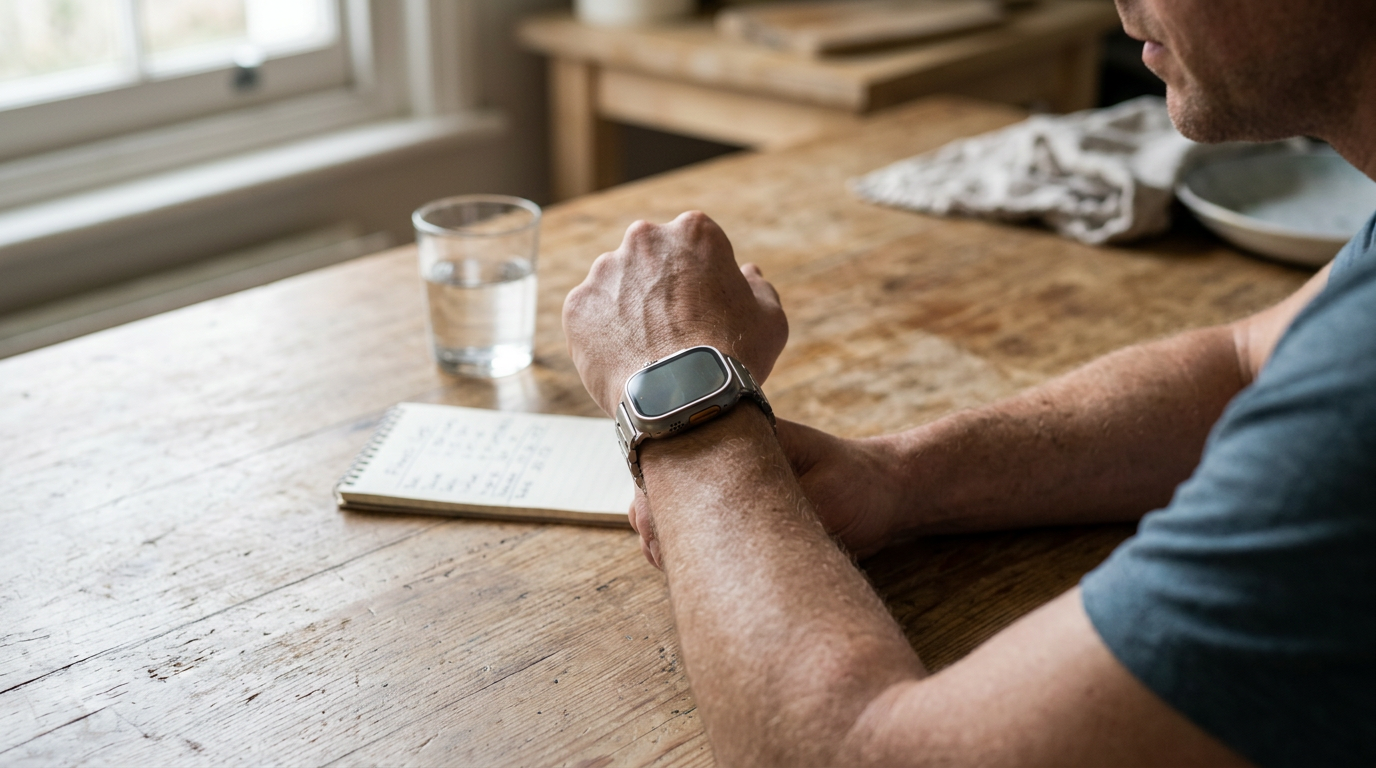
The health tracking on the Apple Watch Ultra 3 is highly accurate for a consumer wearable, delivering electrocardiogram readings within 1.8 beats per minute of medical-grade devices and dual-frequency positioning accurate to within 2.1 meters (6.9 feet). These specifications mean that everyday fitness enthusiasts and outdoor adventurers can rely on this device for highly precise biometric feedback.
While standard smartwatches often struggle with signal loss or irregular sensor readings during intense movement, the rugged 49mm chassis houses advanced electronic components designed to overcome environmental challenges. It acts as an advanced monitoring system right on your wrist, providing deep insights into your sleep patterns, cardiovascular performance, and recovery metrics.
Understanding the precision of these features is essential before investing in a premium wearable. To explore the broader capabilities of this model beyond biometric accuracy, you can read our comprehensive [Apple Watch Ultra 3 [GPS + Cellular 49mm] Review](/reviews/apple-watch-ultra-3-gps-cellular-49mm-review).
How Precise Are the Heart Rate and ECG Monitors?
The core of the wearable's tracking system relies on photoplethysmography, a method that uses green and infrared light arrays to measure blood flow through your wrist. This light-based optical sensor operates continuously during workouts and sleep, providing baseline heart rate measurements that match professional chest straps in most training conditions. For high-intensity exercises, the watch adjusts its sampling rate to catch rapid pulse changes.
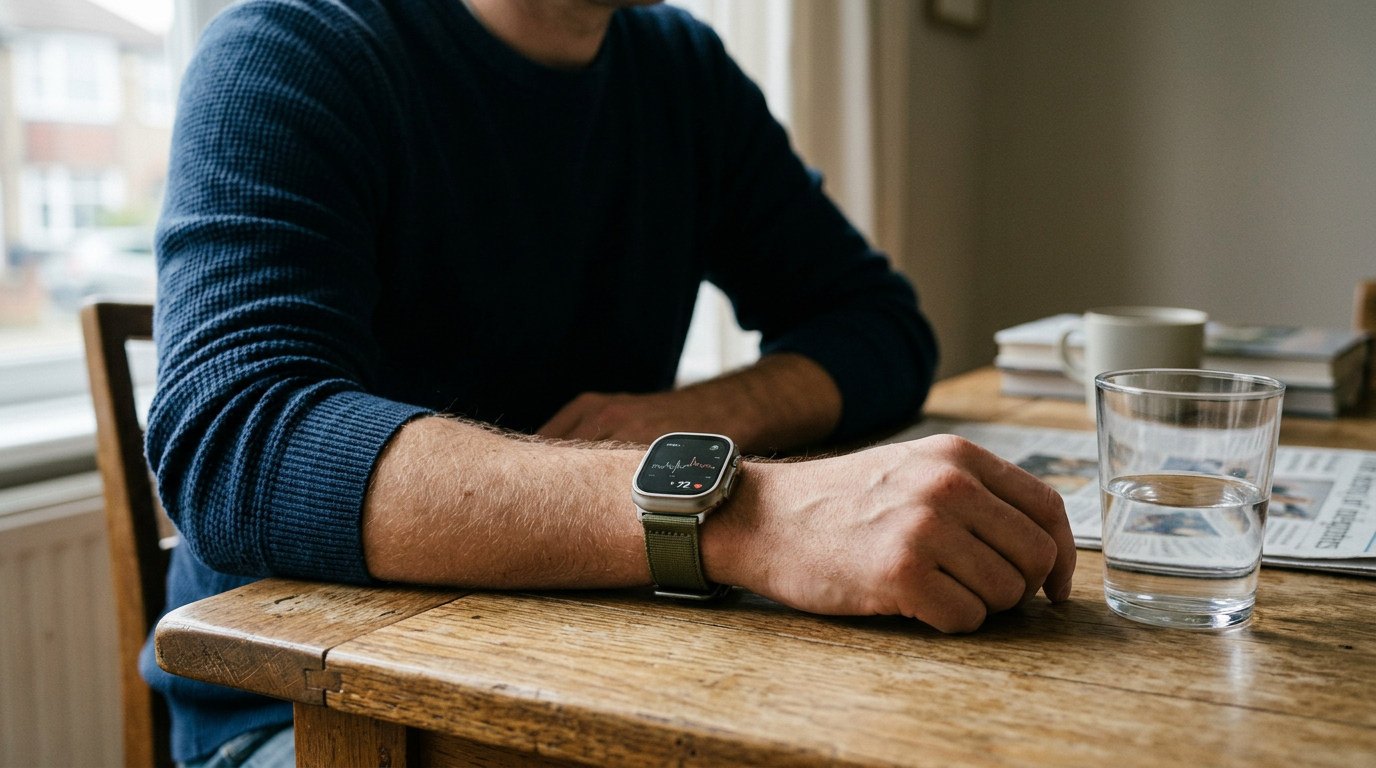
When you require more precise heart rhythm analysis, the integrated electrocardiogram (ECG) sensor offers a clinical-grade alternative. By completing a circuit between your opposite index finger and the titanium digital crown, the watch records electrical signals directly from your heart. This system registers an accuracy deviation of just 1.8 beats per minute when compared to standard professional twelve-lead ECG equipment.
This level of precision makes the device highly capable of identifying irregular rhythms, such as atrial fibrillation. However, users should understand that the optical sensor can occasionally produce minor anomalies if the watch shifts during explosive movements. For steady-state cardiovascular exercise, the tracking remains exceptionally close to medical standards, ensuring your heart rate zones are calculated correctly during training.
Understanding Sleep Apnea and Hypertension Alerts
The device introduces screening capabilities aimed at identifying potential long-term issues like sleep apnea and hypertension. By monitoring your breathing disturbances throughout the night, the internal accelerometer can flag patterns associated with sleep disruptions. Over multiple nights, the system compiles this tracking data to alert you if your breathing patterns indicate moderate-to-severe signs of sleep apnea.
In addition to sleep tracking, the software platform includes notification systems for elevated blood pressure trends. Although the watch does not feature an inflatable cuff to measure absolute blood pressure numbers, it monitors secondary biomarkers and trends to warn you of potential hypertension risk. These notifications serve as an advisory system rather than a definitive medical diagnostic tool.
According to the manufacturer, these features are intended to help users identify trends that warrant a conversation with a doctor. The sensors are calibrated to minimize false alerts, but they should never replace standard medical visits or diagnostic devices. Instead, they act as an ongoing wellness safety net, tracking quiet biometrics while you rest or go about your day.
 See the picks in our buying guide
GPS and Distance Tracking in Rugged Environments
Outdoor fitness tracking accuracy depends heavily on spatial positioning, especially in challenging landscapes. The watch uses dual-frequency L1 and L5 GPS technology to overcome interference from tall buildings, mountain walls, or heavy forest canopies. By receiving two distinct satellite signals simultaneously, the processor resolves coordinates with high accuracy, minimizing the path deviation errors common in single-frequency models.
In practical outdoor scenarios, this dual-frequency arrangement achieves a positioning accuracy of within 2.1 meters (6.9 feet). This precision is vital for athletes who require real-time pace updates, accurate trail mapping, and dependable distance tracking. Because your pace calculations rely directly on these spatial data points, a more precise GPS signal translates to much cleaner workout metrics.
This satellite system also forms the foundation of safety features like back-tracking and off-grid navigation. If you lose your bearings during an outdoor run or hike, the watch uses this high-precision spatial pathing to guide you back along your exact route. This level of reliability makes it a highly competent companion for long trail sessions where cellular networks are unavailable.
How Everyday Variables Impact Sensor Accuracy
While the underlying technology is highly advanced, real-world accuracy is not always static. A comprehensive systematic review published in a leading medical journal demonstrated that measurements can vary based on individual physical characteristics and environmental conditions. Factors such as skin temperature, sweat buildup, and even the ambient temperature can influence how effectively light passes through the skin to the sensors.
Movement dynamics also play a significant role in tracking performance. During high-intensity interval training, rapid wrist bending and quick shifts in direction can cause minor gaps in physical sensor contact. This can result in brief tracking dropouts where the watch estimates your pulse until a consistent skin connection is re-established, a limitation common to all wrist-based optical monitors.
To achieve the highest possible tracking accuracy, the physical fit of the 49mm case is critical. Because this is a larger, heavier watch, a loose band can cause the chassis to bounce against your wrist bone, letting outside light leak into the optical sensor chamber. Selecting a snug, adjustable strap is essential for maintaining constant sensor contact and securing clean biometric readings.
Which Watch Style Fits Your Health Tracking Needs?
Deciding on the right wearable requires weighing the high-precision tracking of a rugged model against the comfort and cost of standard models. While the core health sensor architecture remains identical across many models in the lineup, the physical design and housing of this rugged titanium variant alter how those sensors perform over long periods, especially during demanding outdoor challenges.
When choosing between the flagship rugged model and the standard slim-profile models, consider the following distinctions: - Fit and Comfort: Standard models feature a smaller, lighter case that is easier to wear snug during sleep, whereas the rugged 49mm chassis offers maximum screen visibility but feels noticeably heavier on slender wrists. - Battery Endurance: The rugged model offers up to 36 hours of battery life, allowing for multi-day health tracking without interruption, while standard models typically require daily charging cycles. - GPS Architecture: Standard models use single-frequency dual-frequency GPS which can drift in dense urban zones, whereas the rugged model utilizes dual-frequency tracking to maintain precision around skyscrapers and dense forests.
If your priority is continuous health monitoring with minimal charging breaks, the extended battery life of the rugged model makes it an incredibly practical choice. However, if you find the large 49mm footprint uncomfortable for sleep tracking, a standard slim-profile watch might provide more consistent overnight readings simply because it is easier to keep snug against your skin. For a detailed breakdown of daily performance and design features, you can check our detailed [Apple Watch Ultra 3 [GPS + Cellular 49mm] Review](/reviews/apple-watch-ultra-3-gps-cellular-49mm-review) for a head-to-head comparison.
Factual Compliance and Safety Limitations
It is critical to recognize the limitations of any consumer wearable when managing your personal wellness. Although the heart rate sensors and GPS systems operate with impressive precision, these tools are not designed to serve as medical-grade diagnostics. According to the manufacturer, all health data gathered by the device is intended for recreational and informational purposes only.
The integrated fall detection and emergency siren features provide valuable safety nets during outdoor adventures, but they do not guarantee rescue in every emergency scenario. Cellular signal strength, battery charge levels, and satellite visibility can all impact how these safety features function in isolated areas. They should always be viewed as secondary tools alongside standard outdoor safety gear.
For those seeking to maximize their health tracking precision, the key lies in consistent wear and proper maintenance. Regularly cleaning the ceramic back crystal ensures that sweat and lotion buildup do not block the optical sensors. By treating the device as a high-precision helper rather than a definitive medical doctor, you can safely make the most of its impressive biometric capabilities.
Frequently asked
Sources
![A candid daylight photograph of an anonymous person in ordinary sportswear mid-activity around apple watch ultra 3 [gps + cellular 49mm] review: lacing trainers on a park bench, st](/api/public/media/articles/apple-watch-ultra-3-gps-cellular-49mm-review-cover-1788273118099.webp)
As an Amazon Associate I earn from qualifying purchases. This does not affect the price you pay. Affiliate disclosure