
Carhartt Classic 21L Backpack Size for Daily Carry
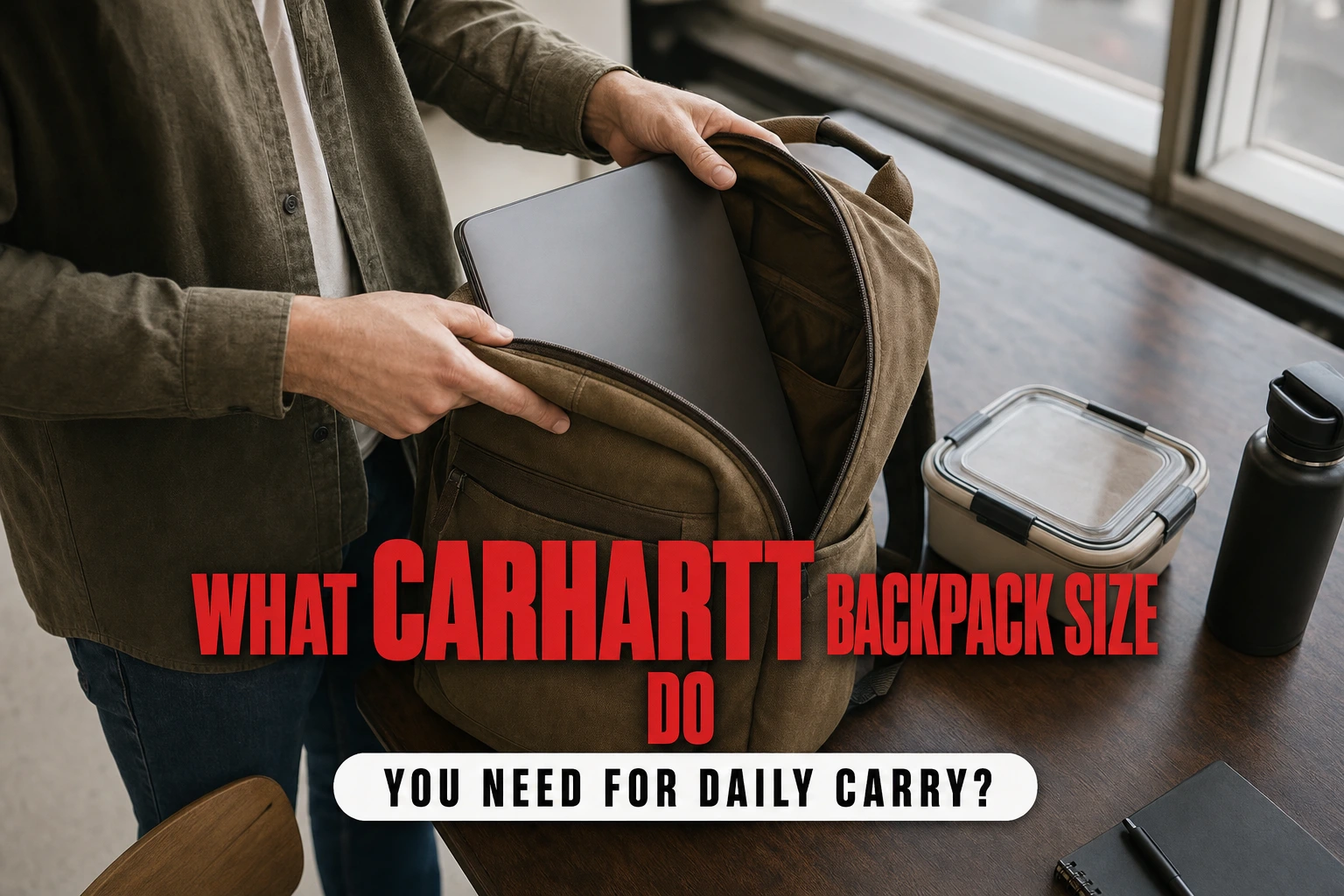
The Carhartt Classic 21L backpack suits a light daily carry built around a laptop up to 15 inches, a notebook, charger, lunch, and small essentials. Choose a larger Carhartt size if you regularly carry textbooks, tools, spare clothing, or bulky containers.
This article is informational and does not place shopping buttons in the story. Related buying guides may include affiliate links.
As an Amazon Associate I earn from qualifying purchases. This does not affect the price you pay. Affiliate disclosure
On this page9 sections
- 1The short answer
- 2What Size Carhartt Classic 21L Backpack Do You Need for Daily Carry?
- 3Understanding Backpack Capacity: What Does 21 Liters Actually Mean?
- 4How the Carhartt Classic 21L Fits Your Daily Essentials
- 5Carhartt 21L vs 23L, 25L, 27L, and 28L Sizes
- 6How to Measure Your Personal Daily Carry
- 7Which Carhartt Backpack Size Should You Pick?
- 8Frequently asked
- 9Sources
The short answer
- The 21L size fits a 15-inch laptop, a few notebooks, and basic commuter essentials.
- Choose 23L to 28L if you must carry bulky clothes, heavy textbooks, or gym gear.
- Heavy-duty material ensures longevity but provides less flexibility than lightweight nylon commuter bags.
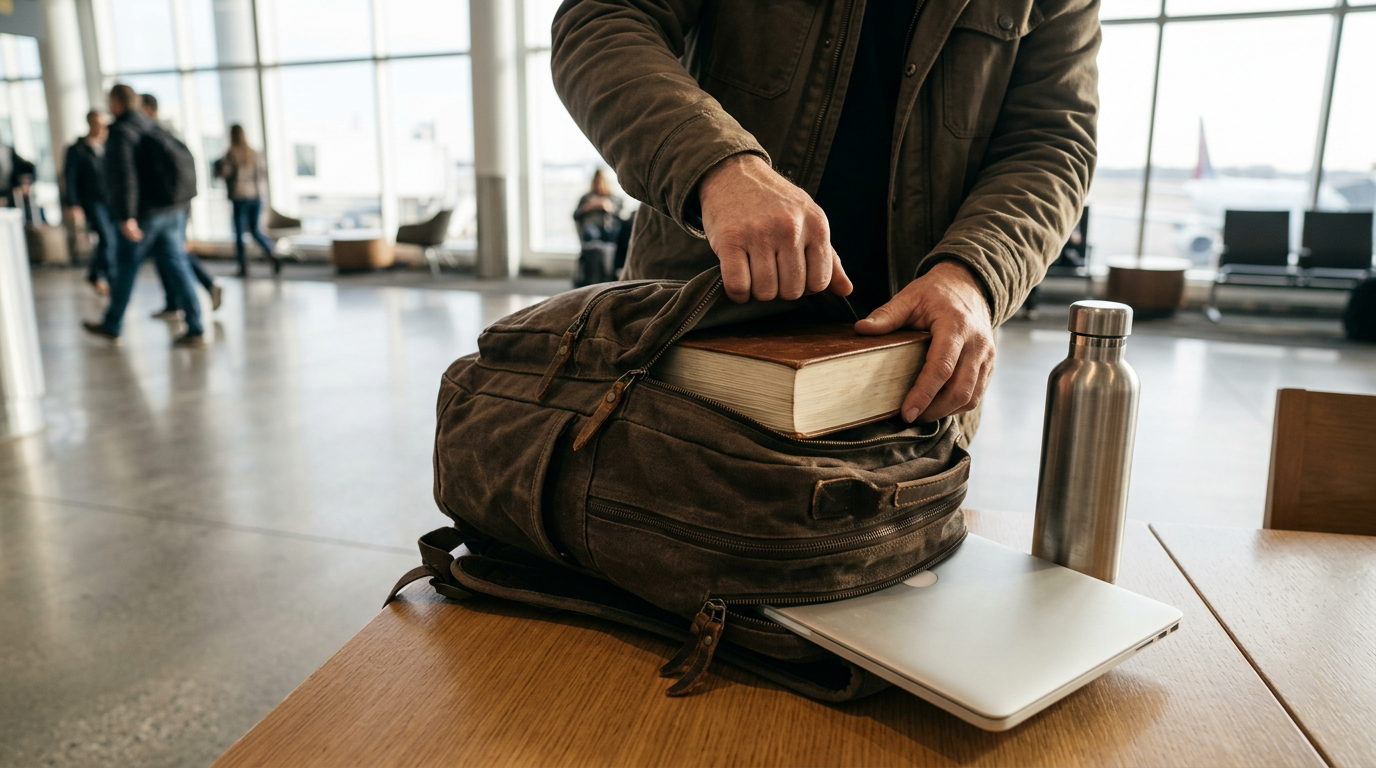
The Carhartt Classic 21L backpack is the right size for daily carry if you pack a laptop up to 15 inches, a notebook, charger, lunch, and a few small essentials. Consider 23L to 25L if you regularly carry bulky books, tools, spare clothes, or a large bottle alongside that basic load.
Deciding on the correct backpack volume can feel like navigating an endless sea of outdoor and workwear jargon. With sizes ranging from tiny hydration packs to massive multi-day hiking rucksacks, finding that sweet spot for daily life is crucial. Many people overpack, dragging unnecessary bulk through their morning subway rides or campus walks.
Carhartt has brought its signature rugged construction to the daily commuter market with its classic line of packs. Understanding how the 21L version fits into your daily routine helps prevent buyers from purchasing a bag that is either frustratingly small or needlessly bulky. Our Carhartt Classic 21L Backpack Review provides a closer look at this specific model.
The quick version
- Gather your daily gear
- Measure your largest item
- Group rigid items
- Consider your commute style
- Allow for seasonal needs
- Remove occasional items
What Size Carhartt Classic 21L Backpack Do You Need for Daily Carry?
For most light office, school, or commuting loads, 21 liters is a practical starting point. A typical setup might include a laptop up to 15 inches, its charger, a notebook, pens, keys, a compact lunch container, and a small water bottle. The 21L size works best when those items make up nearly all of your regular load.
The important limit is not only the stated capacity. The shape and rigidity of your items also matter. A thick lunchbox, large insulated bottle, camera insert, several textbooks, or spare shoes can consume usable room quickly even if each item seems modest on its own. If you often carry two or more bulky items together, a 23L or 25L alternative may be easier to pack.
Your commute also affects the decision. The 21L model keeps a relatively compact profile for walking, cycling, or crowded public transport. Drivers may care less about profile and more about spare capacity. For model-specific features and practical considerations, see the full Carhartt Classic 21L backpack review.
Understanding Backpack Capacity: What Does 21 Liters Actually Mean?
When shopping for bags, manufacturers measure internal space using volume capacity in liters rather than simple external dimensions. A 21-liter bag represents the lower-to-mid range of daily commuter packs. This size is specifically tailored to keep a close profile to your body while still offering enough room for the items you use every single day.
Capacity should be treated as a comparison tool rather than a guarantee that every object will fit. Internal sleeves, seams, pocket panels, and the taper of the bag all affect usable space. Two backpacks with the same published capacity can therefore pack differently. A rigid rectangular lunchbox may be harder to accommodate than soft clothing with a similar volume.
For most professionals, students, and trade workers, a 21-liter volume represents a disciplined approach to packing. It discourages you from carrying items you will not use, which ultimately saves your shoulders and back from unnecessary fatigue. However, if your daily routine involves carrying specialized tools, large winter garments, or heavy sports gear, this limit might feel restrictive. Choosing the right backpack volume helps avoid unnecessary load and keeps you organized.
The structured fabric also means the available space is less forgiving than a soft, unstructured sack. You cannot assume the material will stretch around an overfilled load, making the initial size selection important.
 See the picks in our buying guide
How the Carhartt Classic 21L Fits Your Daily Essentials
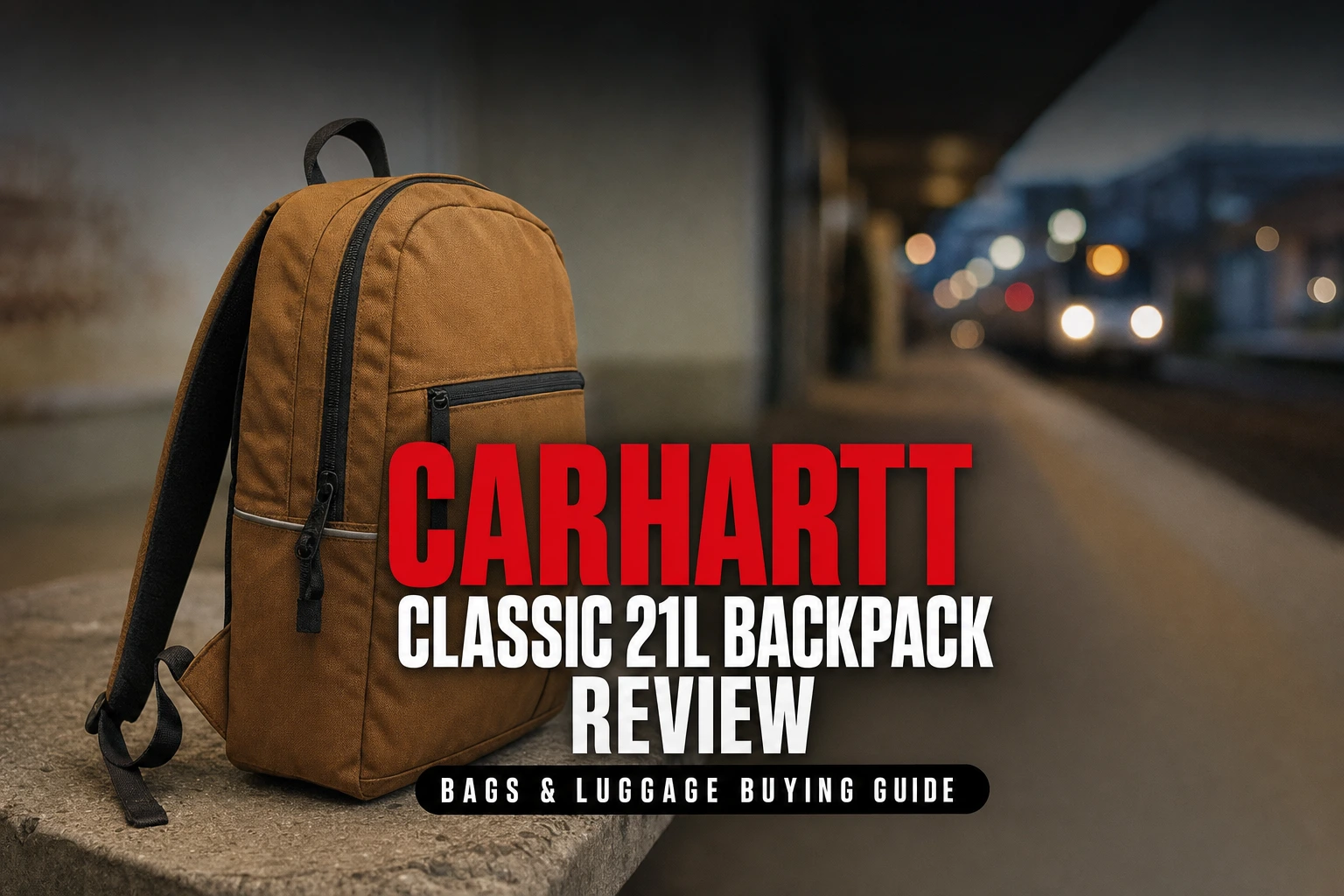
To determine if this size fits your lifestyle, you must look at what actually goes inside the bag. A standard daily setup typically consists of a laptop, a power adapter, a small notebook, a water bottle, pens, and perhaps a light lunch container. The Carhartt Classic 21L is built for this general combination, with a dedicated laptop sleeve described as fitting machines up to 15 inches.
The bag uses polyester fabric with a water-repellent treatment. Water-resistant does not mean waterproof, so electronics and papers may still need additional protection in sustained or heavy rain. The structured material helps the bag retain its shape, but it can also make overpacking less forgiving than it would be in a softer pack.
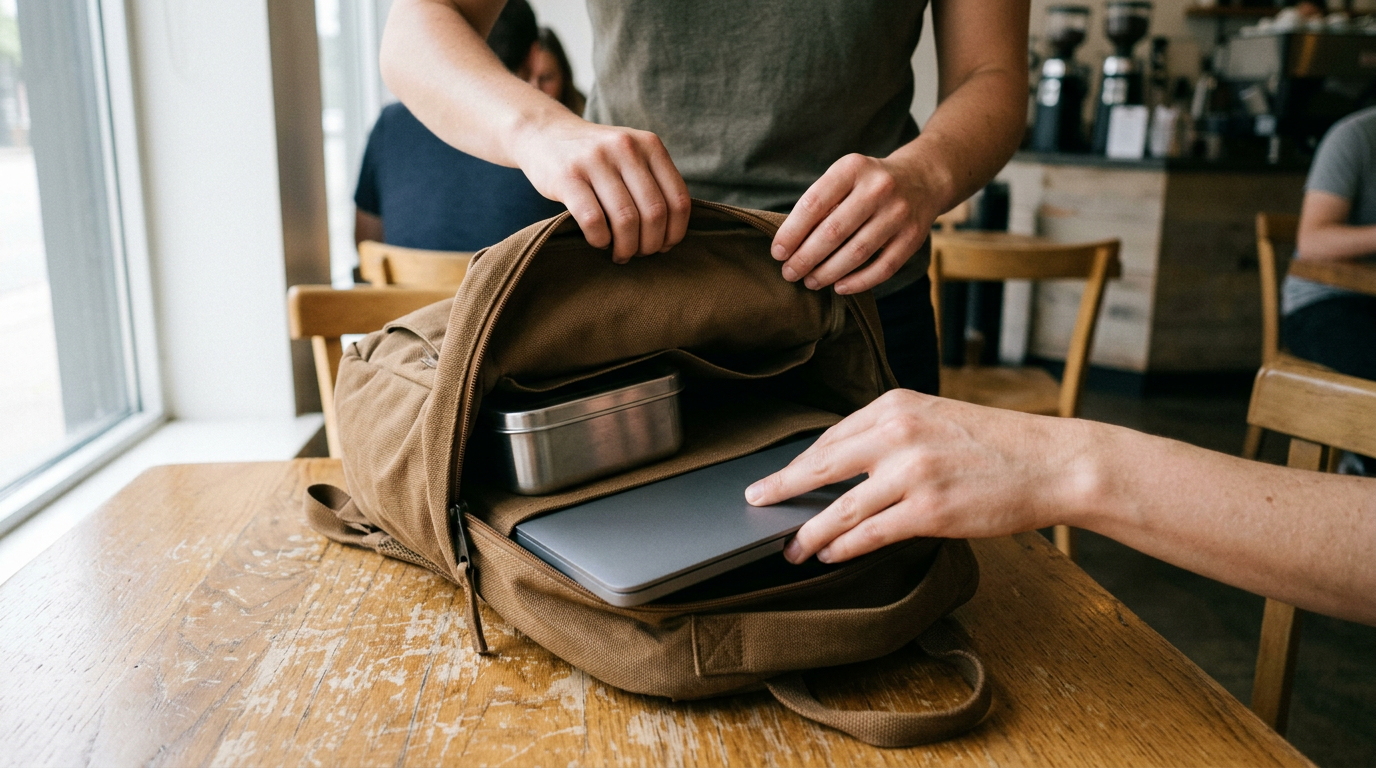
Because of this structured design, packing the bag is straightforward. The main compartment accommodates bulkier items like a lunchbox or a light sweater, while the front zippered compartment keeps smaller pens, keys, and charging cords accessible. The 21-liter capacity is suited to a 15-inch laptop, a notebook, and daily essentials without the footprint of a larger travel-oriented pack.
The relatively open interior also leaves flexibility for differently shaped gear. Even so, bulky organizers can waste space. Flat cable cases and slim stationery pouches generally suit this layout better than thick accessory cubes.
Carhartt 21L vs 23L, 25L, 27L, and 28L Sizes
Carhartt offers backpacks in several capacities, and the useful choice depends on your cargo rather than the number alone. The 21L model is oriented toward a basic office, school, or commuter load. Moving to 23L or 25L adds breathing room for combinations such as several textbooks, a larger lunch container, spare clothing, or additional work equipment. Capacities around 27L to 28L are more relevant when the same bag must handle heavier daily gear or short-trip packing.
- 21L: A compact daily load with a laptop, notebook, charger, lunch, and small essentials.
- 23L to 25L: More suitable if books, tools, clothing, or bulky food containers are regular additions.
- 27L to 28L: Better reserved for substantially larger loads or crossover use between commuting and short travel.
A larger pack can be useful even when it is not full, but it occupies more space and may encourage extra packing. Conversely, choosing 21L simply for its compact profile can be frustrating if rigid items compete for the same main-compartment space. Choose according to your fullest normal day, not an unusually light day or an occasional trip.
The Carhartt Classic 21L review and fit overview can help you assess whether this model's layout matches your routine.
How to Measure Your Personal Daily Carry
If you are unsure whether the 21-liter model fits your routine, perform a simple assessment at home. Gather your normal equipment rather than relying on memory, and include the small objects that are easy to overlook. Chargers, power banks, glasses cases, umbrellas, food containers, and bottles can collectively take up substantial room.
- Gather your daily gear. Lay out every item you plan to carry on a typical busy day.
- Measure your largest item. Record the width, height, and thickness of your laptop, largest book, lunchbox, or organizer.
- Group rigid items. Check whether a laptop, bottle, and lunch container can sit together without one pressing against another.
- Consider your commute style. Walking, cycling, and public transit generally reward a more compact profile.
- Allow for seasonal needs. Include a light layer, gloves, or a compact umbrella if these regularly travel in the bag.
- Remove occasional items. Weekend-trip equipment should not dictate your everyday size unless the backpack must serve both purposes.
Pay particular attention to laptop fit. Screen size is a diagonal measurement and does not describe the full chassis. Two 15-inch laptops may have different external dimensions, so compare your device measurements with the sleeve dimensions supplied for the bag. A capacity label cannot replace a direct dimensions check.
Hydration is another practical constraint. A large bottle stored inside the main compartment reduces room for food and clothing. Include the exact bottle you use during your packing assessment rather than assuming it will fit around other gear.
Which Carhartt Backpack Size Should You Pick?
Ultimately, your decision comes down to how you plan to use the bag on a day-to-day basis. If your daily carry consists of a slim laptop up to 15 inches, a charger, some keys, a notebook, and a compact lunch, the 21L is the clearest match. It keeps your profile compact and limits unused space. A compact 21L profile can also discourage unnecessary overpacking during regular commutes.
For students carrying multiple physical textbooks, or trade workers who need extra tools and clean work shirts, the 23L or 25L range offers more breathing room for bulky, rigid items that do not bend or compress. A 27L or 28L capacity makes more sense if the backpack must also cover short travel, sports equipment, or a consistently heavy work setup.
Do not choose solely from the capacity number. Confirm your laptop's full dimensions, account for the space taken by your bottle and lunch container, and consider whether seasonal layers must fit inside. If the complete everyday load fits without forcing the zipper or stacking hard objects against the laptop, 21L should be sufficient. If it requires careful repacking every day, moving up one size is the more practical choice.
For a deeper look at the model's construction, storage arrangement, and everyday suitability, read our detailed Carhartt Classic 21L Backpack Review.
Frequently asked
Sources
As an Amazon Associate I earn from qualifying purchases. This does not affect the price you pay. Affiliate disclosure