Choosing the Right Breathable Full Bed Sheets
To choose the right breathable full bed sheets, prioritize natural fibers like cotton, linen, or bamboo-derived lyocell paired with an open, airy percale weave.
This article is informational and does not place shopping buttons in the story. Related buying guides may include affiliate links.
As an Amazon Associate I earn from qualifying purchases. This does not affect the price you pay. Affiliate disclosure
On this page9 sections
- 1The short answer
- 2Decoding the Best Breathable Bedding Materials
- 3Why Thread Count Can Be Misleading
- 4Understanding Weave Patterns and Airflow
- 5Getting the Right Fit for a Full Bed
- 6Step-by-Step Guide to Choosing Breathable Sheets
- 7Which Breathable Sheet Material Should You Pick?
- 8Frequently asked
- 9Sources
The short answer
- Weave over thread count: A lower thread count percale weave breathes much better than dense sateen.
- Natural fiber selection: Linen, hemp, and bamboo-derived lyocell naturally absorb moisture and allow excellent airflow.
- Check the mattress depth: Ensure your full sheets have deep pockets to avoid pulling the fabric tight.
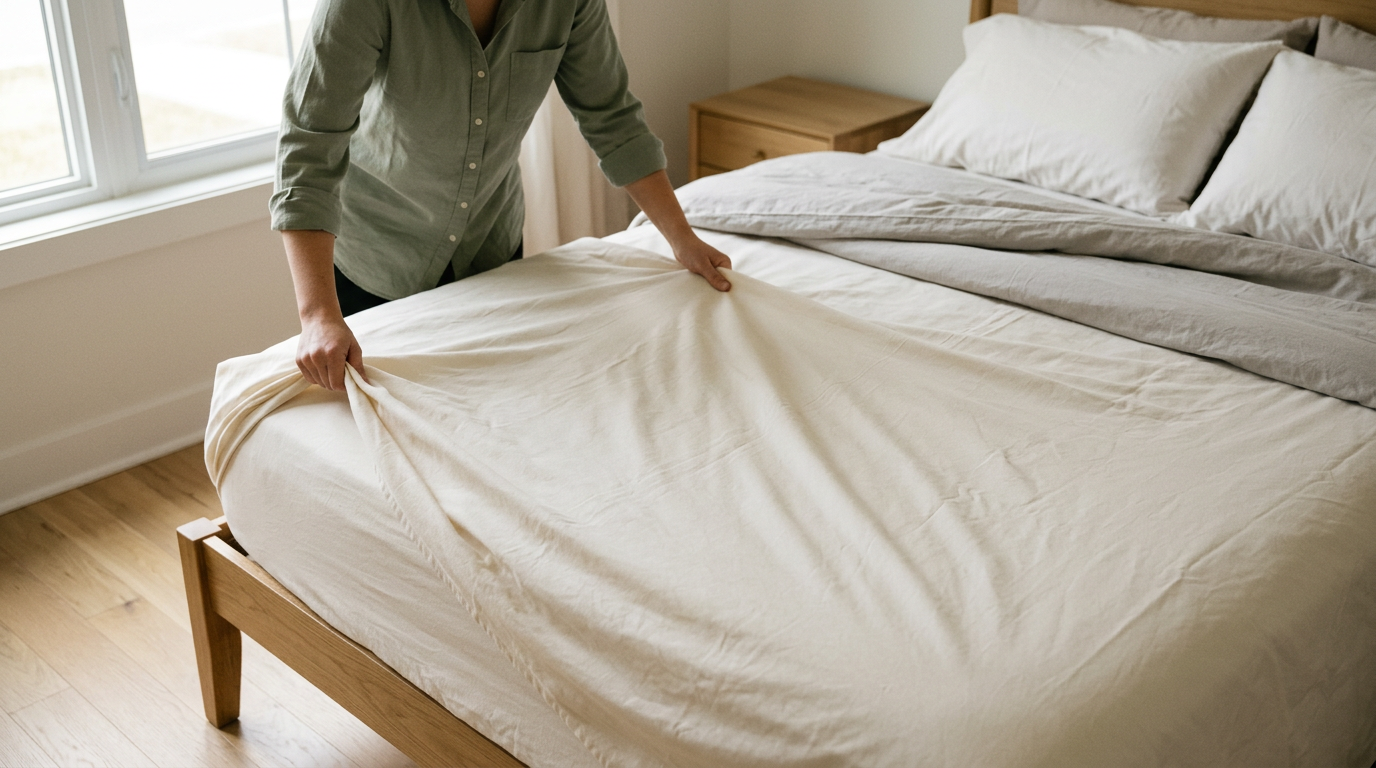
To choose the right breathable full bed sheets, prioritize natural fibers like cotton, linen, or bamboo combined with an open, airy weave like percale. This combination keeps body moisture and heat from becoming trapped in your mattress.
Finding a set of sheets that fits a standard full-size mattress while offering proper airflow involves sorting through a lot of marketing jargon. Many brands advertise high thread counts or specialized cooling technologies that actually do the opposite of what hot sleepers need. Understanding how materials and weave patterns interact is the key to creating a comfortable, dry sleeping environment.
When shopping for full bed sheets, which measure 54 inches by 75 inches (137 cm by 191 cm), you want to balance fiber structure and weave tightness. Selecting the right combination will significantly improve your sleep quality by managing humidity. Let's look at how to decode the labels so you can find the ideal set for your bed.
The quick version
- Measure your mattress dimensions
- Select your preferred raw material
- Check the weave style
- Verify the thread count or weight
- Review the care instructions
Decoding the Best Breathable Bedding Materials
Selecting the raw material of your sheets is the most critical decision in your search. Natural fibers are inherently superior to synthetics when it comes to regulating temperature. Cotton remains a classic choice because its fibers allow air to pass through freely while absorbing moisture from your skin during the night. For those who experience night sweats, linen offers an even more open structure that facilitates maximum air circulation.
Another excellent option is bamboo-derived lyocell, which is manufactured through a closed-loop chemical process that transforms wood pulp into soft threads. Lyocell excels at managing humidity, drawing moisture away from the body quickly so it can evaporate. In contrast, synthetic fabrics do not offer true moisture-wicking performance, meaning they keep sweat trapped against your skin and lead to a clammy, uncomfortable sleeping environment.
If you want a detailed breakdown of specific top-rated products that utilize these high-performance materials, you can check out our guide to the best breathable full bed sheets for 2026. This resource compares the leading options on the market to help you find the exact match for your mattress.
Why Thread Count Can Be Misleading
Many people believe that a higher thread count always indicates a higher-quality, more comfortable sheet. In reality, an excessively high thread count often means the fabric is woven so tightly that air cannot pass through it. When threads are packed densely together, they block the natural ventilation of the fabric, turning your bed into a heat trap.
Higher thread counts often mean the sheet is woven with thin, low-quality threads twisted together, which restricts air circulation.
For optimal breathability, you should aim for a thread count between 200 and 400. Anything higher than this range usually requires twisting multiple thin, low-quality threads together, which increases the density without improving durability. Choosing a moderate thread count ensures that the fabric retains its strength while leaving enough space between the threads for air to circulate freely.
It is also worth noting that linen sheets are measured by weight rather than thread count. For linen, look for a fabric weight of around 140 to 180 grams per square meter. This weight provides a durable feel without becoming too heavy or restrictive during warm summer nights.
 See the picks in our buying guide
Understanding Weave Patterns and Airflow
The way a sheet is woven determines how it feels against your skin and how much air can pass through it. The two most common cotton weaves are percale and sateen. A percale weave uses a simple one-under, one-over pattern that creates a crisp, matte finish similar to a high-end hotel sheet. This structure is highly breathable because the simple grid pattern allows air to move through the fabric with minimal resistance.
In contrast, a sateen weave uses a four-over, one-under pattern that exposes more thread surface on the face of the fabric. While this creates a silky feel and a subtle sheen, the tight arrangement of threads reduces the space through which air can flow. Consequently, sateen sheets tend to feel much warmer and are less suitable for hot sleepers who need constant ventilation.
Other open weaves include gauze and waffle knits, which are excellent for summer use. These textures create tiny pockets of air that help regulate temperature without trapping moisture. If you prefer the feel of crisp percale sheets, reading through our best breathable full bed sheets for 2026 is a great starting point for finding your next bedding set.
Getting the Right Fit for a Full Bed
A breathable sheet cannot do its job effectively if it does not fit your mattress properly. Standard full mattresses measure 54 inches by 75 inches (137 cm by 191 cm), but mattress depths can vary significantly. If your sheets are too tight, the fabric stretches to its limit, closing up the tiny gaps in the weave and reducing its natural breathability.
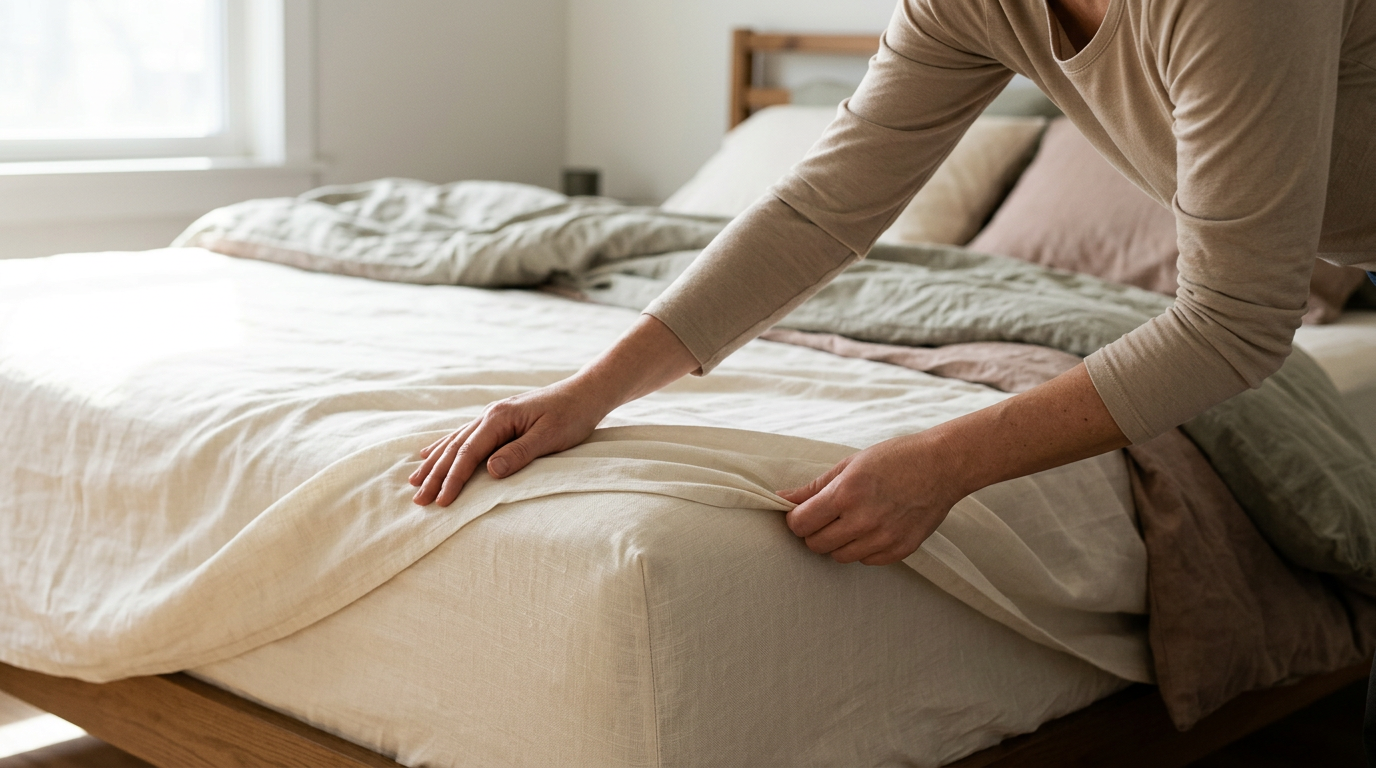
Before buying, measure the height of your mattress, including any mattress toppers or pads you use. Look for fitted sheets with pocket depths that exceed your mattress height by at least two to three inches. This extra room ensures the sheet slips on easily and does not pull too tightly across the sleeping surface, preserving the fabric's engineered airflow.
Additionally, elastic quality plays a major role in keeping the sheet secure. Look for fitted sheets with strong, fully elasticized borders rather than elastic only on the corners. A secure fit stops the sheet from bunching up under your body, which can create warm spots and disrupt your sleep during the night.
Step-by-Step Guide to Choosing Breathable Sheets
Finding the perfect set of sheets does not have to be a guessing game. By following a structured process, you can eliminate options that will trap heat and focus only on the ones that keep you cool. Here is how to systematically select the best bedding for your sleep needs.
- Measure your mattress dimensions. Verify the exact width, length, and depth of your bed to ensure a loose but secure fit.
- Select your preferred raw material. Choose linen for maximum airflow, bamboo-derived lyocell for moisture absorption, or cotton for classic crispness.
- Check the weave style. Look specifically for percale or open-weave designs to guarantee that air can circulate through the threads.
- Verify the thread count or weight. Avoid any sheets that boast exceptionally high numbers, aiming instead for the middle range.
- Review the care instructions. Ensure the sheets can be washed in cool water and tumble dried on low to keep the fibers from shrinking and tightening.
After completing these step cards, you will have a clear idea of which specifications suit your sleeping style. You can explore a curated selection of top-performing options by reading our comprehensive guide to the best breathable full bed sheets for 2026 to find the perfect match.
Which Breathable Sheet Material Should You Pick?
Your final decision should depend on your personal sleep style and your local climate. If you are a hot sleeper who sweats during the night, bamboo-derived lyocell sheets are your best bet because of their exceptional moisture management. They pull sweat away from your body and allow it to evaporate quickly, keeping your bed dry and comfortable.
If you prefer a crisp, structured sheet that feels cool to the touch immediately, cotton percale is the ideal choice for your full bed. These sheets offer the classic hotel feel and are highly durable, softening with each successive wash while maintaining their excellent ventilation properties. They are perfect for year-round use in moderate climates.
For those living in hot, humid climates, linen sheets provide the ultimate airflow due to their loose weave and thick, natural fibers. While linen has a textured feel that is different from smooth cotton, its ability to keep you cool during sweltering summer nights is unmatched by any other fabric.
Frequently asked
Sources
As an Amazon Associate I earn from qualifying purchases. This does not affect the price you pay. Affiliate disclosure