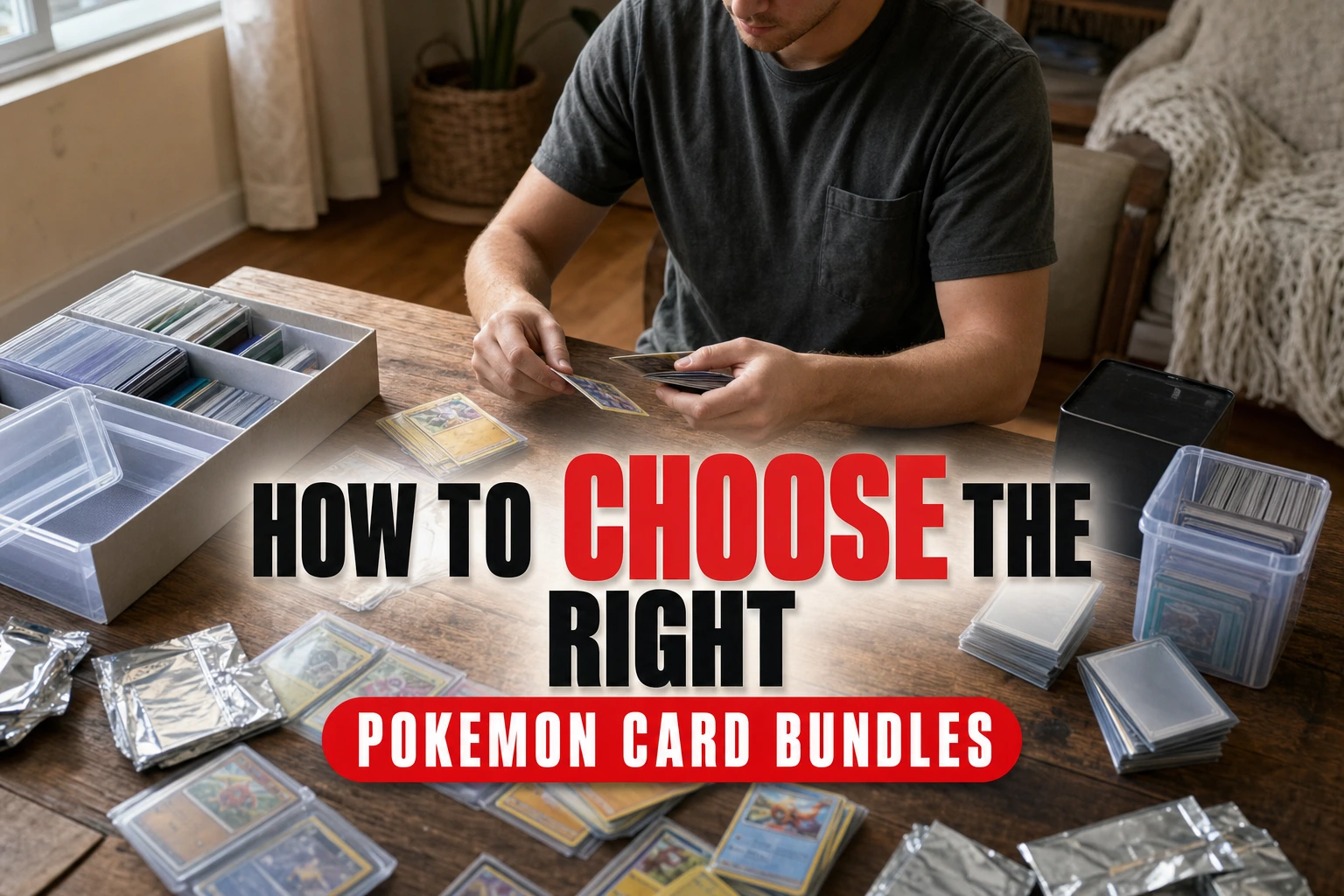
How to Choose the Right Pokemon Card Bundles
Learn how to select the ideal Pokémon card bundle by matching your collecting goals, budget, and preference for pack types or gameplay accessories.
This article is informational and does not place shopping buttons in the story. Related buying guides may include affiliate links.
As an Amazon Associate I earn from qualifying purchases. This does not affect the price you pay. Affiliate disclosure
On this page9 sections
The short answer
- Identify your goal: choose raw card packs for collecting, or packaged boxes for accessories and storage.
- Compare the price per individual booster pack to ensure you get the best value for money.
- Avoid random loose repackaged bundles from unverified online sellers to prevent buying counterfeit or searched cards.
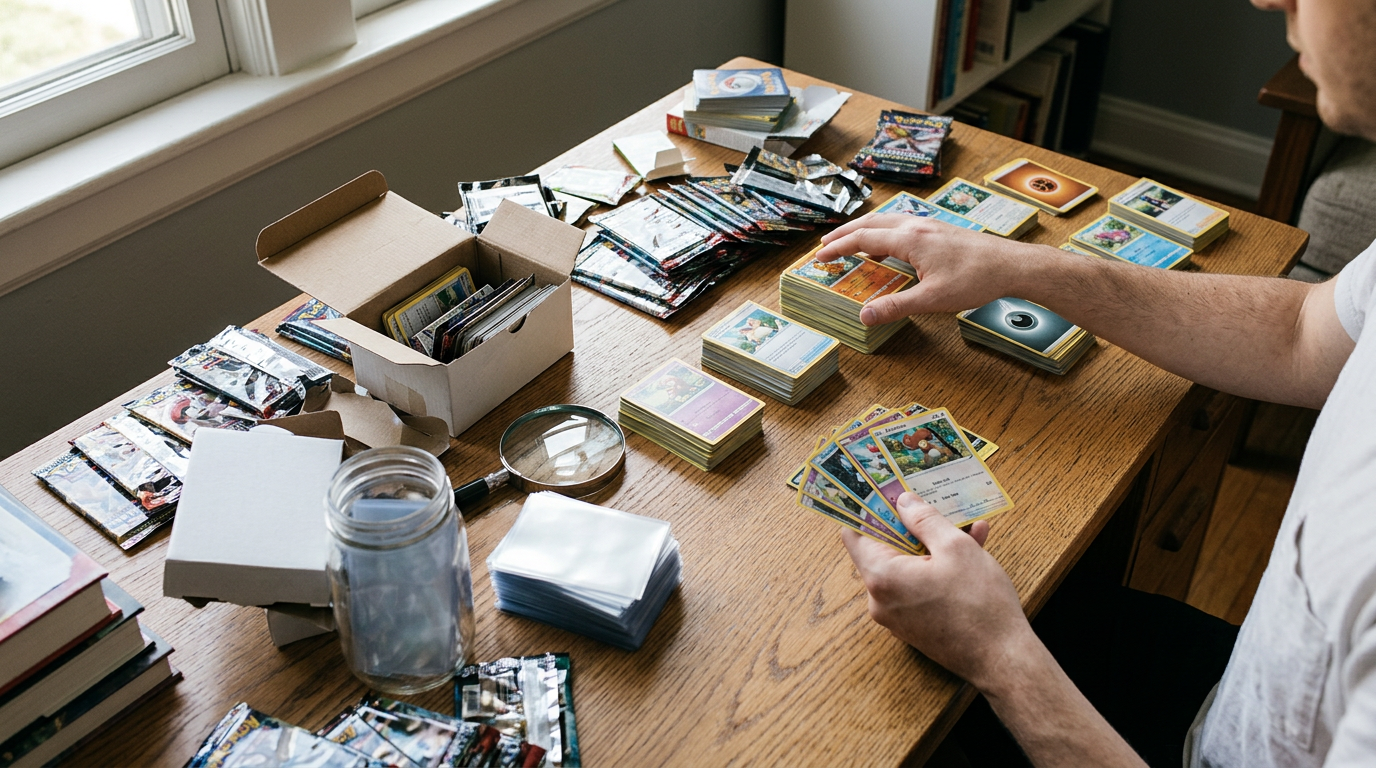
You choose the right Pokémon card bundles by aligning your specific collecting goal with the package style. If you want only raw cards, buy booster bundles, while players who need accessories should select boxed sets.
The landscape of Pokémon Trading Card Game (TCG) products has grown highly specialized. What once consisted simply of individual packs has expanded into an array of boxes, tins, and multi-pack packages that serve completely different purposes. Finding the sweet spot between card count and extra physical components is the secret to getting the most value for your money.
Navigating these options requires understanding how different products package their contents. Some configurations maximize your chance of finding rare cards per dollar spent, while others focus on providing a pre-built foundation for actual competitive tabletop matches. By learning how to analyze these configurations, you will make smarter purchasing decisions that avoid unnecessary clutter.
The quick version
- Identify your primary objective
- Calculate your spending limit
- Count the booster packs
- Evaluate the included accessories
- Check the specific expansion set
Decoding the Common Package Types
The Pokémon TCG market features several standard packaging structures. A basic booster pack contains ten game cards, but buying these individually is rarely the most cost-effective path. Instead, collectors look to multi-pack options to save money.
A standard booster bundle is a streamlined box containing exactly six booster packs. It features no extra accessories, dice, or promo items. This makes it highly efficient for collectors who want to open packs without storing excess cardboard packaging and plastic waste.
The elite trainer box, often abbreviated as an ETB, is a larger package. It includes eight to ten booster packs alongside gameplay components like damage-counter dice, card sleeves, energy cards, and a player guide. These boxes also double as sturdy, decorative storage containers for your growing collection.
Finally, a full booster box represents the wholesale tier, usually containing 36 booster packs. While this requires a larger upfront financial commitment, it offers the lowest cost per individual pack, making it the preferred choice for serious hobbyists who like to open cards in bulk.
Define Your Collecting Goals First
Selecting the perfect product depends on an organized decision process. By following a systematic approach, you can filter out products that contain components you do not need, saving both money and physical space in your home.
Here is how to narrow down your options systematically: 1. Identify your primary objective. Decide whether you want to play the game, collect rare artwork, or hunt for high-value cards. 2. Calculate your spending limit. Establish a clear budget before browsing to avoid overspending on large wholesale boxes. 3. Count the booster packs. Divide the total price of the package by the number of packs included to find the unit cost. 4. Evaluate the included accessories. Determine if you actually need items like sleeves, dice, dividers, or cardboard storage boxes. 5. Check the specific expansion set. Verify that the bundle contains packs from the expansion containing your desired target cards.
Following these steps prevents the common mistake of buying expensive, accessory-heavy boxes when your only real desire is to tear open foil wrappers in search of beautiful holographic artwork. Matching your budget to your exact hobby usage keeps your collection organized.
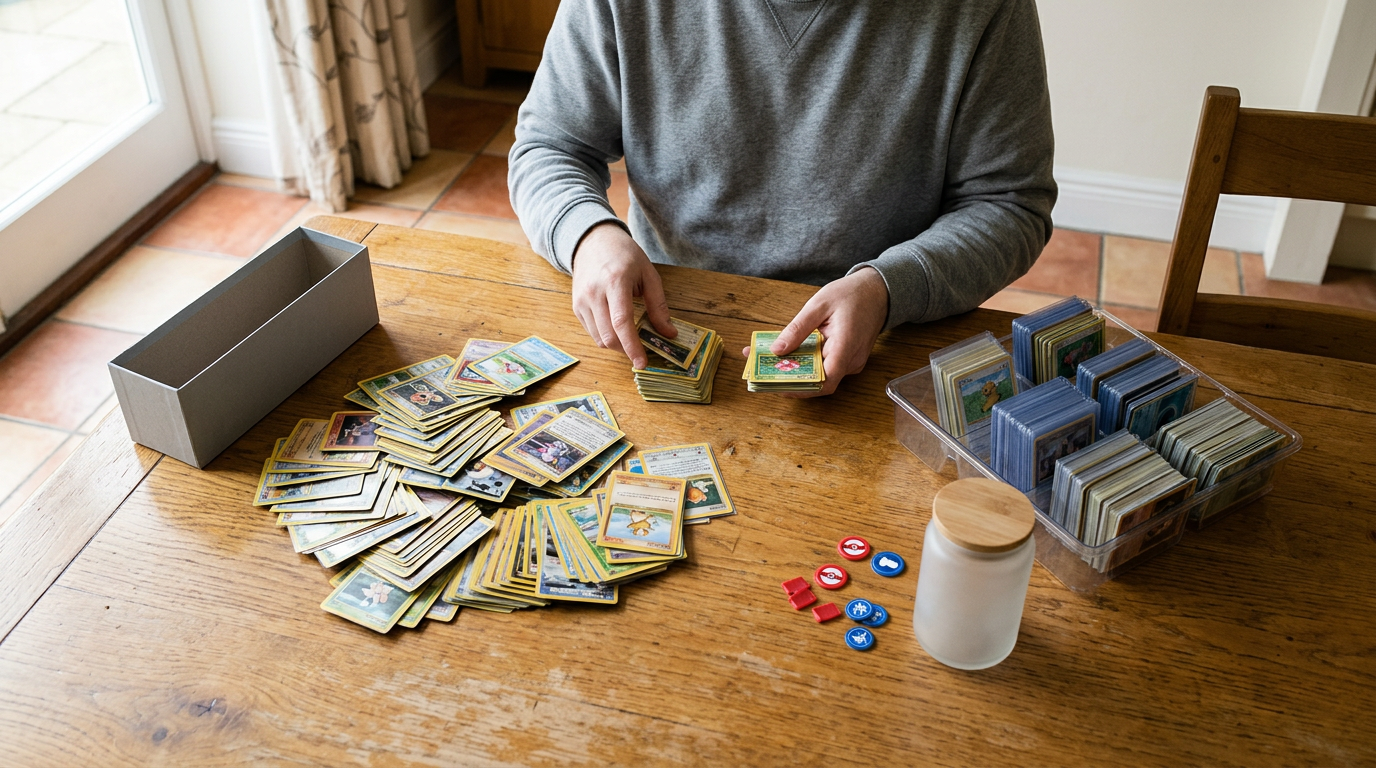 See the picks in our buying guide
Booster Bundles vs. Collection Boxes
When looking at mid-tier options, buyers often struggle to decide between a minimalist pack of boosters and a decorative collection box. These two products target different kinds of enjoyment and offer distinct physical contents.
The trade-offs can be analyzed directly across several key metrics: - Pack Density: Booster bundles pack six packs into a tiny cardboard sleeve, whereas collection boxes spread fewer packs across a large plastic tray. - Guaranteed Contents: Booster bundles rely entirely on the random luck of the packs, whereas collection boxes always feature a visible, guaranteed promo card or oversized collectible card. - Packaging Waste: Booster bundles generate almost zero excess trash, whereas collection boxes use large amounts of plastic molding and cardboard that are quickly discarded. - Gift Appeal: Booster bundles look like simple retail boxes, whereas collection boxes make impressive, visually striking gifts due to their large size and clear display windows.
Understanding these differences allows you to choose based on whether you prefer the thrill of raw, unguided pack openings or the certainty of receiving a specific, beautifully illustrated promotional card.
Calculating the Cost Per Pack
The smartest way to compare any trading card products is to calculate the unit price per booster pack. This math strips away the distraction of fancy packaging and extra plastic toys, revealing exactly what you are paying for the cards themselves. To do this, simply take the retail price of the bundle and divide it by the number of foil booster packs contained inside.
Typically, larger products like booster boxes offer the lowest unit price, but they require a higher initial outlay. Elite trainer boxes usually have a higher unit price because you are paying a premium for the physical box, the card sleeves, and the player guides. If those accessories do not interest you, that premium is essentially wasted money.
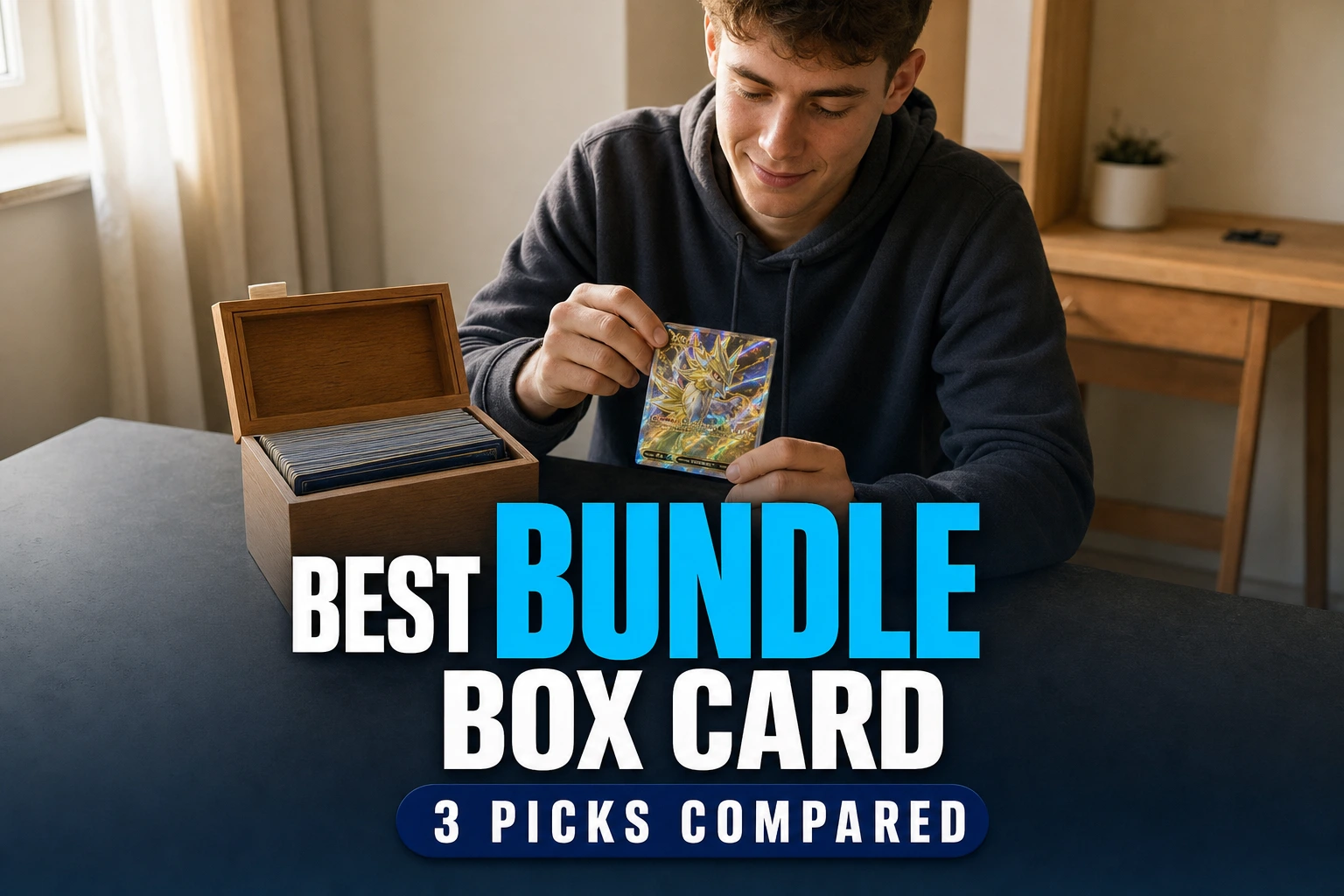
For collectors who want a balanced approach, choosing an intermediate package is often the ideal solution. You can read our detailed breakdown in the Best Pokemon Card Bundles: 3 Picks Compared guide to see how different configurations measure up in terms of pure card value. This comparison will help you visualize which products keep your unit costs low while still providing an exciting opening experience.
Calculating the unit cost of your cards keeps your hobby affordable and prevents overpaying for unnecessary packaging.
Spotting and Avoiding Counterfeit Products
The popularity of the Pokémon TCG has unfortunately led to a rise in counterfeit goods and tampered packages. Untrustworthy sellers often reseal booster packs after removing the valuable cards, or they print low-quality replica cards. This makes where and how you buy your bundles just as important as which bundle type you choose.
Always inspect the packaging carefully before opening it. Legitimate bundles and boxes feature crisp, high-resolution printing, straight alignment, and tight factory shrink-wrap. If the plastic wrap looks loose, re-taped, or messy, there is a high chance the product has been tampered with and should be returned immediately.
Furthermore, avoid buying "mystery bundles" created by third-party sellers on digital marketplaces. These bundles often advertise a high number of cards for a low price, but they are almost always composed of bulk common cards that the seller has already sorted through. You will rarely, if ever, find a valuable or rare card in these customized repackages. Stick to factory-sealed products from verified distributors to protect your money.
To ensure your transactions are safe, always inspect the packaging carefully before opening it to guarantee the original factory seal is completely intact. This simple step protects you from receiving tampered goods that contain no rare cards.
Which One Should You Pick?
Your final choice should match your experience level and what you want to do with the cards once they are opened. There is no single option that fits every collector, but categorizing your goals makes the decision incredibly straightforward.
To help you decide, consider how you plan to enjoy the hobby: - If you are a pure collector who only wants rare cards, you should choose booster bundles or full booster boxes. These configurations strip away the unnecessary plastic accessories, ensuring that every dollar of your budget goes directly toward obtaining the maximum number of booster packs. - If you are a beginner looking to play the game, you should pick an elite trainer box. The included dice, status markers, and energy cards provide the essential tools required to sit down and play, while the box itself gives you a safe place to organize your new collection. - If you are buying a gift for a young fan, a themed collection box is usually the best option. The large packaging looks spectacular, and the guaranteed promo card ensures they get a flashy, high-powered card of their favorite character right away, regardless of their luck with the random booster packs.
Ultimately, you must match your experience level and what you want to do with the cards before clicking buy. If you want a detailed side-by-side analysis of specific sets currently on the market, you can consult our Best Pokemon Card Bundles: 3 Picks Compared comparison to find the absolute best fit for your budget.
Frequently asked
Sources
As an Amazon Associate I earn from qualifying purchases. This does not affect the price you pay. Affiliate disclosure