
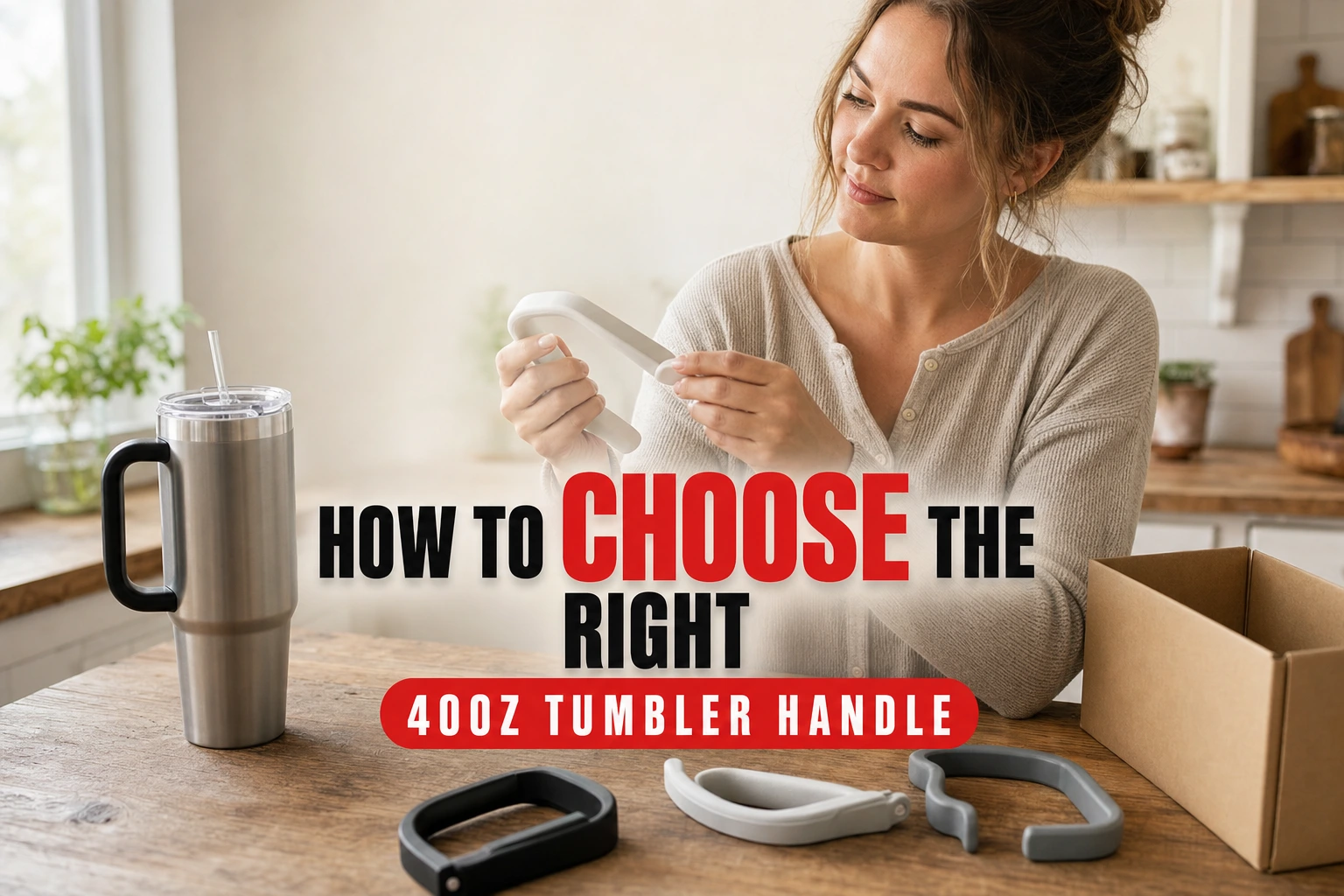
How to Choose the Right 40oz Tumbler Handle
To choose the right 40oz tumbler handle, evaluate the connection style, materials, grip comfort, and whether it fits standard vehicle cup holders.
This article is informational and does not place shopping buttons in the story. Related buying guides may include affiliate links.
As an Amazon Associate I earn from qualifying purchases. This does not affect the price you pay. Affiliate disclosure
On this page9 sections
The short answer
- Integrated handles offer superior stability, while removable grips allow for easier cleaning and versatile cup usage.
- Look for molded rubber or silicone linings on the handle underside to prevent slipping during carry.
- Ensure the handle placement sits high enough on the tumbler to clear standard vehicle cup holders.

To choose the right 40oz tumbler handle, evaluate the attachment security, grip material, and overall ergonomics to balance the weight of a full forty-ounce vessel. Select an integrated handle for maximum durability or a removable slip-on grip for versatility.\n\nCarrying a fully filled forty-ounce insulated cup can be surprisingly tiring, often weighing upwards of four pounds [about 1.8 kilograms] when filled to capacity with water and ice. Without an ergonomic grip, holding this heavy weight by the cylinder wall quickly causes hand fatigue during your commute or outdoor activities.\n\nUnderstanding how different handles affect portability, cup holder compatibility, and daily cleaning is essential before making a purchase. This guide breaks down the structural differences, materials, and design choices that will help you pick the perfect companion for your hydration needs.
Understanding the Two Main Handle Categories
When searching for the perfect large-capacity drinking vessel, the first major decision is choosing between integrated handles and removable aftermarket grips. An integrated handle is permanently joined to the tumbler body, usually during manufacturing using spot welding or molded plastic collar rings. This configuration provides absolute stability, ensuring the cup never slips or rotates while you take a drink. However, these permanent structures make the tumbler bulkier to pack into tight bags and trickier to wash by hand.\n\nConversely, a removable handle utilizes a modular band that slides up from the bottom of the tumbler, securing itself via friction against the tapered metal walls. These removable accessories offer excellent flexibility, allowing you to convert a standard travel mug into a handled carrier in seconds. The trade-off is a slight loss in rigidity; lower-quality slip-on bands can slide out of place or twist when the heavy forty-ounce container is completely filled with ice and liquid.
Choosing Between Open and Closed Handle Designs
The shape of the handle itself plays a critical role in how comfortably you can transport your beverage throughout the day. Closed-loop handles form a complete loop from the top attachment point to the bottom, offering maximum security because your hand cannot slip out of the bottom. This style is ideal if you frequently carry multiple items at once, as you can easily loop several fingers through the handle without worrying about dropping the vessel.\n\nOpen-loop handles, often referred to as hook handles, remain unattached at the bottom end. This open configuration allows you to quickly hang the tumbler from thin straps, tree branches, or grocery cart frames during outdoor activities. The primary disadvantage of the open design is that it places more torque on your wrist, as the bottom of the handle does not distribute the lateral weight back into the lower half of the tumbler body.
Key Material Differences and Grip Textures
The materials used in constructing a tumbler handle directly dictate its comfort, longevity, and performance in harsh weather conditions. Most high-end handles feature a rigid polypropylene core wrapped in a softer thermoplastic elastomer or silicone coating. This dual-material design provides the structural strength needed to support a four-pound vessel while offering a comfortable, slip-resistant surface for your fingers. Cheaper alternatives often use single-mold hard plastics that feel slick when wet and can dig painfully into your knuckles over long walks.\n\nMetal handles, while exceptionally durable and sleek, present unique challenges. If left in a hot vehicle or exposed to direct sunlight, a bare steel handle can quickly absorb heat and become uncomfortable to touch. Similarly, in freezing winter temperatures, metal handles can become painfully cold unless they are wrapped in a protective rubber sleeve. For year-round outdoor use, composite or insulated polymer handles remain the most practical and reliable choice.
Step-by-Step Guide to Evaluating a Handle
1. Measure the clearance height. Ensure the lower attachment point starts high enough on the tapered base to avoid obstructing shallow vehicle cup holders.\n2. Assess the finger clearance. Ensure there is at least one inch [2.5 cm] of space between the handle and the tumbler wall.\n3. Test the grip texture. Look for molded thermoplastic elastomer on the inner edge to prevent slipping.\n4. Check the attachment point. Inspect whether the connection uses metal rivets, heavy screws, or molded welds.\n5. Verify the weight balance. A good handle aligns with the center of gravity to prevent the cup from tilting.
Cup Holder Compatibility and Placement
One of the most common frustrations among owners of large insulated cups is finding out that their favorite vessel no longer fits into their vehicle console. Because a forty-ounce tumbler naturally requires a wide body to hold its volume, manufacturers taper the bottom section to fit standard cup holders. However, if the handle attachment extends too far down this tapered base, it will hit the rim of the cup holder and prevent the tumbler from dropping fully into the receptacle.\n\nTo avoid this issue, look for handles that feature a raised clearance profile. The lower attachment point should ideally sit at least three inches [7.6 cm] above the narrowest portion of the cup base. This design ensures the wide, handled portion of the cup remains completely suspended above the console, keeping your drink secure and upright while driving over bumpy roads. Some manufacturers even offer adjustable or offset handles specifically engineered to maximize console clearance.
Which Handle Style Should You Pick?
Selecting the ideal grip style ultimately depends on your daily routine and where you plan to take your beverages. If your routine revolves around a daily office commute and vehicle travel, an integrated, closed-loop handle with a high-clearance design is the most convenient choice. It offers maximum stability for quick sips at stoplights and slides effortlessly in and out of standard automotive consoles. For a side-by-side comparison of the top models featuring this layout, explore our detailed guide comparing the Best Tumbler 40oz Handle: Top 4 Insulated Cups Compared.\n\nOn the other hand, if you are an outdoor enthusiast, hiker, or active gym-goer, a removable or open-loop handle may serve you better. Removable options allow you to strip the cup down to its sleek cylinder form for easy packing inside backpack side pockets, while open-loop hooks allow you to hang the vessel from gear loops or stroller frames. Evaluate your lifestyle needs first, then select a handle that prioritizes either absolute stability or adaptable versatility.
Frequently asked
Sources

As an Amazon Associate I earn from qualifying purchases. This does not affect the price you pay. Affiliate disclosure