
How to Choose the Right Front Dash Cam for Your Vehicle
Learn how to select a front-facing dash camera by evaluating video resolution, lens field of view, temperature resistance, and essential storage options.
This article is informational and does not place shopping buttons in the story. Related buying guides may include affiliate links.
As an Amazon Associate I earn from qualifying purchases. This does not affect the price you pay. Affiliate disclosure
On this page9 sections
- 1The short answer
- 2Understanding Image Sensors and Resolution
- 3Evaluating Field of View and Lens Materials
- 4Choosing Between Capacitors and Batteries
- 5Selecting the Right MicroSD Card and Storage Limits
- 6How to Choose Your Front Dash Cam in 5 Steps
- 7Finding the Right Match for Your Driving Profile
- 8Frequently asked
- 9Sources
The short answer
- Prioritize at least 1440p (2K) resolution to capture legible license plates during daytime and nighttime driving.
- Select a lens with a viewing angle between 140 and 160 degrees to balance coverage and detail.
- Decide between standard capacitor power and hardwiring kits based on your need for continuous parking surveillance.
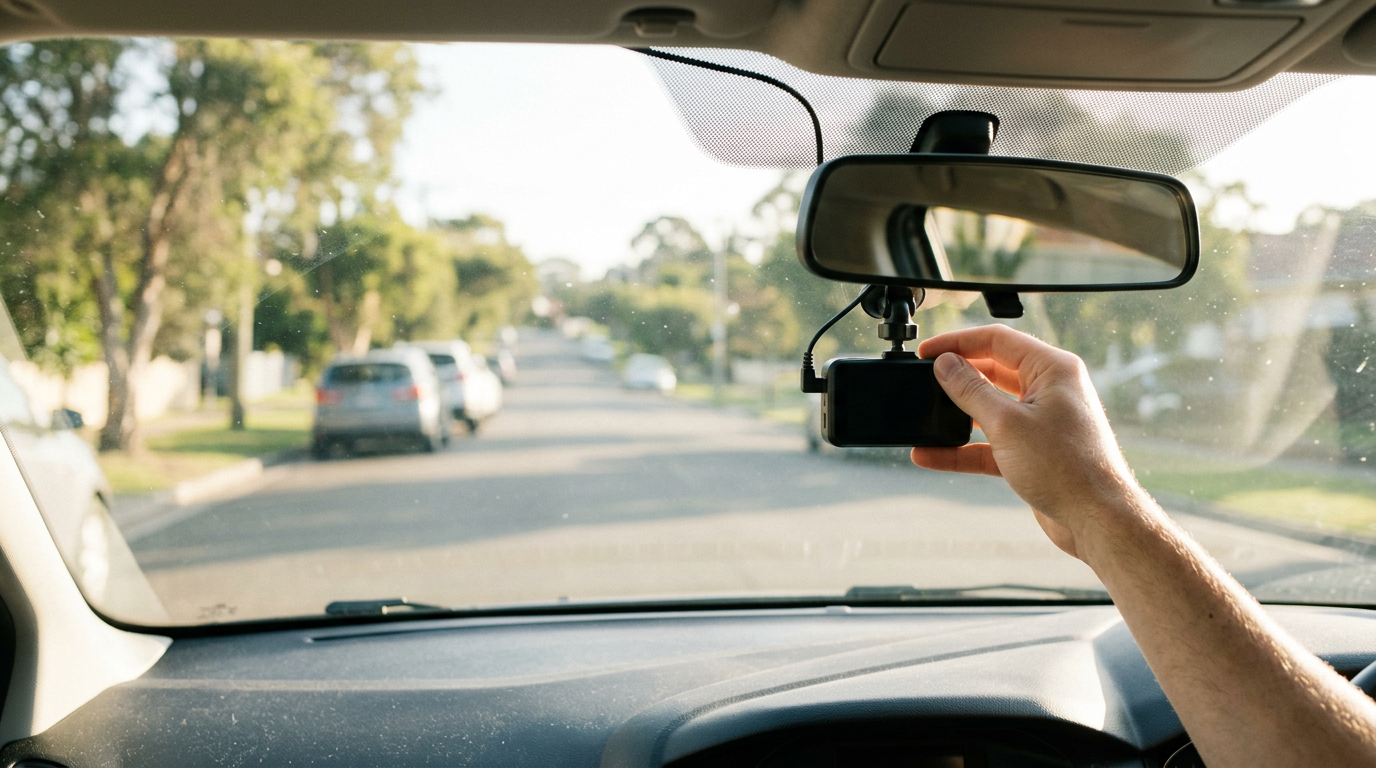
To choose the right front dash cam, evaluate video resolution, lens field of view, night performance, and storage capacity to ensure clear footage during any dispute. Match features like parking modes to your daily driving habits.
While many drivers pick a dashboard camera based solely on brand names, the actual performance depends on the internal image sensor and lens construction. A camera with subpar components can produce blurry, overexposed footage, rendering it useless when you need to show details like license plates to your insurance company.
Selecting the correct model requires translating complex technical specifications into real-world benefits. In this guide, we break down these specifications so you can find the perfect match on our list of the Best Front Dash Cams: Top Dashboard Cameras.
The quick version
- Determine your video resolution needs
- Select your preferred power source mechanism
- Evaluate the physical size and mounting
- Verify the camera storage card compatibility
- Compare additional connectivity options
Understanding Image Sensors and Resolution
Video clarity is the single most critical factor when selecting a forward-facing camera. Most budget options provide standard 1080p high definition, which may seem sufficient on a phone screen but often fails to capture distant details. Upgrading to a 2K (1440p) or 4K (2160p) resolution ensures that fine details remain sharp even when you zoom in on a recording.
Alongside resolution, you must consider the frame rate, measured in frames per second (FPS). A standard 30 FPS camera works well for slow-speed driving, but a camera that supports 60 FPS captures smoother footage at highway speeds. This higher frame rate reduces motion blur, making it easier to read license plates on passing vehicles.
To handle extreme lighting variations, look for cameras equipped with High Dynamic Range (HDR) or Wide Dynamic Range (WDR). These processing technologies balance the dark and bright areas of an image, preventing headlight glare or bright sunlight from washing out critical details on the road ahead.
Evaluating Field of View and Lens Materials
The field of view determines how much of the road your camera can see. While a wider angle captures more lanes, a lens that is too wide will create a fish-eye effect, distorting the edges and making distant objects appear much farther away than they actually are.
A viewing angle of 140 to 160 degrees represents the ideal middle ground for front-facing dashboard cameras. This range is wide enough to capture multiple lanes of traffic and sidewalks without severely distorting the image or sacrificing clarity in the center of the frame.
Lens materials also play a substantial role in durability and light transmission. Glass lenses are far superior to plastic alternatives because they resist scratching, handle extreme temperatures without warping, and allow more light to reach the internal image sensor. This direct light transmission significantly improves low-light performance.
 See the picks in our buying guide
Choosing Between Capacitors and Batteries
Dash cams must withstand extreme internal car temperatures, which can fluctuate wildly depending on the season. Older or cheaper cameras often rely on internal lithium-ion batteries, which are prone to swelling, leaking, or failing completely when exposed to intense summer heat or freezing winter nights.
Choose a dash cam powered by a supercapacitor rather than a traditional battery. Supercapacitors are much more heat-resistant and durable, ensuring the camera shuts down safely and saves the last recorded file when you turn off the vehicle ignition.
If you want to protect your vehicle while it is parked, you must consider how the camera receives power. Standard cigarette lighter adapters only supply power when the engine runs. To utilize parking mode features, you will need to hardwire the camera directly to your vehicle's fuse box, enabling continuous power while protecting the car battery from draining completely.
Selecting the Right MicroSD Card and Storage Limits
Dash cams write data continuously, rewriting over older files once the storage card fills up. This constant looping cycle puts immense stress on memory cards. Using a standard memory card designed for phones or cameras will often lead to premature failure and corrupted video files.
Look for cards rated as high endurance, which are specifically manufactured to withstand thousands of write-and-erase cycles. Most mid-range front cameras support cards up to 128GB or 256GB, which can store several hours of high-definition video before looping back to overwrite the oldest clips.
High-resolution video files, especially 4K recordings, consume storage space incredibly fast. If you select a 4K camera, prioritize a larger memory card to ensure you do not overwrite crucial footage before you have a chance to download or review it after an incident.
How to Choose Your Front Dash Cam in 5 Steps
Selecting the correct model does not have to be an overwhelming process. By following a structured approach, you can narrow down the massive array of options to find the specific unit that matches your vehicle, budget, and daily commute. Here is how to systematically evaluate your choices.
- Determine your video resolution needs. Opt for 1440p or 4K if you drive frequently at night or on high-speed highways.
- Select your preferred power source mechanism. Decide if you want a simple plug-and-play installation or a hardwired system for parking surveillance.
- Evaluate the physical size and mounting style. Choose a compact, adhesive-mount camera that fits discretely behind your rearview mirror.
- Verify the camera storage card compatibility. Ensure the model supports high-capacity, high-endurance MicroSD cards of at least 128GB.
- Compare additional connectivity options. Look for built-in Wi-Fi and mobile app integration to download clips directly to your phone.
Following these steps ensures you do not overpay for unnecessary features while securing the core capabilities required for reliable evidence. Once you have defined these requirements, browse our comprehensive list of the Best Front Dash Cams: Top Dashboard Cameras to find the top-performing hardware in each category.
Finding the Right Match for Your Driving Profile
The ideal dashboard camera depends heavily on how and when you use your car. If you are a daily commuter who primarily drives during daylight hours, a straightforward, plug-and-play 1080p or 2K camera with a suction mount offers an easy, cost-effective safety net without complex installation steps.
For night shift workers or highway commuters, investing in a premium 4K camera with advanced HDR capabilities and a supercapacitor is highly recommended. The enhanced resolution and superior light processing are essential for capturing high-speed details in poor lighting conditions.
If you frequently park on busy city streets or share your vehicle, select a hardwired model featuring a low-draw parking mode and a built-in sensor. This sensor detects physical impacts when the car is stationary and automatically saves the recording, protecting your vehicle against hit-and-run incidents.
Frequently asked
Sources
As an Amazon Associate I earn from qualifying purchases. This does not affect the price you pay. Affiliate disclosure