
How to Choose the Right Portable Power Station for Your Needs
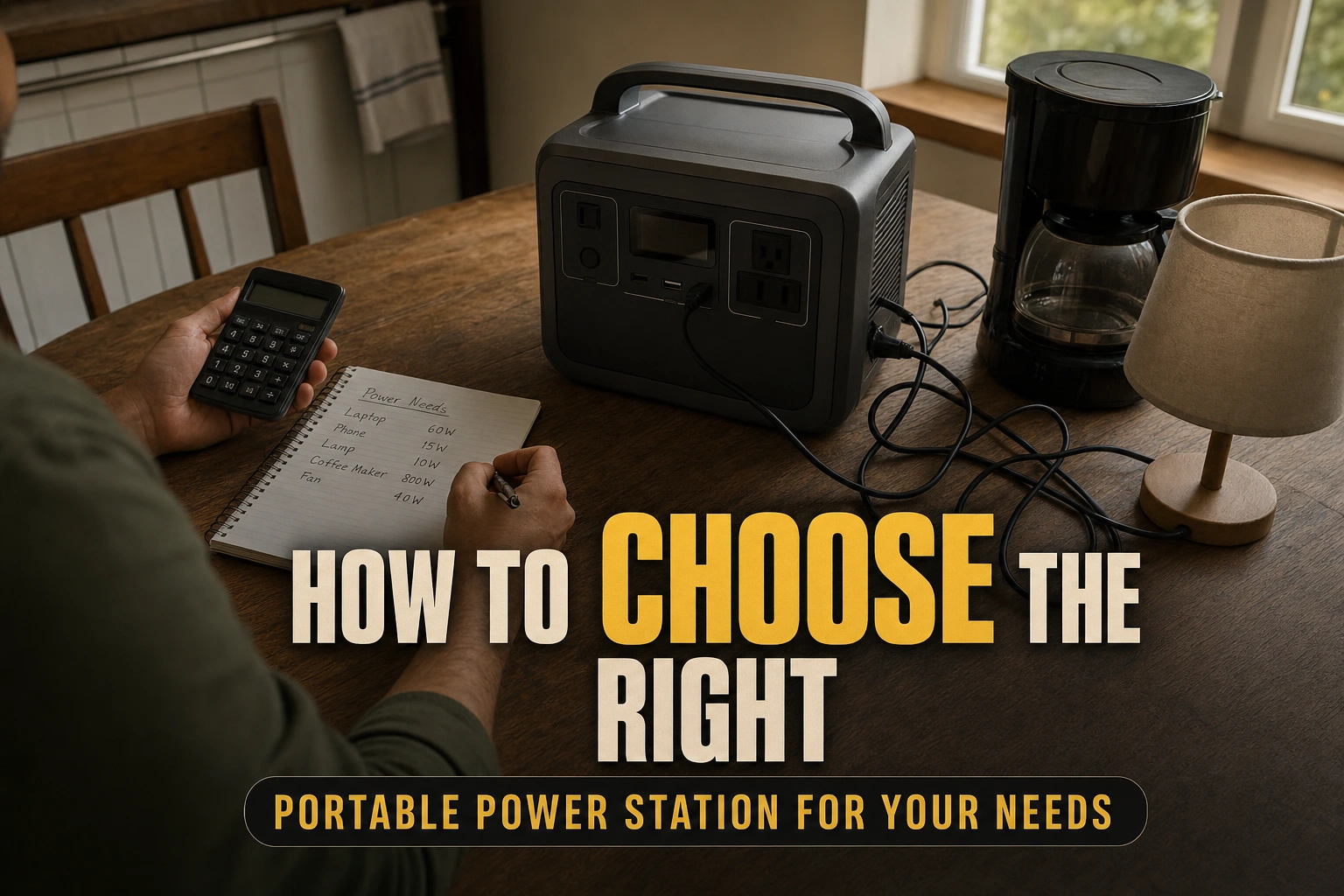
To choose the right portable power station, match its capacity in watt-hours and continuous output in watts to the specific appliances you plan to run.
This article is informational and does not place shopping buttons in the story. Related buying guides may include affiliate links.
As an Amazon Associate I earn from qualifying purchases. This does not affect the price you pay. Affiliate disclosure
On this page8 sections
The short answer
- Determine total power needs by multiplying appliance wattage by the hours you need them to run.
- Choose LiFePO4 batteries for long-term daily durability, or Li-ion batteries for lightweight weekend travel.
- Ensure the station's continuous AC output exceeds the startup surge wattage of your largest appliances.

To choose the right portable power station, you must calculate your total wattage needs, match them to the station's capacity, and select the correct battery chemistry. Focus on matching peak power demands to the unit's output limits.
Finding the correct model prevents you from carrying unnecessary weight during outdoor trips or running out of emergency electricity during a black-out. The market is filled with options ranging from pocket-sized chargers to massive rolling home backups.
Navigating terms like surge capacity, expansion ports, and solar input rates can feel overwhelming. This guide breaks down the core technical specifications so you can confidently select the perfect option from our curated list of the best portable power stations.
The quick version
- Identify your essential appliances
- Locate the wattage label on each
- Multiply the watts by hours of
- Add the total watt-hours together
- Add a twenty percent safety buffer
Understanding the Numbers: Capacity vs. Output
Many buyers confuse battery storage size with the power a station can deliver at any single moment. Battery storage capacity is measured in watt-hours (Wh), which represents the total amount of energy stored inside the unit. Think of this metric as the size of a fuel tank, determining how long your devices can run.
Continuous output, measured in watts (W), dictates the maximum size of the appliance you can plug in. If your station has high capacity but low continuous output, you cannot run demanding appliances like coffee makers or portable heaters. Always check both numbers before buying to ensure they align with your intended use.
Additionally, look closely at the peak or surge wattage of the power station. Electrical appliances with motors, such as mini-fridges or power tools, require a brief burst of extra electricity to start up. If the station cannot handle this momentary surge, it will shut down to protect its internal circuitry.
Step-by-Step: How to Calculate Your Power Needs
Before shopping, you need to calculate exactly how much power your essential devices will consume. Doing this exercise prevents you from overpaying for a massive battery that is too heavy to carry, or choosing an underpowered unit that fails during emergencies.
- Identify your essential appliances. List every device you plan to run during a power outage or camping trip.
- Locate the wattage label on each device. Look for the rating plate on the back or bottom of your appliances to find their power draw.
- Multiply the watts by hours of use. Multiply each device's wattage by the number of hours you expect to run it daily.
- Add the total watt-hours together. Combine all the calculated watt-hour figures to find your minimum daily power requirement.
- Add a twenty percent safety buffer. Multiply your total by 1.2 to account for natural energy loss during power conversion.
Once you have this final number, you can cross-reference it against the specifications of various models. If you plan to recharge your laptop five times and run a portable cooler, you will need a medium-sized unit. For heavier demands, larger home integration systems are necessary.
 See the picks in our buying guide
Battery Chemistry: LiFePO4 vs. Lithium-Ion
The internal battery chemistry directly impacts how long the power station will last over its lifetime. Most modern portable power stations use either lithium iron phosphate (LiFePO4) or traditional lithium-ion (NMC) cells. Understanding the difference between these chemistries is crucial for long-term satisfaction.
LiFePO4 batteries are renowned for their exceptional lifecycle ratings, often surviving thousands of charge cycles before losing capacity. They are chemically stable, highly durable, and run cooler during heavy usage, making them ideal for frequent users. However, they tend to be heavier and bulkier than their counterparts.
Choosing the right battery chemistry ensures your power station lasts for years of reliable outdoor adventures.
Lithium-ion (NMC) batteries are much lighter and more compact, which makes them highly portable for backpacking or casual camping. The downside is that they typically have a shorter overall lifespan, supporting fewer charge cycles before their capacity begins to degrade. Choose this option if weight is your absolute primary concern.
Port Selection and Inverter Types
The physical ports on a portable power station dictate how many devices you can charge simultaneously without adapters. Look for a healthy mix of standard AC wall outlets, USB-A ports, high-speed USB-C ports, and 12-volt car outlets. Having multiple USB-C ports with high power delivery is vital for charging modern laptops directly.
Beyond the physical ports, the type of built-in inverter is critical for protecting sensitive electronics. Ensure the station uses a pure sine wave inverter rather than a modified sine wave inverter. Pure sine wave inverters produce clean electricity that matches the utility power coming from your home wall outlets.
Sensitive microprocessors found in laptops, smartphones, and medical equipment like CPAP machines can suffer damage when run on modified sine waves. According to manufacturers, clean power protects your valuable electronics from unexpected shutdowns and excessive heat buildup in sensitive devices. Checking this detail protects your valuable electronics from long-term damage.
Portability, Charging Speeds, and Solar Inputs
How you transport and recharge your power station will heavily influence how often you actually use it. A heavy station without wheels can become a burden during simple camping trips, while a small unit might not offer enough ports. Weighing these practical factors helps you find the right balance between utility and convenience.
Indeed, recharge speed is another critical specification, especially when preparing for incoming storms or moving between campsites. Some modern units can charge from empty to eighty percent in under two hours using standard wall outlets. Check if the unit supports dual charging, which combines wall power and solar power for faster replenishment.
If you plan to live off the grid, examine the solar input specifications of the station. Ensure the maximum solar input wattage aligns with the panels you plan to buy. High-input rates allow you to recharge your battery fully in a sunny day, ensuring continuous power access.
Which One Should You Pick?
Your final decision comes down to your primary use case and how often you will transport the unit. If you need reliable backup power for essential home appliances during blackouts, prioritising a high-capacity LiFePO4 station with expandable battery ports is your best option. These units are heavy but deliver peace of mind.
For casual camping, tailgating, or weekend road trips, a lightweight lithium-ion power station is usually the most practical option. Look for a unit weighing under twenty pounds (approx. 9 kg) that offers enough AC outlets for your gear. This ensures easy portability without sacrificing the capacity needed to keep devices charged.
For those seeking the ultimate balance of longevity and portability, explore our comprehensive selection of the best portable power stations. Comparing highly-rated models side-by-side helps you identify which features fit your budget and physical capability. Invest in quality components that match your specific power calculation.
Frequently asked
As an Amazon Associate I earn from qualifying purchases. This does not affect the price you pay. Affiliate disclosure