
How to Choose the Right Robot Vacuum for Your Home
To choose the right robot vacuum, you must match navigation types, suction power, and maintenance needs to your specific home layout.
This article is informational and does not place shopping buttons in the story. Related buying guides may include affiliate links.
As an Amazon Associate I earn from qualifying purchases. This does not affect the price you pay. Affiliate disclosure
On this page10 sections
- 1The short answer
- 2Assess Your Flooring Types and Home Layout
- 3Understand the Different Navigation Systems
- 4Decide on Docking and Maintenance Features
- 5Step-by-Step Guide to Selecting Your Model
- 6Compare Suction Power and Brush Roll Designs
- 7Which Robot Vacuum Setup Should You Pick?
- 8Evaluating Battery Life and Smart Home Integration
- 9Frequently asked
- 10Sources
The short answer
- Assess your home's floor types to choose between gentle hardwood rollers and deep-cleaning carpet brushes.
- Select LiDAR navigation if you want fast, efficient cleaning that works in dark rooms.
- Invest in a self-emptying dock to drastically reduce manual dustbin maintenance and filter cleanings.
To choose the right robot vacuum, you must evaluate your home's flooring types, layout complexity, and your tolerance for daily maintenance. Matching these personal factors to specific navigation sensors, brush styles, and dock capabilities ensures you select a model that runs efficiently.
Many homeowners make the mistake of buying based on raw suction specs alone, only to find the machine gets stuck on rugs or requires constant emptying. By understanding how different navigation systems, brush rolls, and self-emptying docks function, you can select an automated helper that truly fits your lifestyle.
Whether you are looking to manage heavy pet hair on carpets or simply want to keep hard floors free of dust, modern smart vacuums offer a wide array of specialized features. Finding the sweet spot between convenience and cost will help you pick a machine that makes manual vacuuming a thing of the past.
The quick version
- Measure your lowest furniture clearance
- Count the transitions in your house
- Inventory your flooring types
- Assess your pet hair situation
- Identify your preferred control method
Assess Your Flooring Types and Home Layout
To find the ideal automated cleaner, you must evaluate your flooring types and layout. Bare hardwood floors require soft roller brushes and gentle suction to avoid scratching, while thick carpets demand deep-cleaning brushes and heavy-duty extraction. If your home has a mix of both, you need a smart machine that can automatically adjust its airflow depending on the surface it detects underneath its wheels.
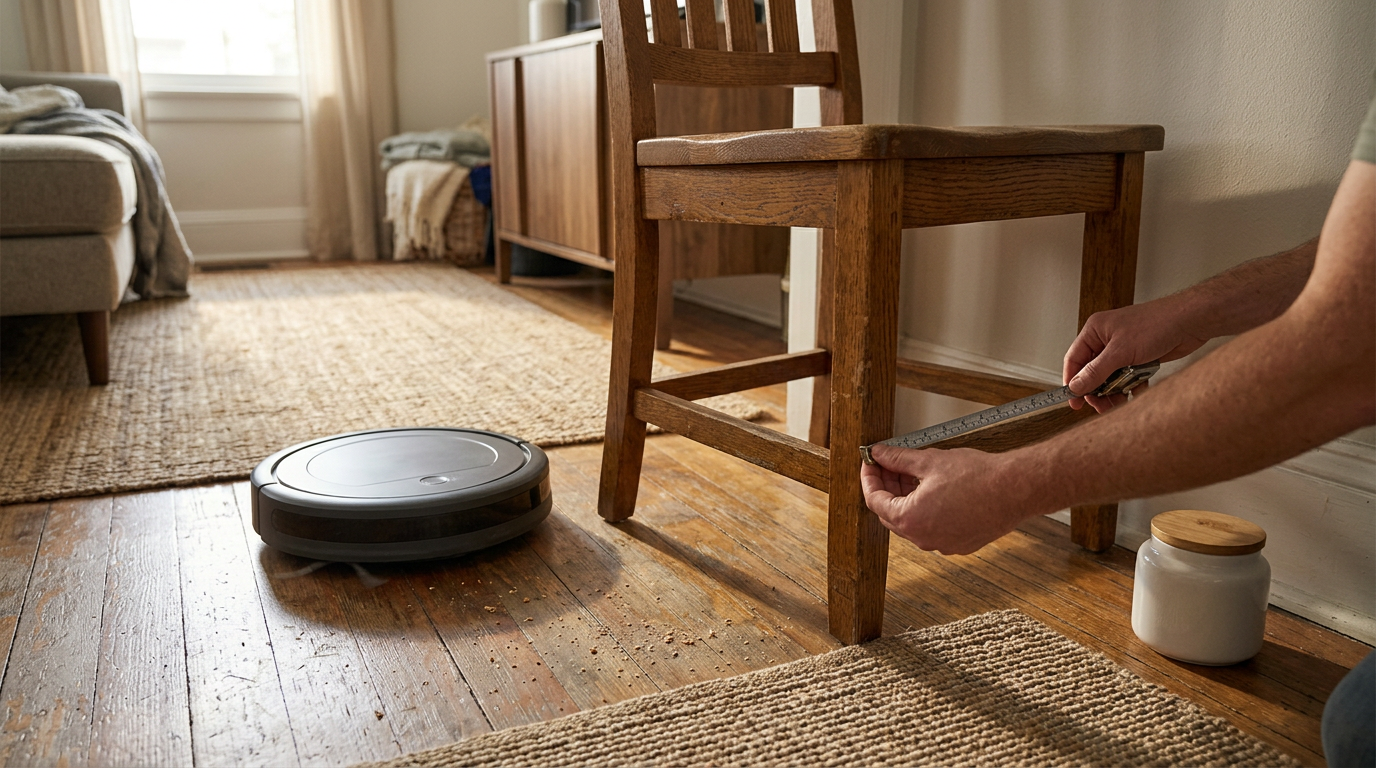
Physical barriers like high thresholds between rooms can trap some low-profile machines. A robot vacuum must have sturdy, spring-loaded wheels to climb over transitions up to 0.75 inches [1.9 cm] high. Homes with tight corners, low furniture clearance, and complex layouts require a slimmer chassis to avoid getting wedged under couches or dining chairs.
According to Dyson, these autonomous machines rely on specialized sensors and real-time inputs to continuously evaluate their surroundings (https://www.dyson.com/discover/news/latest/what-is-a-robot-vacuum-cleaner-how-it-works-navigates-cleans). Understanding how your home layout matches these onboard capabilities is the first step toward hands-free cleaning. If your layout is cluttered, basic navigation models will struggle.
Understand the Different Navigation Systems
The way a robot finds its path changes how fast and thoroughly it cleans. Early models used basic infrared sensors to bounce off walls in random directions, a method that takes a long time and often misses spots. Modern mid-range and premium vacuums use advanced mapping technologies to create an efficient cleaning grid.
To choose a navigation system, you should understand the primary sensor types. One common high-end technology is LiDAR, which uses a spinning laser on top of the vacuum to map the walls and furniture in seconds, allowing the robot to clean in neat, parallel lines even in total darkness. Another popular system is VSLAM, which uses a small optical camera to map the ceiling and walls to orient itself.
According to Wikipedia, many modern robotic vacuums also use smart scheduling and custom maps to target specific rooms on demand (https://en.wikipedia.org/wiki/Robotic_vacuum_cleaner). Choosing between laser and optical camera mapping changes how well the robot works at night, as camera-based systems generally require overhead lights to navigate, while laser systems do not.
 See the picks in our buying guide
Decide on Docking and Maintenance Features
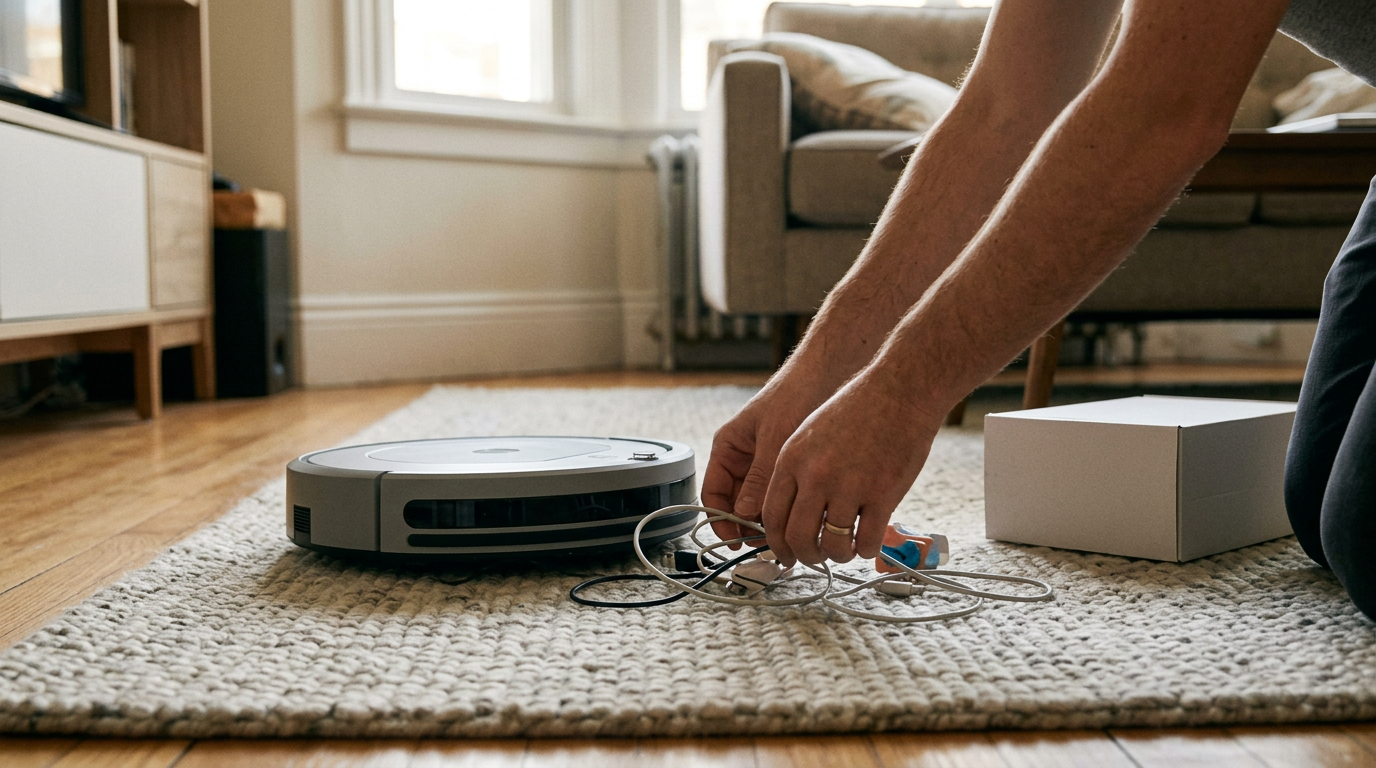
A major factor that changes your daily experience is the type of docking station. Standard docks only recharge the battery, meaning you must manually empty the tiny onboard dustbin after every single cleaning cycle. If you forget, the robot will fill up and simply drag dust around without picking anything up.
Opting for a self-emptying base station solves this issue by pulling debris from the robot into a much larger disposable bag inside the base. This drastically reduces your maintenance chores, limiting your interaction to changing a bag once every few weeks. This feature is especially helpful for pet owners who deal with massive amounts of fur daily.
According to Eufy, modern robot vacuums have evolved beyond simple dry sweeping to include advanced mopping modules that wash and dry themselves at the base station (https://www.eufy.com/blogs/robovac/how-do-robot-vacuums-work). These dual-purpose machines are highly convenient but require a larger footprint in your home to accommodate the clean and dirty water tanks.
Step-by-Step Guide to Selecting Your Model
To match the machine to your home without overspending, it helps to follow a structured evaluation process. By taking specific measurements and identifying your home's unique obstacles, you can filter out models that are ill-suited for your living space.
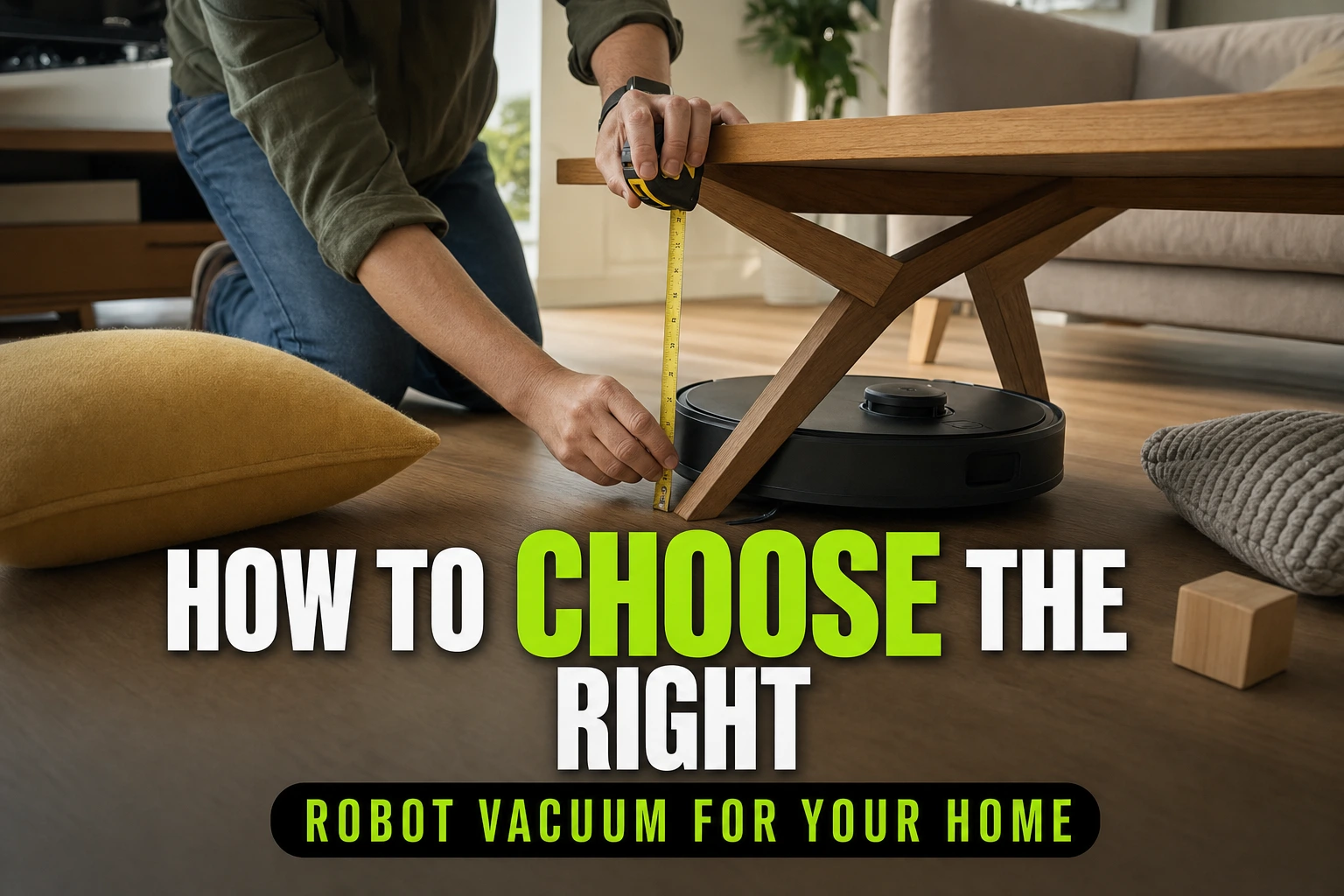
- Measure your lowest furniture clearance. Ensure the robot's physical height is thin enough to glide under low-hanging couches and beds.
- Count the transitions in your house. Check if your doorways have high thresholds that exceed the climbing limit of basic vacuums.
- Inventory your flooring types. Map out the exact ratio of thick carpets, low-pile rugs, and hard surfaces in your home.
- Assess your pet hair situation. Look for silicone roller brushes that resist long hair tangles if you have shedding pets.
- Identify your preferred control method. Choose between simple physical buttons, smartphone apps, or integrated voice-assistant controls.
According to Home Vacuum Zone, evaluating these home characteristics before purchasing prevents the common frustration of a robot getting stuck constantly (https://homevacuumzone.com/how-do-robot-vacuums-work/). Taking these steps ensures the unit you choose can actually run unattended.
Compare Suction Power and Brush Roll Designs
Suction power is measured in Pascals, often abbreviated as Pa. While manufacturers frequently advertise massive suction numbers, high suction alone does not guarantee clean carpets. The design of the main brush roll underneath plays an equally critical role in agitating carpet fibers to release embedded dirt.
Bristle brushes are effective at sweeping up fine dust on hard floors, but they are notorious for catching long pet hair, which wraps tightly around the cylinder and requires manual cutting. All-silicone rollers use flexible paddles to scoop up hair and direct it into the intake path, drastically reducing maintenance headaches.
Research published by TheTestedHub explains that the cleaning process combines sensing the room, mapping a path, and physically lifting dirt off the surface (https://thetestedhub.com/articles/how-do-robot-vacuums-work/). If the physical extraction system is weak or clogged with tangled hair, even the smartest navigation system in the world will leave your floors dirty.
Which Robot Vacuum Setup Should You Pick?
For compact apartments with mostly hard floors and minimal clutter, a budget-friendly vacuum with basic optical navigation and a simple charging dock is often more than enough. You will need to empty the bin manually, but the small layout means the robot can complete its cycle without running out of battery or getting lost.
If you live in a larger multi-story home with thick carpets and pets, you should invest in a model with LiDAR mapping and an auto-empty station. To see the top-performing models that handle these demanding environments, explore our guide to the best robot vacuums.
For those who want a completely hands-off experience across mixed floors, a high-end hybrid vacuum-mop combo is the way to go. These systems automatically lift their mopping pads when they detect carpet and wash themselves at the dock, though they do require regular water refills and larger storage spaces.
Evaluating Battery Life and Smart Home Integration
Battery capacity determines how much square footage your robot can clean in a single run. Large homes require a battery that can run for at least two hours without needing to recharge. If the battery runs low mid-cycle, premium models will use a feature called recharge and resume to head back to the dock and finish the job later.
Smart home connectivity allows you to integrate the vacuum with your voice assistants or home automation hubs. This lets you trigger a cleaning cycle with a simple voice command as you walk out the door, or schedule the vacuum to run only when your security system detects that you have left the house.
According to WitsEngineer, a robust companion app is essential for setting virtual boundary walls, designating no-go zones around fragile items, and customizing cleaning schedules (https://www.witsengineer.com/what-is-a-robot-vacuum/). Without a stable and intuitive app interface, managing these advanced smart features becomes highly frustrating and limits the robot's overall utility.
Frequently asked
Sources
As an Amazon Associate I earn from qualifying purchases. This does not affect the price you pay. Affiliate disclosure