
How to Clean and Protect Your Luggage
Learn how to safely wash, sanitize, and shield your hardside and softside travel bags to ensure they last for years.
This article is informational and does not place shopping buttons in the story. Related buying guides may include affiliate links.
As an Amazon Associate I earn from qualifying purchases. This does not affect the price you pay. Affiliate disclosure
On this page9 sections
- 1The short answer
- 2Identifying Your Luggage Materials Before Cleaning
- 3Step-by-Step Guide to Cleaning Hardside Luggage
- 4How to Wash and Deep Clean Fabric Suitcases
- 5Sanitizing and Deodorizing the Interior Lining
- 6Protecting and Storing Your Travel Gear
- 7Softside vs Hardside Maintenance
- 8Frequently asked
- 9Sources
The short answer
- Use mild dish soap and warm water on hardside shells to avoid scratching the finish.
- Vacuum interior compartments after every trip to remove debris and prevent fabric odors.
- Apply protective sprays to fabric bags to maintain water resistance and repel stains.
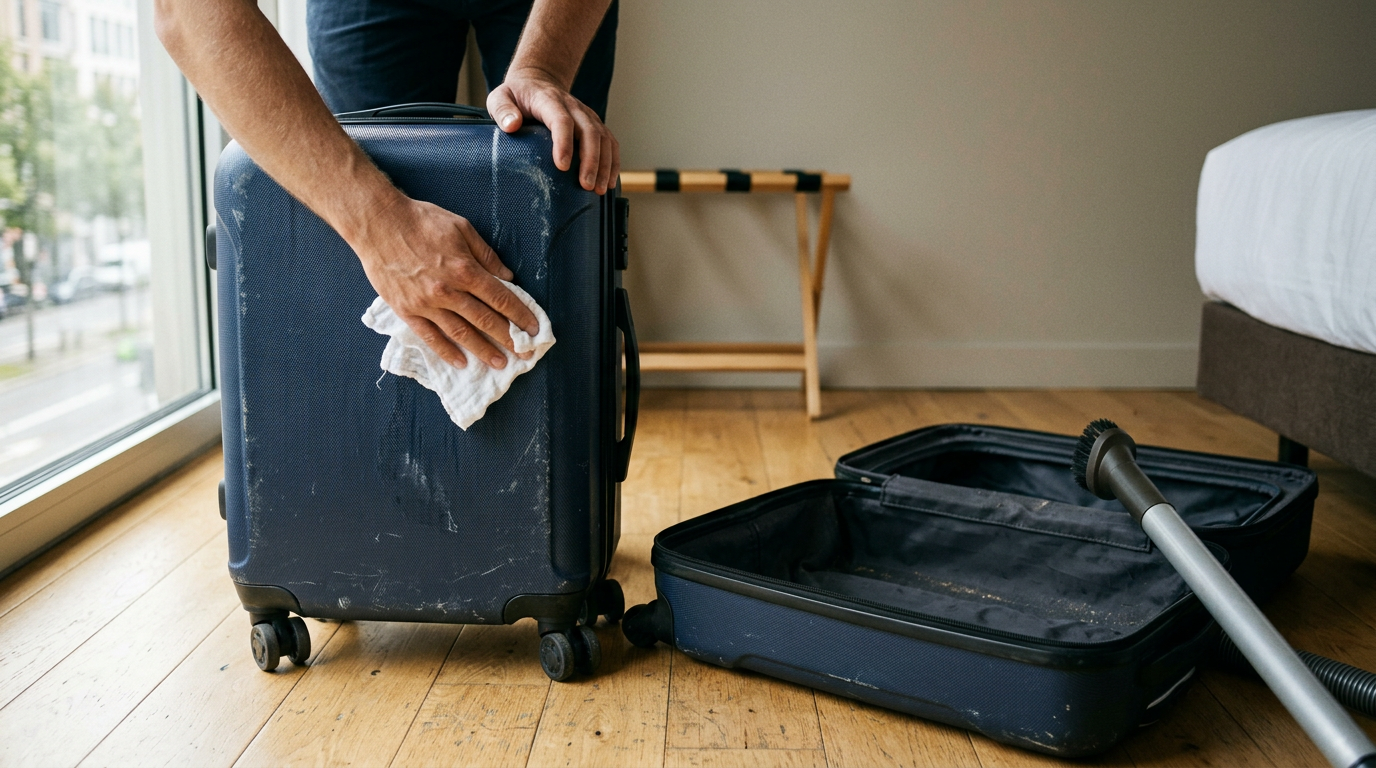
To clean and protect your carry, wipe down the exterior with mild soap and warm water, vacuum out the interior lining, and apply material-specific protectants. This simple routine removes stubborn stains, eliminates bacteria, and prevents long-term wear on your investment.
Every journey subjects your travel gear to harsh environments, from dirty airport conveyor belts to dusty cargo holds. Over time, road grime, pollen, and bacteria accumulate on your luggage, which can compromise the integrity of the zippers, wheels, and fabrics. Regular maintenance ensures your gear remains sanitary and functional for your next adventure.
Taking care of your bags requires understanding the specific needs of different materials. Using the wrong scrubbing brush or detergent can permanently scratch a glossy shell or strip away the specialized water-repellent coatings on fabric bags. By establishing a post-trip cleaning routine, you keep your bags looking sharp and performing reliably.
The quick version
- Empty all compartments
- Vacuum the interior lining
- Wipe the outer shell down
- Remove stubborn scuff marks
- Clean the wheels and handles
- Dry the suitcase completely
Identifying Your Luggage Materials Before Cleaning
Before applying any cleaning solutions to your bag, you must identify its primary construction materials. Hardside suitcases are typically made of materials like polycarbonate, ABS plastic, aluminum, or polypropylene. Each of these hard plastics responds differently to solvents, and using abrasive scrubbers can ruin their sleek outer shells. According to major manufacturers like Samsonite, gentle treatment is always the safest path to avoid clouding the plastic surfaces.
Softside bags, on the other hand, are constructed from dense woven fabrics such as polyester or heavy-duty ballistic nylon. These materials are highly durable but can trap dirt, pollen, and liquid spills within their fibers. Fabric bags often feature a durable water repellent coating that can be stripped away if you wash them with harsh detergents or hot water.
Understanding these distinctions helps you select the correct cleaning tools and avoid costly mistakes. For instance, if you are looking to upgrade your travel gear, choosing between fabric and hard materials is a key consideration when browsing the Best Carry-On Luggage Spinner Options for 2026. Knowing how much effort you want to put into long-term maintenance will guide your purchase.
Step-by-Step Guide to Cleaning Hardside Luggage
Hardside suitcases are prone to scuffs and dirt transfer from airport handling equipment, but they are generally easier to wipe down than fabric bags. Follow these steps to restore your hard shell suitcase to its original appearance without damaging its outer coating.
- Empty all compartments. Remove all luggage tags, loose trash, and personal items before beginning the cleaning process.
- Vacuum the interior lining. Use a brush attachment to remove dust, crumbs, and lint from every pocket and corner.
- Wipe the outer shell down. Mix a few drops of mild dish soap into a bucket of warm water and use a soft microfiber cloth to wash the exterior surfaces.
- Remove stubborn scuff marks. Use a damp eraser sponge with very light pressure to lift scuffs away from plastic surfaces without scratching them.
- Clean the wheels and handles. Wipe down the telescoping handle with disinfectant wipes and clear hair or dirt from the spinner wheel axles.
- Dry the suitcase completely. Leave the suitcase open in a well-ventilated room out of direct sunlight for at least twenty-four hours before storing it.
Regularly executing this quick process will maintain the luster of your hard shell bag. Over time, taking care of small scuffs prevents them from setting permanently into the plastic pores.
 See the picks in our buying guide
How to Wash and Deep Clean Fabric Suitcases
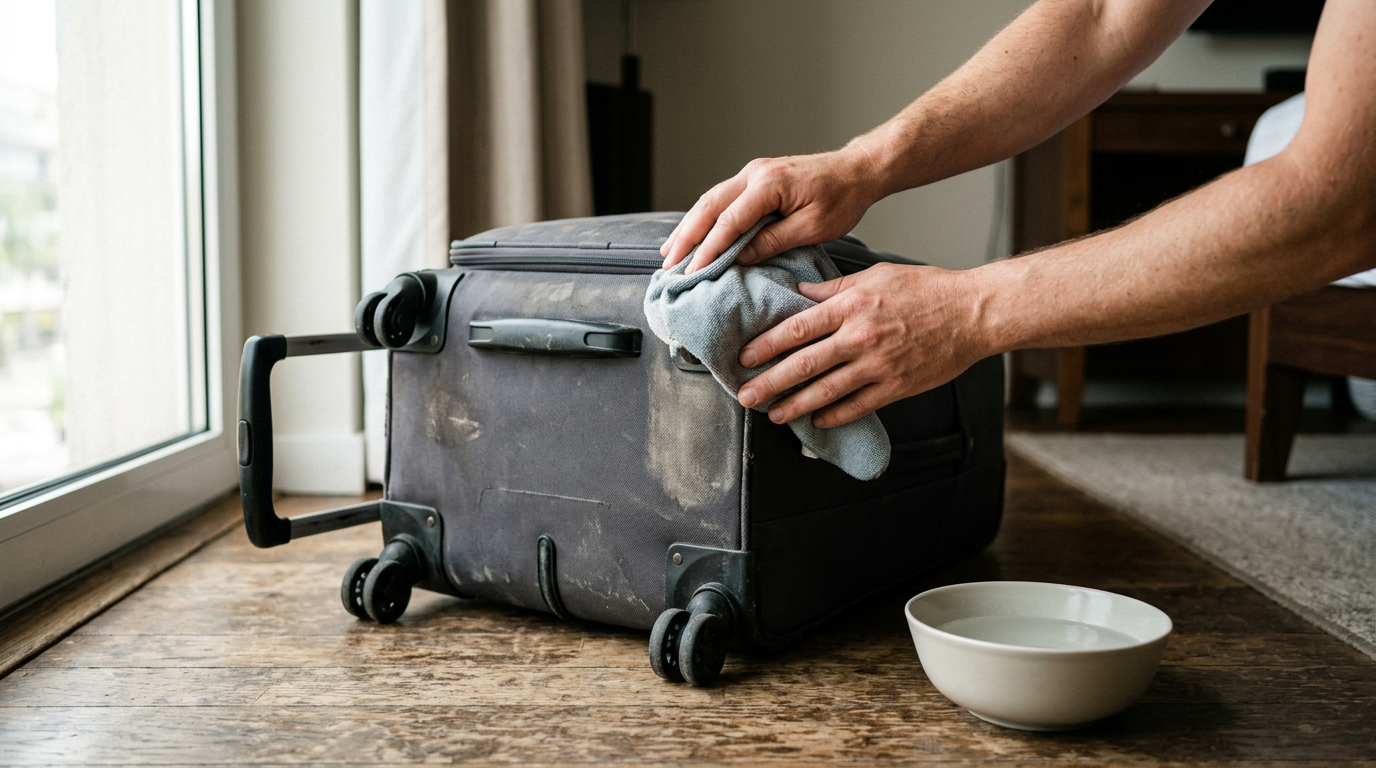
Fabric suitcases require a slightly different approach because dirt penetrates deep into the weave. To clean fabric suitcases, use a specialized upholstery shampoo or a highly diluted mixture of laundry detergent and warm water. Avoid soaking the fabric entirely, as excessive water can seep into the interior backing, leading to structural damage or mold growth.
Begin by brushing away loose dirt with a soft-bristled brush, which prepares the fabric for wet cleaning. Use a microfiber cloth dipped in your soapy solution to gently rub stained areas in circular motions. Be careful not to scrub too vigorously, which can cause the fabric fibers to pill or fray over time.
Once you have treated the stains, wipe the fabric down with a clean towel dampened with plain water to rinse away any soap residue. Leaving dried soap on the fabric can attract more dirt during your next trip. If you are shopping for a durable fabric option, review the Best Carry-On Luggage Spinner Options for 2026 to find bags designed with stain-resistant coatings.
Sanitizing and Deodorizing the Interior Lining
The interior of your luggage can harbor bacteria and unpleasant odors from dirty laundry, shoes, or toiletries. Sanitizing these areas is crucial, but you must avoid saturating the interior lining, which is often glued to the suitcase frame. According to brands like Briggs & Riley, excessive moisture can dissolve these adhesives, causing the fabric lining to peel away.
To sanitize safely, spray a fabric-safe disinfectant light mist over the lining, or wipe the surfaces down using gentle disinfecting wipes. Look for alcohol-free sanitizing sprays to protect the synthetic fibers of the interior pockets. Always avoid soaking the interior lining of your bag, as excess moisture can permanently dissolve the manufacturing glue.
Never place your suitcase in a washing machine or submerge it in a bathtub. The mechanical action of a washing machine can warp the internal frame, destroy the zippers, and permanently ruin the wheels. Hand cleaning is the only way to preserve the structural integrity of your carry.
Protecting and Storing Your Travel Gear
Protecting your suitcase between trips is just as important as cleaning it after a long journey. To protect your carry from physical damage and moisture, store it in a breathable fabric dust cover in a temperature-controlled environment. Avoid storing suitcases in damp basements or hot attics, where humidity can rot the fabric fibers and crack the plastic components.
You can also apply an aftermarket water and stain repellent spray to fabric luggage to bolster its defenses. Ensure the product is rated for nylon or polyester before application, and spray it outdoors in a well-ventilated space. For hardside luggage, applying a thin coat of specialized silicone-based wax can help repel dirt and prevent scuff marks during handling.
Keep your zippers running smoothly by applying a small amount of beeswax or zipper lubricant along the teeth once a year. This prevents the zipper sliders from snagging or breaking when your bag is packed to its maximum capacity. Taking these small preventative steps will keep your spinner bags rolling smoothly for years to come.
"Taking care of your luggage is an investment in your travels, ensuring your gear remains a reliable companion rather than a source of stress on the road."
Softside vs Hardside Maintenance
Deciding which type of luggage is right for you often comes down to how much effort you want to invest in cleaning. Different materials require different levels of care and offer distinct advantages.
- Cleaning Effort: Softside bags require more time to dry and can hold onto deep stains, whereas hardside luggage can be wiped clean in minutes.
- Scuff Resistance: Softside nylon hides scratches and scuffs exceptionally well, while hardside shells are prone to visible scraping and surface marks.
- Water Protection: Hardside suitcases naturally deflect water during heavy downpours, but softside bags require protective chemical coatings to repel moisture.
- Odor Retention: Fabric interiors and exteriors of softside luggage absorb environmental smells more easily, needing regular deodorizing treatments.
When choosing your next bag, think about your cleaning habits. If you want a quick wipe-and-go experience, check out the hardside options in the Best Carry-On Luggage Spinner Options for 2026. If you prefer a bag that hides wear and tear without constant polishing, a high-quality softside option may be your ideal travel companion.
Frequently asked
Sources

As an Amazon Associate I earn from qualifying purchases. This does not affect the price you pay. Affiliate disclosure