
Clean and Protect Backpacks for Boys and Girls
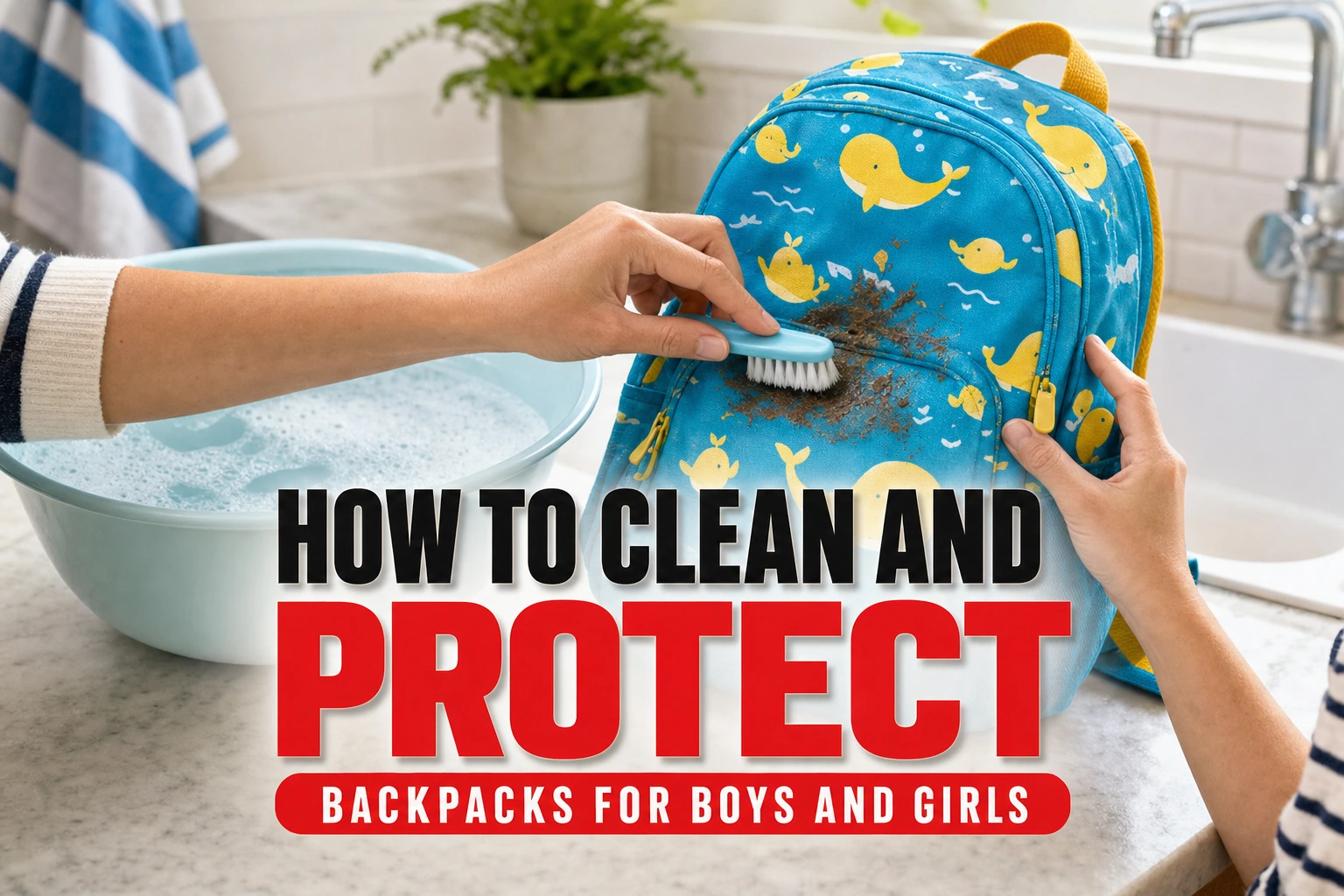
Clean a child’s backpack according to its care label, using mild soap and a damp cloth or gentle hand-wash, then air-dry it fully before applying a compatible fabric protector.
This article is informational and does not place shopping buttons in the story. Related buying guides may include affiliate links.
As an Amazon Associate I earn from qualifying purchases. This does not affect the price you pay. Affiliate disclosure
On this page9 sections
- 1The short answer
- 2How to Clean Backpacks for Boys and Girls Safely
- 3Step-by-Step Hand-Washing Method
- 4Spot-Cleaning Stains, Spills, and Odours
- 5Machine Washing and Drying: Check the Label
- 6How to Protect a Kids’ Backpack After Cleaning
- 7Weekly Maintenance and Storage
- 8Choosing an Easier-to-Clean Backpack
- 9Frequently asked
The short answer
- Hand-wash with mild soap to protect internal coatings and prevent frayed seams.
- Air-dry the backpack completely in a shaded area; never use a high-heat clothes dryer.
- Apply fabric protector spray after drying to guard against future liquid spills and stubborn dirt.
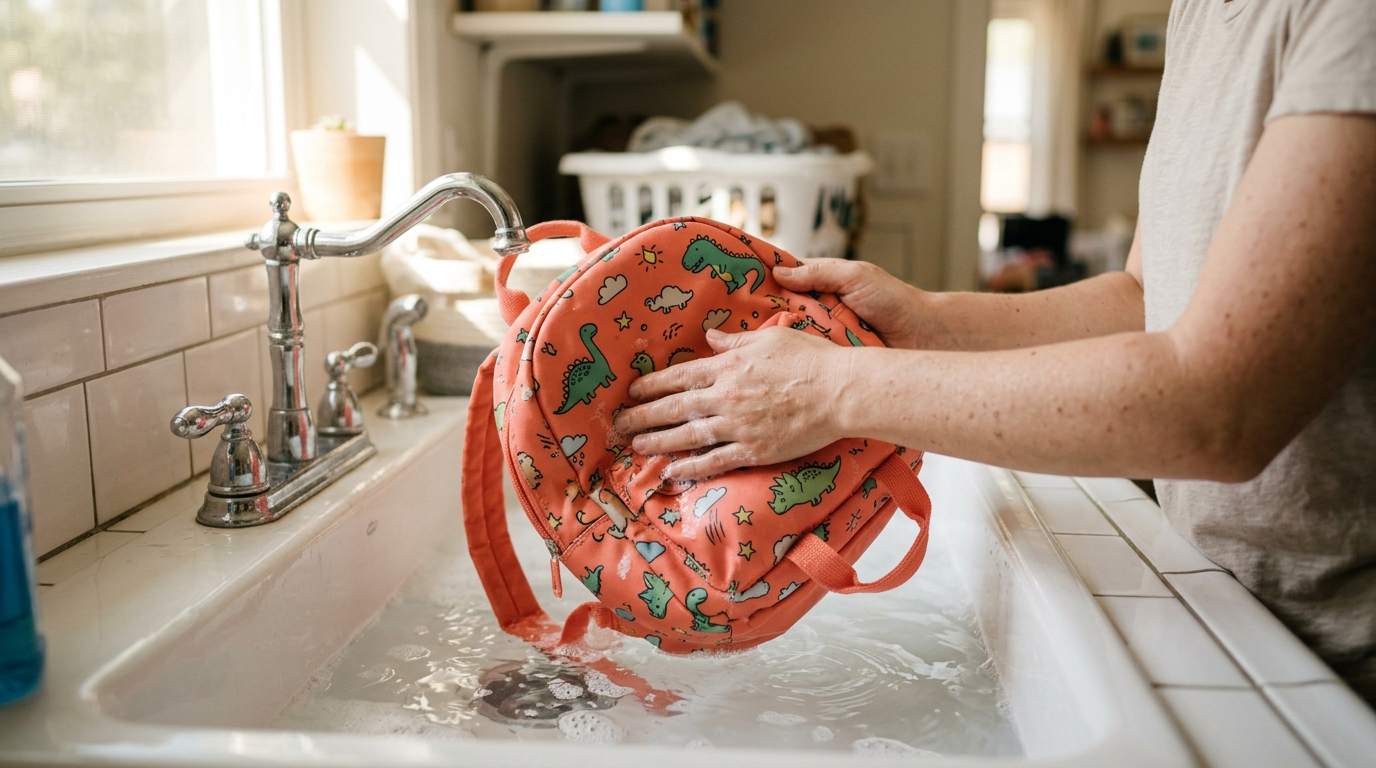
To clean and protect backpacks for boys and girls, empty every pocket, check the care label, remove loose dirt, and use mild soap with lukewarm water. Spot-clean or hand-wash only as directed, rinse away residue, and air-dry completely with the pockets open. Apply a compatible fabric protector only if the manufacturer permits it.
Kids' school bags face a daily onslaught of mud, spilled drinks, crushed crayons, and outdoor grime. A careful cleaning routine can remove this dirt without unnecessarily stressing seams, coatings, mesh pockets, or plastic hardware. The right method depends on the backpack’s fabric, construction, decorations, and care instructions.
Machine washing is suitable only when the care label explicitly allows it. Structured bags and designs with leather trim, patches, rigid panels, or electronic components may require spot cleaning instead. If the current bag is difficult to maintain or already damaged, our guide to the best backpacks for boys and girls explains what to consider in a replacement.
The quick version
- Empty all compartments fully
- Remove loose debris
- Pre-treat visible marks
- Wash carefully
- Rinse thoroughly
- Blot excess water
How to Clean Backpacks for Boys and Girls Safely
Start by locating and reading the care label inside the backpack. It takes priority over general cleaning advice because materials, dyes, coatings, adhesives, and internal supports vary between bags. A label may permit machine washing, recommend hand-washing, or specify spot cleaning only. Follow any stated temperature, detergent, and drying instructions.
Empty every compartment, including pencil slots and small zipped pockets. Turn the bag upside down and shake out crumbs outdoors, then use a vacuum’s crevice attachment gently on seams and corners if needed. Remove detachable accessories and wash them separately according to their own instructions. Before using soap, test a small amount of diluted cleaner on a hidden area and let it dry. Stop if the colour transfers, fades, or changes.
Most everyday synthetic school bags are made from polyester or nylon, sometimes with an internal polyurethane coating for water resistance. Decorative patches, printed graphics, leather trim, reflective details, and electronic parts can require different treatment. Do not soak a backpack unless its care label allows immersion.
Step-by-Step Hand-Washing Method
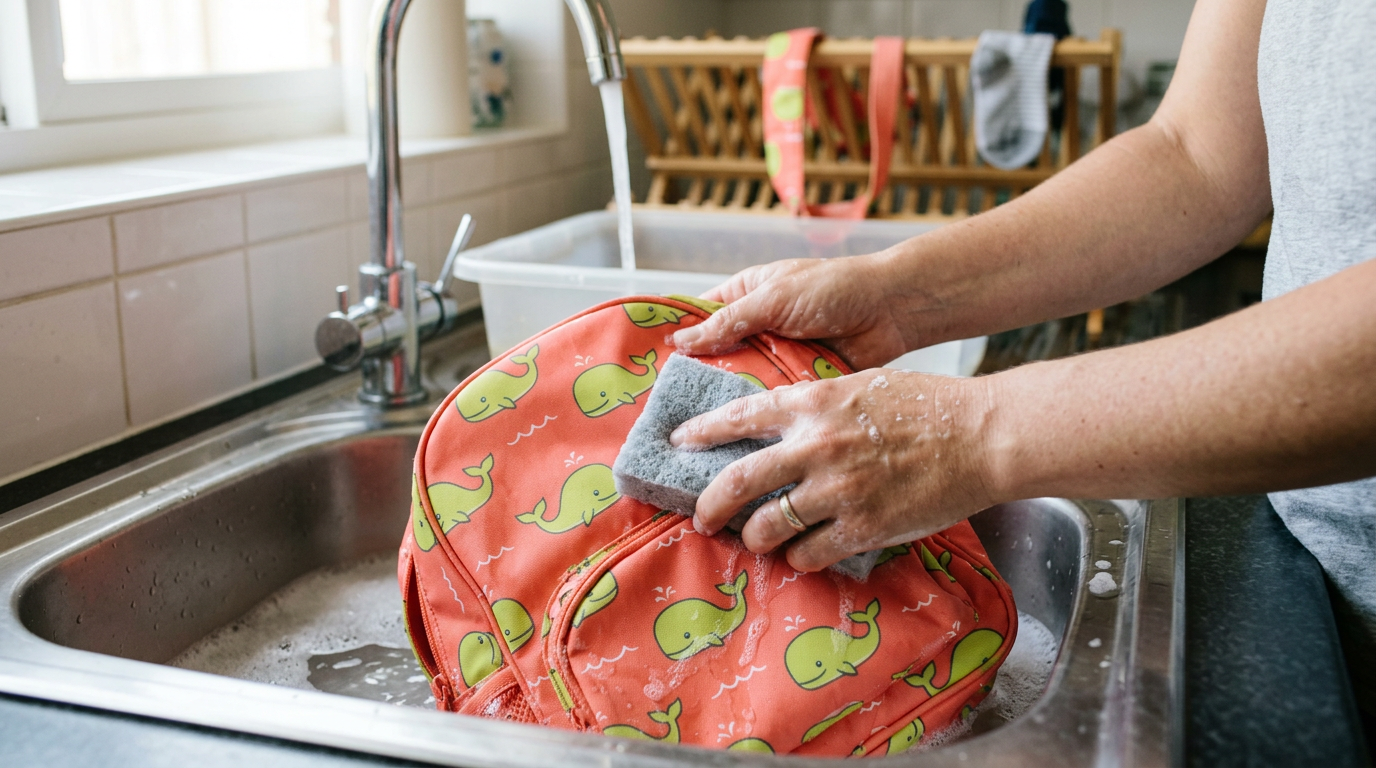
If the label permits hand-washing, fill a clean basin with lukewarm water and add a small amount of mild liquid detergent. Avoid bleach, strong stain removers, and abrasive powders unless the manufacturer specifically approves them. Use a clean sponge, a microfiber cloth, or a soft-bristled brush.
- Empty all compartments fully. Check for paper, coins, food, pens, and toys.
- Remove loose debris. Shake the bag out and gently vacuum its corners.
- Pre-treat visible marks. Dab on diluted mild detergent and work it gently with a cloth.
- Wash carefully. Wipe or lightly agitate the permitted areas without twisting the bag or scrubbing printed details aggressively.
- Rinse thoroughly. Use clean, cool or lukewarm water until no obvious soap remains.
- Blot excess water. Press the bag between clean towels rather than wringing it.
- Air-dry completely. Leave every compartment open in a shaded, ventilated location.
An old, soft toothbrush can loosen dry dirt around zipper teeth and seams. Brush gently and keep soap out of the zipper mechanism where possible. Check deep pockets and padded panels before storing or using the bag, because these areas may remain damp after the outer fabric feels dry.
 See the picks in our buying guide
Spot-Cleaning Stains, Spills, and Odours
For routine marks, spot-clean before soaking the whole bag. Blot fresh liquid spills with a clean absorbent cloth instead of rubbing, which can spread the mess. Apply a small amount of diluted mild detergent to the affected area, work from the outside of the mark towards its centre, and wipe again with a separate damp cloth. Repeat gently rather than using a stronger cleaner immediately.
For dried mud, let it dry first, brush away the loose material, and then clean the remaining mark. For food residue, remove solids with a spoon or dull-edged tool before blotting. Ink, paint, adhesive, and cosmetic stains may need material-specific treatment, so consult the backpack maker before using solvents.
To address stale smells, empty and air the bag in a shaded, ventilated place. Clean any visible residue and make sure the lining dries fully. Avoid masking an odour with fragrance while moisture or food remains inside. If mould is visible or a persistent smell returns after cleaning, consult the manufacturer’s care guidance before attempting stronger treatment.
Machine Washing and Drying: Check the Label
Some unstructured fabric backpacks can be machine-washed, but only if their care labels allow it. Before washing, empty the bag, remove detachable parts, close or secure loose straps, and brush away dry dirt. Follow the labelled water temperature, detergent, and cycle instructions. A laundry bag or pillowcase may help contain straps if this does not conflict with the manufacturer’s directions.
Do not machine-wash a bag simply because it is made from nylon or polyester. Its foam padding, internal stiffeners, adhesives, printed graphics, coated lining, buckles, and mesh pockets may respond differently from the main fabric. Bags containing integrated cables, lights, charging ports, or other electronics should be handled according to their specific instructions.
Avoid machine drying unless the label expressly permits it. Heat and tumbling can affect synthetic fabric, coatings, foam, plastic hardware, and zipper alignment. Air-dry the backpack with its pockets open, away from radiators and other direct heat. Do not return books, clothing, or food containers to it until seams and padded sections are fully dry.
How to Protect a Kids’ Backpack After Cleaning
Protection starts with simple habits. Keep drinks and food in sealed containers, clear out damp clothing promptly, and avoid leaving the backpack on wet ground. Wipe away fresh marks before they set and empty food wrappers regularly. These steps reduce the need for frequent deep cleaning, which can place unnecessary wear on fabric and trim.
A fabric protector may help some compatible materials resist water and dirt, but it is not suitable for every backpack. Check both the backpack instructions and the protector label before application. Test the product on a hidden area, use it only in the setting and manner stated on its label, and keep it away from trim or components the instructions exclude. The bag should be clean and fully dry first.
Apply only the recommended amount and allow the stated drying or curing time before use. A protector does not make a backpack waterproof, and seams, zippers, and openings may still admit water. For guidance on materials and practical school features, see our kids’ backpack buying guide.
Weekly Maintenance and Storage
You do not need to perform a full deep clean every week to keep your child's school gear in good shape. To maintain cleanliness, you should establish a quick weekly routine that prevents small messes from turning into permanent, unsightly stains. Ask your children to empty their bags every Friday afternoon to check for forgotten food wrappers, leaking markers, or damp sports clothes.
For minor scuffs and daily dirt, a quick spot-clean with a damp microfiber cloth is usually sufficient. Avoid using harsh chemical sprays or bleach-based wipes, as these may fade patterns or affect some fabrics. Instead, use a mild solution of lukewarm water and a tiny amount of detergent, provided the care label permits it.
Inspect shoulder straps, seams, buckles, zipper pulls, and mesh bottle pockets while the bag is empty. Trim nothing and avoid pulling loose threads, because that may worsen damage. Store the clean, dry bag with compartments open in a ventilated cupboard rather than compressing it beneath heavy items. If wear has made a replacement necessary, compare construction and care needs in our guide to durable backpacks for boys and girls.
Choosing an Easier-to-Clean Backpack
Care requirements are worth considering before selecting another school bag. Smooth, accessible linings are generally easier to wipe than narrow compartments that trap crumbs. Simple exterior panels give dirt fewer seams and decorative edges in which to collect. Removable accessories may also be easier to clean separately, provided their care instructions are clear.
Polyester and nylon are both widely used in backpacks, but the fabric name alone does not establish durability, water resistance, or washability. Weave, thickness, coatings, stitching, hardware, padding, and overall construction also matter. Look for a clear care label and check whether the bag can be spot-cleaned, hand-washed, or machine-washed before choosing it.
Consider how the child uses the bag. A school backpack may need accessible bottle pockets and an interior that handles lunch spills, while a toddler bag may benefit from a simpler layout with fewer hard-to-reach corners. Our school and toddler backpack picks cover further design considerations without replacing the manufacturer’s care instructions.
Frequently asked

As an Amazon Associate I earn from qualifying purchases. This does not affect the price you pay. Affiliate disclosure