
Fleece vs. French Terry: What Is the Difference?
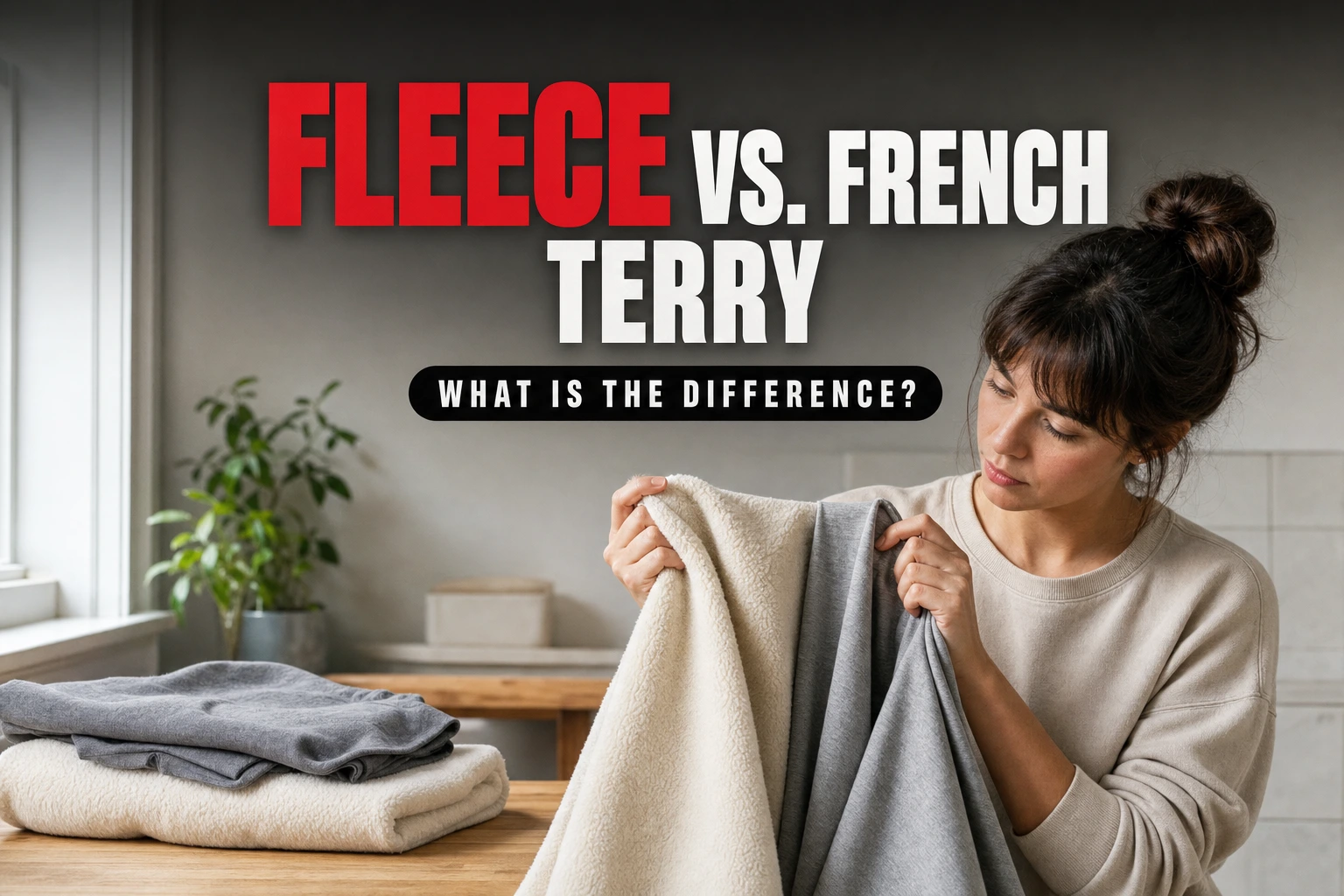
French terry has visible loops on the inside, while sweatshirt fleece has a brushed, fuzzy interior. That structural difference affects warmth, airflow, bulk, moisture handling, and care.
This article is informational and does not place shopping buttons in the story. Related buying guides may include affiliate links.
As an Amazon Associate I earn from qualifying purchases. This does not affect the price you pay. Affiliate disclosure
On this page9 sections
The short answer
- French terry has a smooth outer face and uncut interior loops; sweatshirt fleece has a smooth face and brushed inner surface.
- Fleece generally traps more warm air, while French terry usually allows more airflow and feels less bulky.
- Check fabric weight, fiber content, and care instructions because neither name identifies one fixed level of warmth, stretch, or durability.

French terry has uncut loops on the inside, while sweatshirt fleece has a brushed, fuzzy interior. French terry is usually more breathable and less insulating; fleece is generally warmer and plusher. The right choice depends on the garment’s weight, fiber blend, weather, and whether you want an active layer or a cold-weather sweatshirt.
The structural difference: loops versus brushed fibers
French terry and sweatshirt fleece can look similar from the outside because both commonly have a smooth knitted face. Turn them over, however, and the distinction is easy to see. French terry has visible, uncut yarn loops on the back. This construction is also called loopback, although naming can vary among sellers.
Sweatshirt fleece usually starts with a knitted backing that is mechanically brushed to raise the fibers. The resulting nap feels soft and fuzzy rather than distinctly looped. Brushing adds loft—the thickness created by raised fibers—and creates spaces that can hold air. That is the main reason fleece generally feels warmer.
Here, “fleece” means knitted sweatshirt fleece, not every fabric sold under that broad label. Some outdoor fleece fabrics have different constructions, and garments marketed as “French terry fleece” can blur the terminology. The inside surface is therefore a more reliable clue than the product name: loops indicate French terry, while a brushed, fuzzy back indicates fleece.
Warmth, breathability, and moisture handling
Fleece is generally the warmer option because its brushed surface creates more loft and traps more air near the body. French terry’s loops are flatter and more open, so heat can escape more readily. In comparable garments, this usually makes French terry better suited to mild weather, indoor wear, warm-ups, or layering when you do not want heavy insulation.
That does not mean every fleece is warmer than every French terry garment. A dense, heavyweight French terry sweatshirt can be warmer than a thin fleece top. Wind also matters: neither construction is automatically windproof, so a shell or tightly woven outer layer may make a larger difference in exposed conditions.
Moisture performance depends on both structure and fiber. French terry’s loops can absorb moisture, especially in cotton-rich versions, but absorption is not the same as moisture wicking or fast drying. Polyester fleece typically absorbs little water into the fiber and may dry faster than cotton, although a warm, dense garment can still feel clammy during hard activity. Do not choose by texture alone if sweat management is important; check the fiber content and garment weight.
 See the picks in our buying guide
How they compare in weight, stretch, and fit
French terry commonly has a flatter profile and a more fluid drape, making it easier to wear under a jacket. Its interior loops add texture without the same fuzzy loft as fleece. Sweatshirt fleece tends to feel thicker and plusher, although fabric weight varies widely in both categories.
Neither fabric has one fixed amount of stretch. Knit construction provides some give, while added elastane or a stretch-oriented blend can increase it. Brushing alone does not tell you whether a fleece garment will feel flexible or stiff. Fit, density, ribbed panels, and fiber blend all affect movement.
The same caution applies to “lightweight” and “heavyweight” labels. French terry can be made in substantial weights, and fleece can be thin. If you are shopping online, compare the listed fabric weight where available, then check the cut. Choose French terry when lower bulk and easier layering matter; choose fleece when loft and a plush interior matter more. For an example of how those traits shape a specific garment, see the Nike Studio Fleece Hoodie Review: Classic Comfort.
Fiber content changes how each fabric performs
French terry and fleece describe surface construction, not a single raw material. French terry is often made with cotton or a cotton-polyester blend, but other fibers and blends are also available. Sweatshirt fleece may be cotton, polyester, or a blend. That means two garments with the same construction can behave differently.
Cotton-rich French terry usually feels absorbent and breathable, but it may take longer to dry and can shrink if washed or dried with excessive heat. Polyester-rich fleece is often lighter for its warmth and dries relatively quickly, but its brushed surface may pill through friction and laundering. Blends are used to balance softness, stability, drying time, and cost, though their exact behavior depends on the percentages and finish.
Environmental comparisons also require more than a fabric label. Polyester is synthetic and can release microfibers during washing; cotton production has its own resource impacts. The label “French terry” does not automatically mean natural or biodegradable, and “fleece” does not automatically mean 100% polyester. Read the fiber label before drawing conclusions about comfort, care, or environmental trade-offs.
Durability, pilling, and washing
Both fabrics can last well, but quality, fiber length, knit density, finishing, friction, and laundering all influence wear. Fleece’s raised fibers make surface pilling more visible in some garments, particularly in high-friction areas such as cuffs, sides, and underarms. French terry can also pill, snag, or develop pulled loops, so it should not be described as universally more durable.
Start with the care label, because recommended temperatures and drying methods vary by fiber blend and garment construction. Turning a sweatshirt inside out and washing it with similar, nonabrasive items can reduce surface friction. Avoiding unnecessary high heat can also help limit shrinkage in cotton-rich garments and protect finishes or elastic components. Air-drying may reduce heat exposure, but some labels permit tumble drying.
Fabric softener advice is not universal. It can leave a coating that reduces absorbency on terry fabrics, and some performance garments advise against it, but the correct instruction is the one supplied for that garment. For a fuller maintenance guide, read How to Keep Fleece Hoodies Soft After Washing. Care according to the fiber blend, not just the surface texture.
Which fabric should you choose?
Choose French terry if you want a sweatshirt that is generally less insulating, less bulky, and easier to layer. It works well for mild conditions, indoor use, travel, warm-ups, and activities where a heavily brushed lining may feel too warm. Cotton-rich versions can absorb perspiration, although they may not dry quickly after becoming wet.
Choose fleece if warmth and a soft, plush interior are the priorities. It is a practical option for cool-weather lounging, casual outer layers in dry conditions, or wearing beneath a wind-resistant shell. Remember that ordinary sweatshirt fleece is not necessarily windproof or waterproof; raised fibers provide insulation but do not replace weather protection.
If you are deciding between two specific garments, compare four details: fabric weight, fiber blend, fit, and care label. A loose fit permits more airflow, while a closer fit may feel warmer. A heavier knit usually offers more substance, but bulk does not guarantee wind resistance. For most buyers, French terry is the more versatile mild-weather layer, while fleece is the more insulating cold-weather choice.
Frequently asked
Sources
As an Amazon Associate I earn from qualifying purchases. This does not affect the price you pay. Affiliate disclosure