
Dyson V15 Detect: Do You Need Mapping or Self-Emptying?
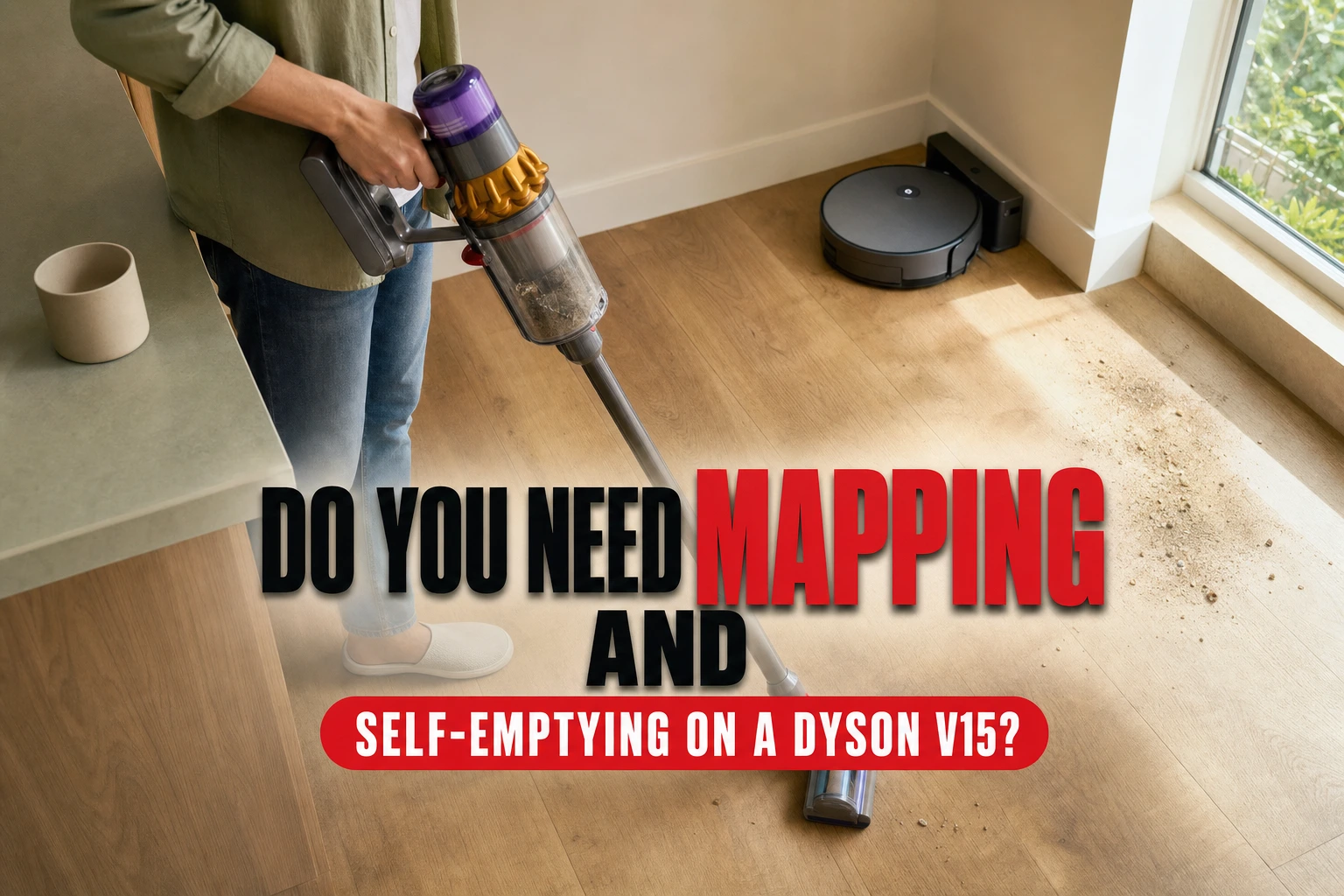
You do not need mapping or self-emptying to use the Dyson V15 Detect. It is a hand-operated cordless stick vacuum with an LCD screen, dust illumination and a manual bin-emptying mechanism rather than robot-style navigation or an auto-empty dock.
This article is informational and does not place shopping buttons in the story. Related buying guides may include affiliate links.
As an Amazon Associate I earn from qualifying purchases. This does not affect the price you pay. Affiliate disclosure
On this page9 sections
- 1The short answer
- 2Do You Need Mapping on the Dyson V15 Detect?
- 3Do You Need Self-Emptying on the Dyson V15 Detect?
- 4The Difference Between Stick Vacuums and Robot Vacuums
- 5What the V15’s Detection Features Actually Do
- 6Comparing Manual Stick and Autonomous Robot Features
- 7Which Cleaning System Fits Your Home?
- 8Frequently asked
- 9Sources
The short answer
- Cordless stick vacuums like the Dyson V15 do not support automated spatial mapping or self-emptying.
- Mapping and self-emptying are features built to help autonomous robot vacuums navigate and maintain themselves.
- The Dyson V15 uses manual lasers and particle sensors to show you where dirt remains.
No, you do not need mapping or self-emptying on a Dyson V15 Detect because it is a manual, hand-operated cordless stick vacuum. Mapping guides autonomous robots, while self-emptying transfers debris from a robot into a dock. The V15 instead relies on you to navigate and empty its clear bin.
When shopping for a premium cleaner, it is incredibly easy to get overwhelmed by the overlapping terminology of automated robot vacuums and high-end cordless stick vacuums. Some prospective buyers mistake the advanced digital tracking screens, automatic suction adjustments, and dust illumination on modern stick models for automated room mapping capabilities.
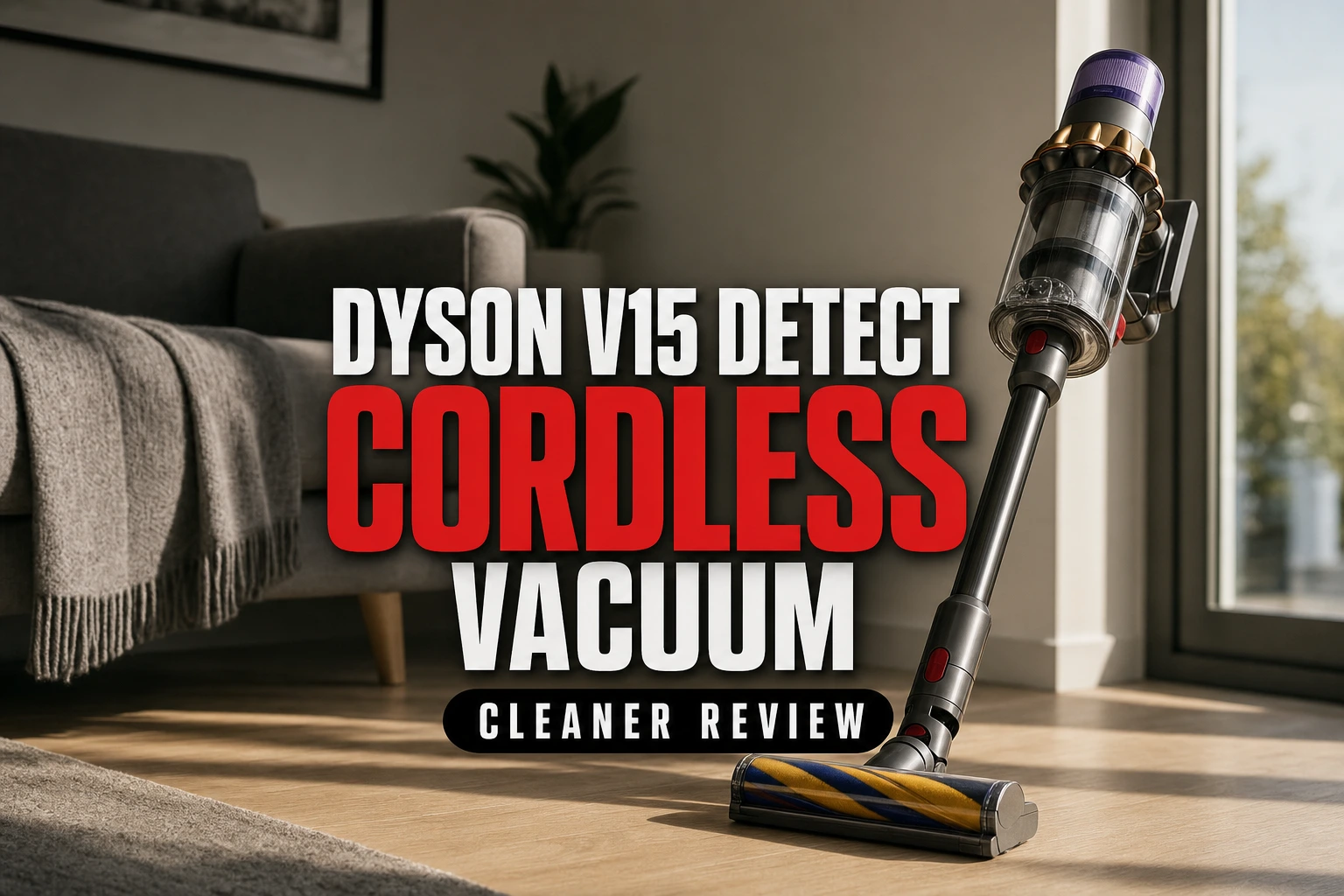
This explainer untangles the structural differences between automated floor care systems and the manual operation of the Dyson V15. We will look at what these features actually do, why cordless sticks handle cleaning differently, and how to decide which cleaning format fits your household's floor layout. For a broader assessment of the machine, read our Dyson V15 Detect cordless vacuum cleaner review (2026).
Do You Need Mapping on the Dyson V15 Detect?
No: the Dyson V15 Detect does not need mapping because you steer it around the home yourself. Spatial mapping is mainly useful when a robot must locate itself, plan a route and return to its charging point without continuous human control. With a cordless stick vacuum, your eyes identify the area to clean and your hands direct the cleaner head.
Dyson’s V15 Detect support materials describe an LCD screen that reports information such as remaining runtime and particle data; they do not present that display as a room map. Dyson also documents a cleaner head that illuminates dust on hard floors. That illumination helps you see debris in the cleaning path, but it does not create a floor plan, remember rooms or navigate autonomously.
This distinction matters because terms such as “detect,” “sensor” and “automatic” can sound like robot-vacuum features. On the V15, sensing supports the cleaning session while a person remains in control. Dust detection is not room detection, and the integrated display is not a substitute for a robot-vacuum app or navigation system.
Do You Need Self-Emptying on the Dyson V15 Detect?
Self-emptying is optional convenience, not a requirement for using a cordless stick vacuum. An auto-empty system normally uses a powered base to draw debris from a vacuum’s onboard bin into a larger container or bag. That arrangement is especially useful for robots expected to complete scheduled cleaning with little intervention.
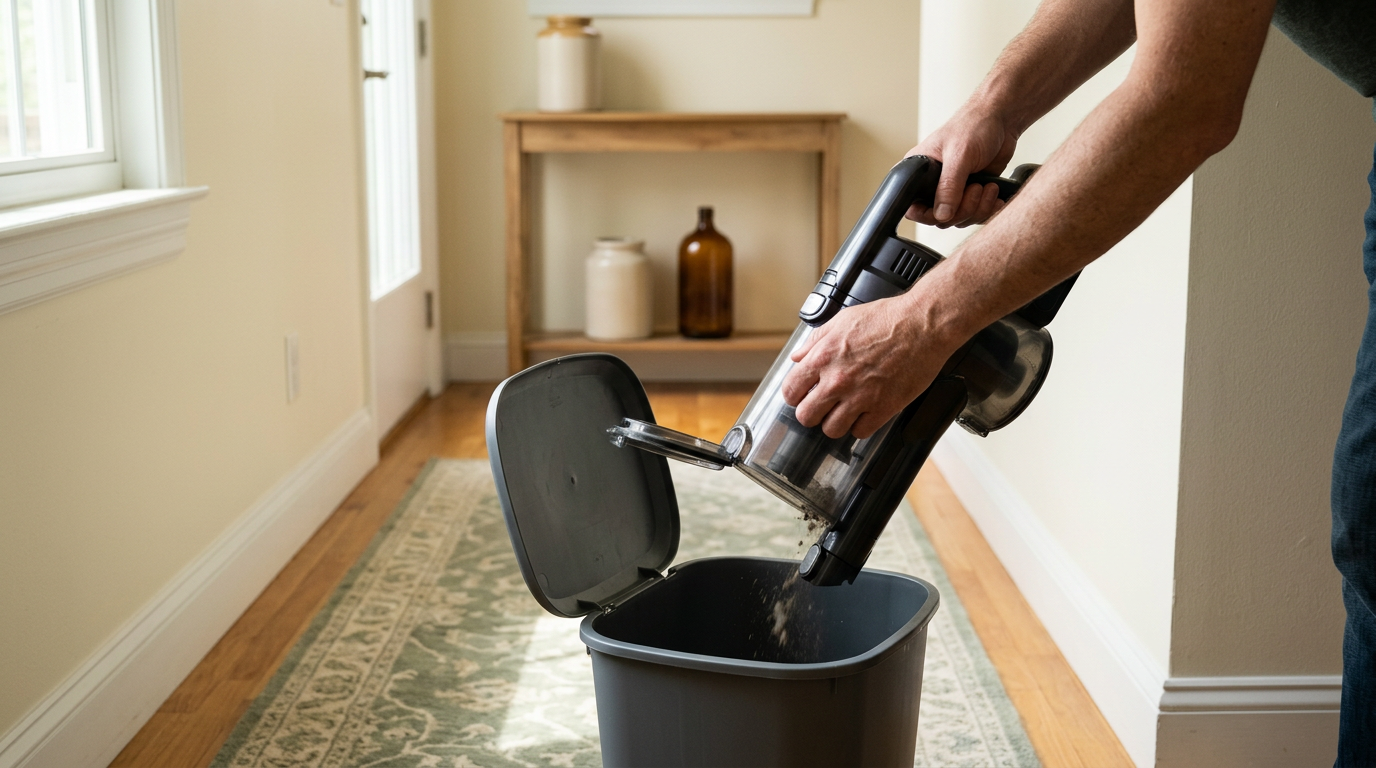
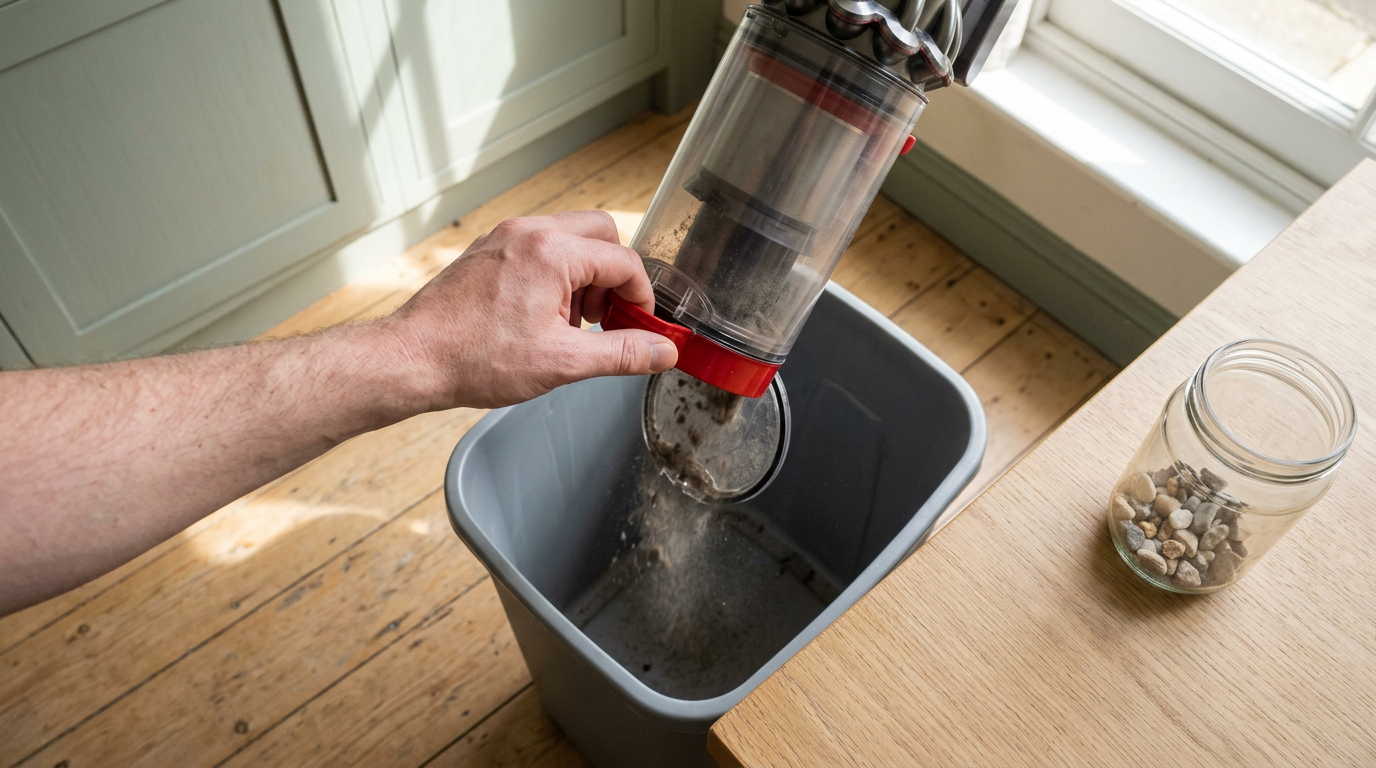
The Dyson V15 Detect takes a different approach. Dyson’s owner guidance shows a manual bin-emptying process: hold the machine over a waste bin and operate the red bin-release mechanism to eject the contents. The clear bin also has a MAX line, so it should be emptied once debris reaches that level rather than packed beyond it. The filter and bin are separate components, and Dyson’s maintenance guidance should be followed before washing or reassembling them.
A self-emptying dock could reduce direct handling of the onboard bin, but it would not improve the V15’s manual navigation, stair cleaning or above-floor reach. The practical question is whether you are comfortable emptying the bin yourself, not whether the vacuum requires an automated base to work.
 See the picks in our buying guide
The Difference Between Stick Vacuums and Robot Vacuums
Stick vacuums and robot vacuums represent two completely different approaches to home floor care. A modern cordless stick vacuum requires your physical guidance to move across different floor types, reach room edges, and clean soft furniture surfaces. It relies on your steering to direct suction where dirt has accumulated.
On the other hand, an autonomous robot vacuum works independently using internal software routines to navigate living spaces. Because these automated machines run without real-time human correction, they require onboard sensors and drop detection to help them move around obstacles and avoid stairs.
The categories also differ in reach. A stick vacuum can be carried between floors and configured for stairs, upholstery or other above-floor surfaces when the appropriate tool is fitted. A floor robot remains focused on accessible horizontal floors. Mapping and an auto-empty base therefore solve problems created by autonomous floor cleaning; they are not missing requirements on a hand-guided vacuum.
Mixing up the capabilities is understandable because both categories may advertise sensors or automatic responses. Our full Dyson V15 Detect review explains the V15’s features in the context of a manual cordless cleaner.
What the V15’s Detection Features Actually Do
The V15 Detect includes intelligent-sounding functions, but none turns it into a robot. According to Dyson’s support and owner materials, the LCD screen can show remaining runtime and a visual representation of collected particle sizes. Dyson also describes automatic adjustment of suction in response to detected dust in Auto mode. These functions provide feedback or alter machine behaviour while you continue to steer it.
On compatible versions and cleaner heads, a green light illuminates fine dust on hard floors. This is a visibility aid aimed at the area immediately ahead of the cleaner head. It does not scan the house, label rooms, store a map or establish no-go zones. Likewise, the particle display is not a record of where each area was cleaned.
These distinctions make comparison easier. If you want a machine to start on a schedule and navigate unattended, those are robot-vacuum requirements. If you want direct control over passes, edges, stairs and upholstery, the V15’s sensors and display support that manual task. The Dyson V15 Detect cordless vacuum review covers those functions together rather than treating them as mapping.
Comparing Manual Stick and Autonomous Robot Features
A side-by-side comparison shows why mapping and self-emptying appear more naturally on one format than the other.
- Navigation: The V15 relies on human sight and movement. A robot relies on its navigation hardware and software, which may include mapping depending on the model.
- Debris disposal: The V15’s clear bin is released manually over a waste container. A robot may require manual emptying or may transfer debris into a compatible dock.
- Cleaning control: With a stick vacuum, you decide how many passes an area receives and can immediately target visible debris. A robot follows its programmed route and available navigation functions.
- Reach: A cordless stick can be carried to stairs and used with suitable attachments on above-floor surfaces. A robot is designed for accessible floors.
- Storage and charging: The V15 uses its supplied charging arrangement. A self-emptying robot base also needs room for its larger debris-transfer equipment.
Neither feature set is universally necessary. Mapping and automated disposal reduce intervention during robot cleaning, while manual steering gives the V15 immediate, flexible control. The relevant choice is therefore between cleaning formats and routines, not a checklist in which every premium vacuum should include identical technology.
Which Cleaning System Fits Your Home?
Choosing between a cordless stick vacuum and an automated robot depends on the surfaces you need to clean and how involved you want to be. Choose a cordless stick format if you want direct control, need to carry the cleaner between floors, or regularly clean stairs, edges, upholstery and other areas a floor robot cannot reach. You must, however, guide the machine, charge it and empty its bin.
Consider a robot format if your priority is unattended maintenance of accessible floors and you are willing to prepare the floor so the machine can travel. Mapping may be valuable in that situation because it can support route planning and room-based controls on models that offer those functions. A self-emptying base may also reduce how often the robot’s small onboard bin needs manual attention.
The two formats can be complementary, but buying both is not automatically necessary. Start by identifying the cleaning task that causes the most friction. If manual deep and above-floor cleaning is the priority, use our Dyson V15 Detect review (2026) to assess this stick vacuum’s documented features. If unattended floor upkeep is the priority, compare robot navigation and dock functions instead.
Frequently asked
Sources
As an Amazon Associate I earn from qualifying purchases. This does not affect the price you pay. Affiliate disclosure