
Is the Hotwave Push Up Board Worth Buying?
An objective look at whether the Hotwave push-up board's color-coded training grid and folding design make it a smart investment for your home workouts.

This article is informational and does not place shopping buttons in the story. Related buying guides may include affiliate links.
As an Amazon Associate I earn from qualifying purchases. This does not affect the price you pay. Affiliate disclosure
On this page8 sections
- 1The short answer
- 2How the Color-Coded System Targets Muscle Groups
- 3Assessing the Build Quality and Portability
- 4How to Use the Board Safely and Effectively
- 5Comparing Push-Up Boards to Traditional Floor Workouts
- 6Understanding the Limitations of Fixed-Angle Training
- 7Which Home Workout Gear Should You Pick?
- 8Frequently asked
The short answer
- Color-coded slots guide your hands to target chest, shoulder, back, and tricep muscles.
- The folding design is highly compact, making storage and travel simple for active users.
- Advanced trainers might find bodyweight limits and fixed angles restrictive for progressive strength training.
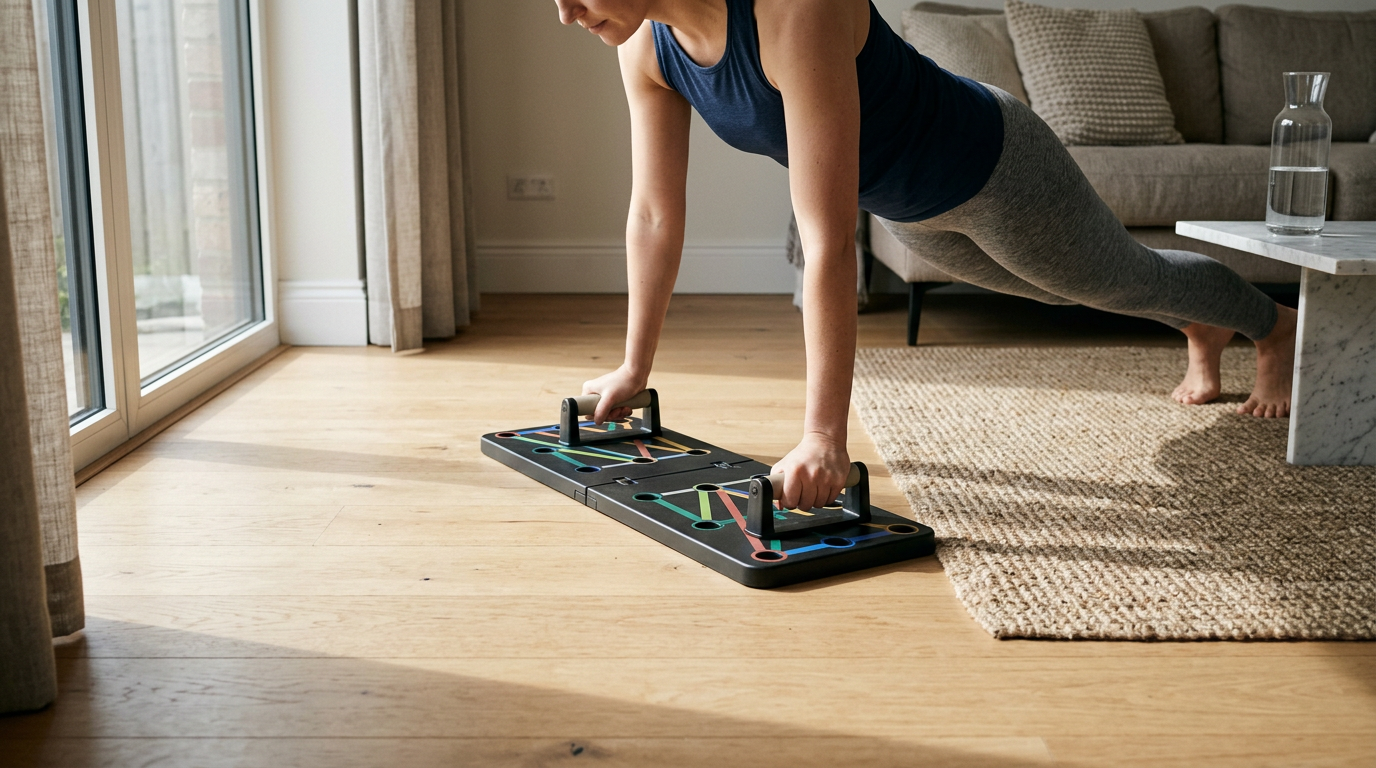
The Hotwave push-up board is worth buying if you want a guided, joint-friendly way to target specific upper-body muscles at home. It offers an organized, structured workout that takes the guesswork out of hand positioning.
For home fitness enthusiasts, finding equipment that is both effective and easy to store is a constant challenge. The Hotwave system attempts to solve this by condensing a complete upper-body routine into a single folding platform. By utilizing a grid of colored slots, the board guides the user through different hand positions that shift the physical load to different areas of the chest, shoulders, triceps, and back.
Before committing to this style of training, it is crucial to understand how mechanical levers and joint alignment affect your progress. Whether you are recovering from joint discomfort or trying to break through a strength plateau, looking closely at how this tool functions will help you decide if it belongs in your home gym setup.
The quick version
- Clear a flat surface
- Insert the handles securely
- Align your spine
- Lower your chest slowly
- Push back up smoothly
- Attach the optional bands
How the Color-Coded System Targets Muscle Groups
At the heart of this fitness tool is a system of color-coded channels molded directly into the plastic platform. Each color represents a distinct muscle group: blue typically targets the chest, red focuses on the shoulders, yellow engages the back muscles, and green isolates the triceps. By inserting the heavy-duty handles into these specific slots, you change the angle of force during the push-up movement.
Traditional push-ups require you to manually adjust your hands, which can lead to asymmetrical positioning or poor form. The guided slots enforce symmetrical hand placement, ensuring that both sides of your body work equally. This symmetry is highly beneficial for correcting muscle imbalances that often develop when training without visual guides.
When you shift the handles to the chest-focused slots, the wider stance increases the horizontal adduction of your arms. Shifting to the tricep slots brings your elbows closer to your torso, forcing the arms to do the majority of the pushing work. This mechanical shift changes the leverage, allowing you to isolate muscles without needing an array of heavy dumbbells.
Understanding these angles is the key to maximizing your workouts. If you want a deep dive into how these configurations feel in practice, our comprehensive HOTWAVE Push Up Board Review breaks down the physical feedback of each position during extended use.
Assessing the Build Quality and Portability
A major consideration for any piece of home exercise equipment is how well it holds up under repeated stress. The board is constructed from high-density ABS plastic, which is designed to withstand significant downward pressure. This material choice keeps the board lightweight while preventing the structure from flexing or bowing when you apply your full body weight.
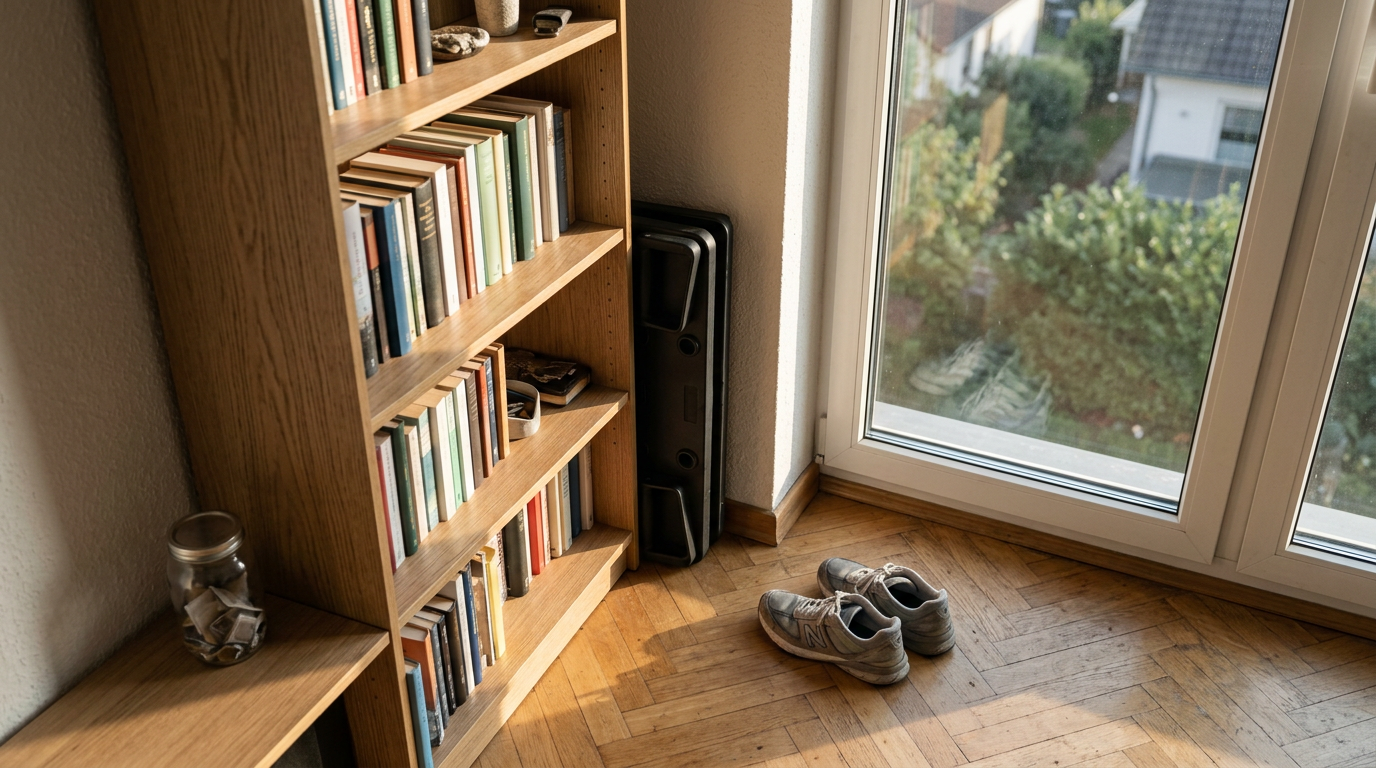
The folding design is another critical feature that appeals to those with limited storage space. A central hinge allows the board to fold in half, reducing its footprint so it can slide under a bed or fit into a travel suitcase. This makes it an attractive option for people who travel frequently but want to maintain a consistent workout schedule on the road.
However, the durability of the folding hinge and the non-slip pads on the bottom are details that require attention. If the non-slip pads lose their grip, the board can slide on hardwood or tile floors, which poses a safety risk. Keeping the floor clean and checking the rubber feet regularly helps maintain a stable foundation during intense exercise sessions.
The handle grips themselves are wrapped in a textured silicone or rubber material to prevent your hands from slipping when you sweat. Unlike standard plastic handles that can become slick, these textured grips provide a secure hold, allowing you to focus entirely on your form rather than maintaining your grip.
 See the picks in our buying guide
How to Use the Board Safely and Effectively
To get the most out of your home workouts without causing unnecessary strain, you must use the platform correctly. Following a structured setup process will protect your joints and target the correct muscle groups. Here is how to get started with your routine:
- Clear a flat surface. Position the board on a level, non-slip floor to ensure total stability during your exercises.
- Insert the handles securely. Push the pegs of the handles fully into your chosen color-coded slots until they sit completely flush.
- Align your spine. Assume a standard plank position with your core engaged, keeping a straight line from your head to your heels.
- Lower your chest slowly. Inhale as you lower your body, keeping your elbows aligned with the path dictated by the handle angles.
- Push back up smoothly. Exhale as you press upward, focusing on squeezing the targeted muscle group at the top of the movement.
- Attach the optional bands. Hook the resistance bands to the metal anchor points if you want to add extra tension to your reps.
Comparing Push-Up Boards to Traditional Floor Workouts
To appreciate why someone would buy this gear, it helps to compare it directly to standard floor-based push-ups. While both exercises use your body weight as resistance, the physical mechanics differ significantly in several areas.
- Wrist Strain: Traditional floor push-ups require your wrists to bend at a sharp ninety-degree angle, which can cause joint pain over time; the raised handles of the board allow your wrists to remain in a neutral, straight alignment.
- Muscle Engagement Variety: Standard floor variations rely on your own knowledge of hand placement, which can be inconsistent; the color-coded tracks offer fixed, repeatable angles that target different muscles with high precision.
- Portability: Doing push-ups on the floor requires no equipment at all, making it the most portable option; the board adds some bulk but provides a clean, dedicated workout surface wherever you are.
- Floor Protection: Bare hands on hard floors can slip due to sweat or cause chafing; the rubberized grips and raised platform keep your hands off dirty or rough surfaces entirely.
This comparison highlights that the primary value of the board is comfort and structure. If you struggle with wrist discomfort during regular workouts, switching to an elevated handle system can make a substantial difference in your training consistency.
Understanding the Limitations of Fixed-Angle Training
While there are many benefits, it is equally important to discuss the drawbacks of a structured platform. Because the slots are molded into fixed positions, they do not adjust for individual body proportions. A person with very broad shoulders may find some of the inner positions uncomfortable, while a person with a narrower frame might struggle with the wider slots.
Another limitation is the concept of progressive overload. In strength training, you must gradually increase the stress placed on your muscles to continue making gains. Once you can easily perform multiple sets on the board, your progress may stall because you cannot easily add heavy weight to a bodyweight exercise without external accessories.
The included resistance bands offer a partial solution to this issue by adding extra tension at the peak of the movement. However, these bands do not provide the same smooth resistance curve as free weights or specialized gym cable machines. Over time, advanced lifters will likely need to transition to heavier external weights to continue building raw strength.
Finally, the plastic construction has a natural weight limit specified by the manufacturer. While the board is sturdy enough for the vast majority of users, anyone near the upper weight threshold should proceed with caution to avoid cracking the plastic during explosive movements. Keeping your movements slow and controlled is the best way to preserve the structural integrity of the plastic hinge.
Which Home Workout Gear Should You Pick?
Choosing the right exercise tool depends entirely on your personal fitness goals and your current physical condition. If your primary goal is to protect your wrists while learning correct hand positioning, the structured layout of the Hotwave board is highly effective. It offers a clear, visual roadmap that helps beginners build a solid foundation of upper-body strength.
On the other hand, if you are an experienced athlete who already possesses excellent body awareness, you might find standard parallettes or adjustable push-up handles more useful. These independent handles can be placed at any distance or angle, allowing for custom configurations that match your exact shoulder width and movement patterns.
For those who want a balanced middle ground, reading a detailed HOTWAVE Push Up Board Review can clarify whether the specific dimensions of this board will suit your home workout space. If you want maximum variety and have the space, combining a folding board with light free weights can create a highly versatile home gym setup.
Ultimately, deciding to buy a push-up board in 2026 comes down to how much you value guided form over complete movement freedom. If you need structure to stay motivated and pain-free, this tool is an excellent investment; if you prefer open-ended training, simple independent handles are likely a better fit.
Frequently asked
As an Amazon Associate I earn from qualifying purchases. This does not affect the price you pay. Affiliate disclosure