
How Big Is a 20L Backpack for School? Fit Guide
A 20L backpack is a compact-to-medium school bag with room for a laptop or tablet, notebooks, lunch, a bottle, and a light layer. Its usefulness depends on its shape and the student’s daily load.
This article is informational and does not place shopping buttons in the story. Related buying guides may include affiliate links.
As an Amazon Associate I earn from qualifying purchases. This does not affect the price you pay. Affiliate disclosure
On this page11 sections
- 1The short answer
- 2How big is a 20L backpack for school use?
- 3What fits in a 20L school backpack
- 4Is a 20L backpack big enough for school supplies?
- 5Typical dimensions and why shape matters
- 620 litre bag size in cm and inches, compared with 15L and 25L
- 7How to check whether the backpack fits the student
- 8When 20L is enough—and when to size up
- 9A simple checklist before choosing
- 10Frequently asked
- 11Sources
The short answer
- A 20L backpack is generally a compact-to-medium option for school.
- It can usually carry a device, several notebooks or folders, lunch, water, and a light layer.
- The same 20L capacity can come in different shapes, so external dimensions and sleeve measurements matter.
- Students carrying several thick books, large binders, or sports kit may need more than 20L.
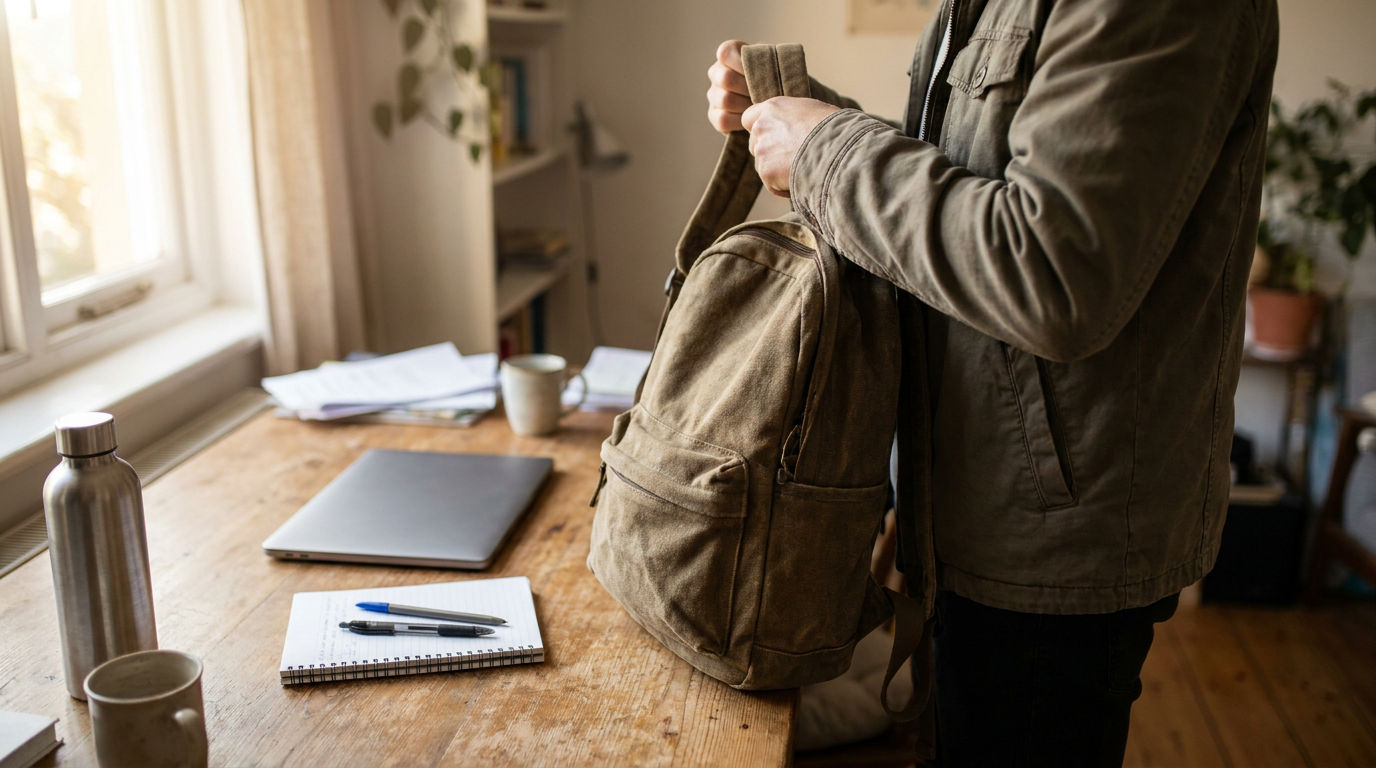
A 20L backpack is a compact-to-medium school bag. It can typically hold a laptop or tablet, several notebooks or folders, a pencil case, lunch, a water bottle, and a light sweater. It may be too small if the student regularly carries several thick textbooks, large binders, sports gear, or bulky clothing.
The 20L figure describes capacity rather than fixed external dimensions. Two backpacks with the same stated volume can differ in height, width, depth, compartment layout, and laptop-sleeve size. Check the measurements and loading space of the specific model instead of relying on liters alone.
How big is a 20L backpack for school use?
A backpack’s 20L rating refers to its approximate capacity, or the amount of space inside the bag. That number does not show how efficiently school supplies will fit. Books, folders, lunchboxes, and laptops are rigid or rectangular, so curved corners, padding, dividers, and narrow pockets can leave part of the stated volume difficult to use.
A tall, slim 20L backpack may work well for a laptop and folders but offer little room for a box-shaped lunch container. A shorter, deeper pack may take lunch and a sweatshirt more easily, yet provide less useful space for large papers if its main compartment is poorly shaped. Internal organizers can help separate equipment, but they also divide the available room.
Treat 20L as a capacity category, not an exact packing promise. According to manufacturers, external measurements and compartment dimensions provide the better final check. Look at the shape of the main compartment, the width of its opening, the bag’s depth, and whether the listed volume includes smaller pockets.
What fits in a 20L school backpack
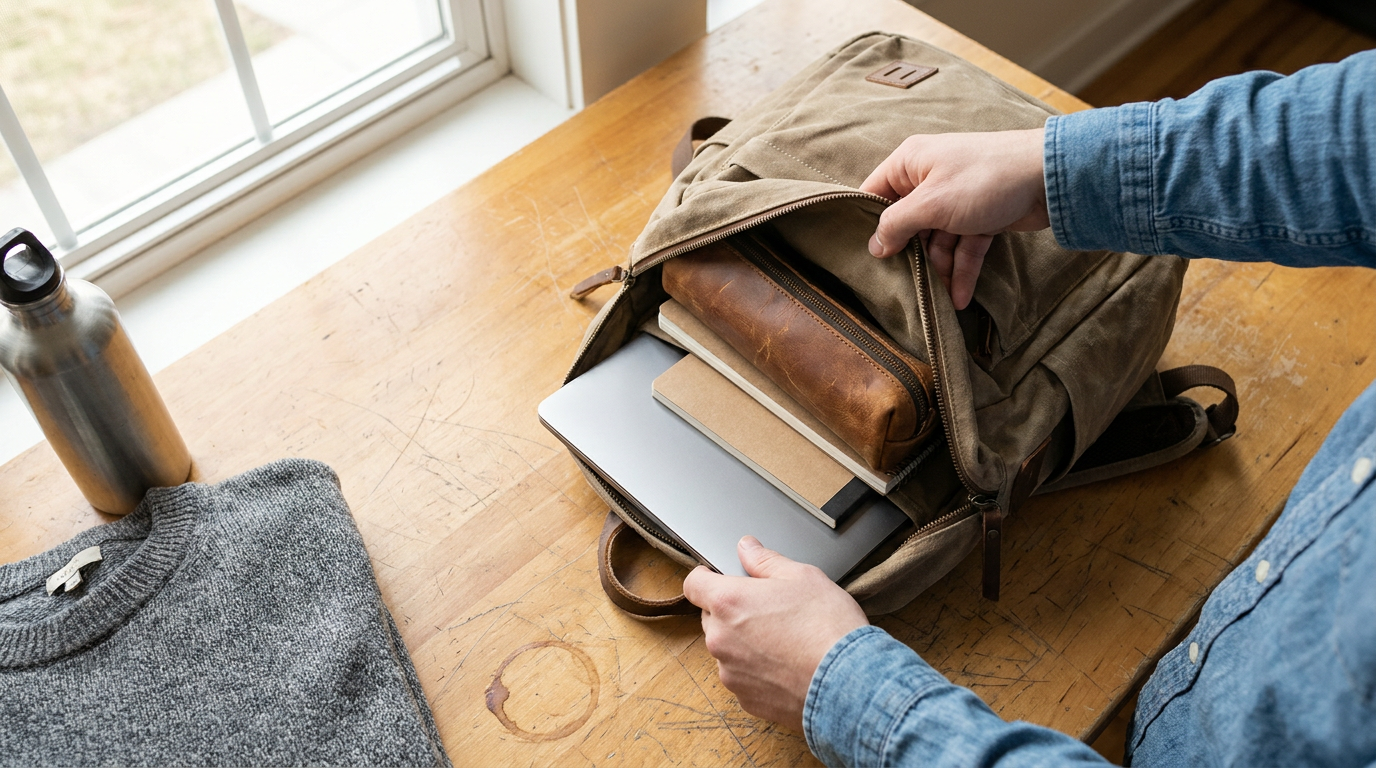
For a typical school day, a 20L backpack can usually hold a laptop or tablet, several notebooks or folders, a pencil case, a lunch container, a water bottle, and a light layer. Exact results depend on the dimensions of those items and how much room the bag’s padding and organization panels occupy.
Place the largest flat items against the back panel. A device can go in the padded sleeve if the sleeve is large enough, with notebooks, folders, and books in the main compartment. Smaller pockets can hold pens, keys, cables, and other loose items. An external bottle pocket saves internal space, although its size and security vary by model.
A 20L bag becomes restrictive when several bulky items must fit at once. Multiple thick textbooks, large ring binders, a rigid lunchbox, a winter layer, shoes, or sports clothing can fill the bag quickly. Gather the intended items and load them together before deciding. The zippers should close naturally, without compressing books or forcing the bag into a heavily rounded shape.
 See the picks in our buying guide
Is a 20L backpack big enough for school supplies?
For most students the answer is yes for a normal day, and no for a heavy book day. The table below sets typical school items against the space they take inside a 20L main compartment, so the decision rests on the actual packing list rather than the litre rating.
| School item | Typical size | Rough share of a 20L bag | Fits comfortably? |
|---|---|---|---|
| 13-14in laptop in a sleeve | 33 x 24 x 2.5 cm | 2-3L | Yes, in the padded sleeve |
| 15.6in laptop in a sleeve | 37 x 26 x 3 cm | 3-4L | Only if the sleeve is rated for it |
| A4 notebook or folder (each) | 30 x 22 x 1.5 cm | ~1L | Yes, 3-4 of them |
| Hardback textbook (each) | 26 x 20 x 4 cm | ~2L | Yes, one or two |
| Large ring binder | 32 x 28 x 6 cm | 5-6L | Tight; often the deciding item |
| Rigid lunchbox | 23 x 17 x 8 cm | ~3L | Yes, if depth is 16 cm or more |
| 750 ml water bottle | 26 x 7.5 cm diameter | ~1.5L (0 in a side pocket) | Best carried in the external pocket |
| Pencil case | 21 x 9 x 6 cm | ~1L | Yes |
| Light sweater or hoodie | Packs to ~4L | 4L | Yes, when books are light |
| PE kit or trainers | Packs to 6-8L | 6-8L | No, size up to 25L |
A realistic full day comes to roughly 12-16L: a laptop, three or four notebooks, a pencil case, lunch and a light layer, with the bottle outside. That leaves a small margin, which is why one large binder or a set of trainers pushes a 20L bag over the edge.
Add up the student's own list the same way. If the total sits under about 16L, 20L is big enough for school; if two or three bulky items appear every week, compare a 25L pack instead.
Typical dimensions and why shape matters
There is no single set of dimensions for a 20L backpack. Published size guides show that bags with this capacity can have different combinations of height, width, and depth. The listed measurements of the individual model are therefore more useful than a generic size estimate.
The back panel height affects how long the pack feels on the wearer. Width affects how the bag sits across the student’s back, while depth determines how far the load projects behind the body. A deeper bag may accommodate a lunchbox or sweater more easily but can feel bulky in a crowded corridor. A slim bag may look smaller while still providing useful vertical room for notebooks and a laptop.
Compare the bag’s dimensions with the student’s largest rigid items. A folder that is wider than the main opening may be awkward to load even if the overall capacity appears sufficient. Soft fabric can also expand when packed, so consider the bag’s loaded shape rather than its empty appearance. Two 20L bags are not necessarily interchangeable.
20 litre bag size in cm and inches, compared with 15L and 25L
Most published school-bag size charts put a 20L pack in a fairly narrow band. The table below shows the typical published ranges for the three capacities students compare most often. Treat them as a starting point: the manufacturer's own figures for the specific model are always the deciding number.
| Capacity | Height x width x depth (cm) | Height x width x depth (in) | Usually suits |
|---|---|---|---|
| 15L | 38-42 x 25-28 x 13-16 | 15-16.5 x 10-11 x 5-6.5 | A tablet or small laptop, one or two notebooks, lunch or a bottle |
| 20L | 42-46 x 27-30 x 15-18 | 16.5-18 x 10.5-12 x 6-7 | A laptop, several notebooks or folders, lunch, a bottle and a light layer |
| 25L | 45-50 x 29-32 x 17-21 | 18-19.5 x 11.5-12.5 x 6.5-8 | Thick textbooks, large binders, sports kit or a bulky coat as well |
The jump from 15L to 20L is mostly height and depth, not width. That extra depth is what lets a rigid lunchbox sit beside a laptop sleeve. Going from 20L to 25L adds another few centimetres in every direction, which is useful for books but can look and feel large on a smaller frame.
To convert quickly, 1 cm is about 0.39 in, so a 44 cm tall bag measures roughly 17.3 in. Remember that stated volume is measured differently by different brands: some count every pocket, others only the main compartment, so a 20L bag from one brand can measure the same as an 18L or 22L bag from another.
How to check whether the backpack fits the student
Capacity tells you whether the supplies may fit; the backpack’s dimensions determine whether it suits the wearer. Start with the bag empty. Adjust both shoulder straps evenly and position the pack against the back rather than allowing it to hang loosely. Check whether its height and width look proportionate to the student and whether it interferes with normal movement.
The straps should sit securely on the shoulders without slipping outward or crowding the neck. If the bag has a sternum strap, it can help keep the shoulder straps positioned, but it cannot correct a backpack that is fundamentally too wide or too long for the wearer.
Repeat the check with the student’s normal supplies loaded. The student should be able to put on, remove, open, and carry the bag without struggling with its size. If it sags, shifts markedly, or must be tightened excessively to stay in place, compare a shorter or narrower model. Age or school grade alone is not enough to establish fit because 20L backpacks vary in shape. A model-specific account, such as our Nike Kids Elemental Backpack 20L school bag review, can help identify the dimensions and layout details to compare.
When 20L is enough—and when to size up
A 20L backpack is a practical option when the student carries a device, a modest set of paper supplies, lunch, a bottle, and a few small personal items. It can also work when books remain at school or only part of the day’s material needs to be carried at once.
Consider a larger capacity if several thick books and binders must travel together, or if the backpack also needs to hold shoes, sports clothing, art materials, or a bulky outer layer. Before sizing up, check whether a different layout would solve the problem. A broad, simple main compartment may accept school gear more efficiently than a narrow design divided into several small spaces.
A smaller bag may suit a short daily packing list or a smaller frame. Choose for the largest routine load, not an unusually light or demanding day. For a closer look at the layout of a specific school bag in this capacity, read our Nike Kids Elemental 20L backpack review.
A simple checklist before choosing
First, list everything the student carries on a normal full day: device, charger, books, notebooks, folders, lunch, bottle, clothing, and activity equipment. Measure the tallest, widest, and thickest rigid items, particularly the laptop, lunchbox, binders, and large folders. Compare those figures with the manufacturer’s external, main-compartment, and laptop-sleeve measurements.
Next, inspect the layout. A wide opening makes books easier to load, a separate device sleeve keeps the laptop against the back, and external bottle storage preserves room inside. A useful front pocket can keep small supplies separate, but do not count pockets that are too small for the intended items. Our review of the Nike Kids Elemental 20L school bag provides an example of the model-specific details worth checking.
Finally, load the bag and test access as well as capacity. The student should not have to remove most of the contents to reach lunch or a notebook. Check the packed shape and try the bag on with the full routine load. If everything fits, the zippers close naturally, and the dimensions suit the wearer, 20L is big enough for that student’s school day.
Frequently asked
Sources
As an Amazon Associate I earn from qualifying purchases. This does not affect the price you pay. Affiliate disclosure