
How Good Does Noise Cancelling Need to Be on Wireless Headphones?
Your noise cancelling needs to match your environment; standard ANC silences low rumbles, while premium ANC blocks erratic office voices.
This article is informational and does not place shopping buttons in the story. Related buying guides may include affiliate links.
As an Amazon Associate I earn from qualifying purchases. This does not affect the price you pay. Affiliate disclosure
On this page9 sections
- 1The short answer
- 2How Active Noise Cancellation Actually Works
- 3The Difference Between Low and High Frequency Blockage
- 4Premium ANC vs. Entry-Level ANC
- 5Real-World Scenarios and Your Needs
- 6How ANC Affects Battery Life and Audio Quality
- 7Which Wireless Headphone Isolation Level Should You Pick?
- 8Frequently asked
- 9Sources
The short answer
- Match your ANC level to your main environment rather than buying the highest rating blindly.
- Basic ANC excels at constant low-frequency drones like airplane engines and train tracks.
- Premium ANC is necessary to block sudden, high-frequency sounds like office chatter and traffic.
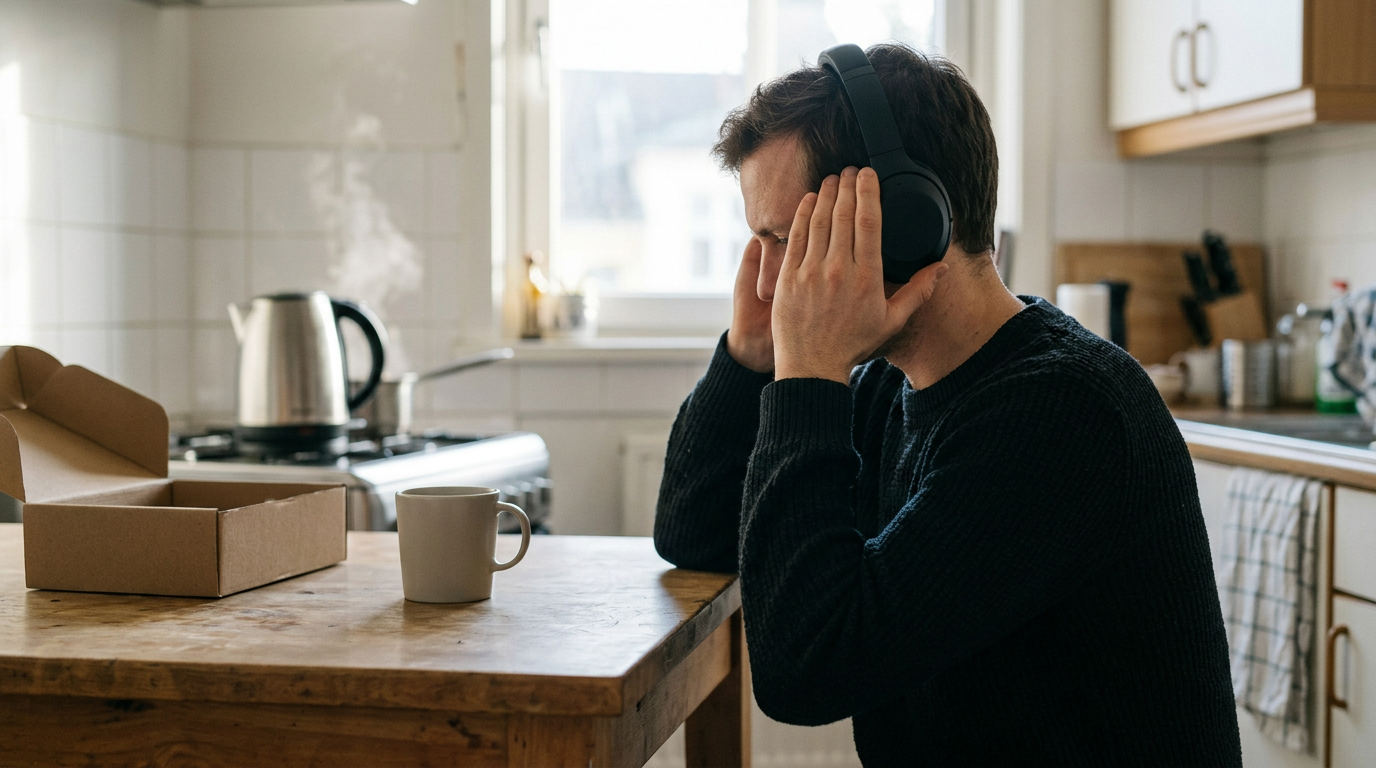
Noise cancelling on wireless headphones only needs to be strong enough to suppress the specific sounds in your daily environment. You do not always need to buy the most expensive pair on the shelf to get a quiet and comfortable listening experience.
If your daily routine consists of studying in quiet libraries, working in a secluded home office, or walking through calm neighborhoods, entry-level noise suppression is usually more than adequate. These simpler systems easily block out the faint hum of a household refrigerator, distant traffic, or a gentle indoor fan.
However, if you are regularly subjected to the roar of jet engines, heavy train commutes, or loud office conversations, you will need a far more advanced setup. For these challenging environments, evaluating the highly capable options in our guide to the Best Headphones Wireless: 3 Picks Compared will help you find the right level of silence to protect your peace.
How Active Noise Cancellation Actually Works
To understand how strong your noise reduction needs to be, you must first understand the technology inside the earcups. Active Noise Cancellation relies on tiny, built-in microphones that constantly monitor the acoustic environment around your head. These microphones capture external audio waves and feed them into an internal digital processor.
The processor instantly creates an opposing soundwave, often called anti-noise, which is exactly inverted relative to the original sound. When these two opposing waves meet, they cancel each other out before reaching your eardrums. This process happens in milliseconds, continuously adjusting to your surroundings to maintain a quiet backdrop.
In contrast, passive isolation refers to the physical barrier of the headphone itself. Thick leather ear cushions, high-density memory foam, and a snug headband physically block sound waves from entering your ear canal. A good physical seal is the vital foundation of any quality audio experience, working to block out high-frequency sounds even before the electronic systems turn on.
The Difference Between Low and High Frequency Blockage
Sound waves travel at different speeds and shapes, which greatly affects how easily they can be canceled. Low-frequency sounds, like the deep rumble of a bus engine, the drone of an airplane, or the hum of an air conditioner, have long, predictable wavelengths. Because these patterns are highly repetitive, headphone processors can easily anticipate and neutralize them with great efficiency.
High-frequency sounds, such as a baby crying, keyboard clattering, or coworkers chatting, are much more erratic. These waves have short, complex shapes that change rapidly from second to second. Cheap processors cannot calculate the anti-noise fast enough to block these sudden acoustic spikes, leaving you exposed to the noise.
This is why many mid-range options seem incredibly quiet on a flight but fail miserably in a busy coffee shop. A system must have high-speed processing power to block human voices effectively. If your primary goal is to silence office distractions and spontaneous chat, you cannot rely on basic active cancellation.
 See the picks in our buying guide
Real-World Scenarios and Your Needs
Your daily commute and work environment should dictate your purchase rather than marketing specifications. If you commute by train or airplane, low-frequency rumble is your primary enemy. Even budget-friendly wireless headphones can reduce this constant drone sufficiently to let you enjoy podcasts without raising the volume to unsafe levels.
For those working in open-plan offices, the requirements are much higher. Human speech is incredibly difficult to mask because of its varied pitch and timing. You will need a premium processor capable of adaptive cancellation to isolate yourself from nearby conversations and phone calls.
If you plan to use your headphones primarily for outdoor exercise, massive noise cancellation can actually be a safety hazard. In these situations, look for models with a high-quality transparency mode. This feature uses the external microphones to pass ambient sounds, like car horns and footsteps, directly into your ears, ensuring you remain aware of your surroundings.
How ANC Affects Battery Life and Audio Quality
Running real-time digital signal processing requires a significant amount of electrical power. When active cancellation is engaged, the battery life of wireless headphones can drop by twenty to thirty percent. Manufacturers often quote maximum battery runtimes with the cancellation features turned off, so always read the specifications carefully before making a choice.
Furthermore, early active cancellation systems often introduced an audible background hiss or a sensation of pressure on the eardrums. Many users compare this feeling to the cabin pressure shift during an airplane takeoff. While modern high-end headphones have largely eliminated this sensation, cheaper alternatives can still cause minor ear fatigue over long listening sessions.
The electronic manipulation can also subtly alter the sound signature of your music. High-end processors compensate for this by dynamically adjusting the equalizer when active systems are turned on. Cheaper models may sound muffled or lose bass response when you switch the cancellation feature on, reducing your overall music enjoyment.
Which Wireless Headphone Isolation Level Should You Pick?
Ultimately, you do not need to pay a premium for top-tier noise cancellation if your routine is relatively quiet. For casual home listening, light study sessions, or yard work, physical noise isolation combined with basic digital cancellation is more than enough to keep you focused. Overpaying for premium features you will not use is a common buying mistake.
However, if you are a frequent traveler, a daily commuter, or an office worker surrounded by distraction, premium noise cancellation is worth every penny. The ability to create a silent bubble in a chaotic environment reduces daily stress and protects your hearing.
Before making a final choice, identify where you spend eighty percent of your listening time. If you decide you need premium silence, or if you prefer a budget-friendly compromise, check out the curated choices in our guide to the Best Headphones Wireless: 3 Picks Compared to find your perfect fit.
Frequently asked
Sources
As an Amazon Associate I earn from qualifying purchases. This does not affect the price you pay. Affiliate disclosure