
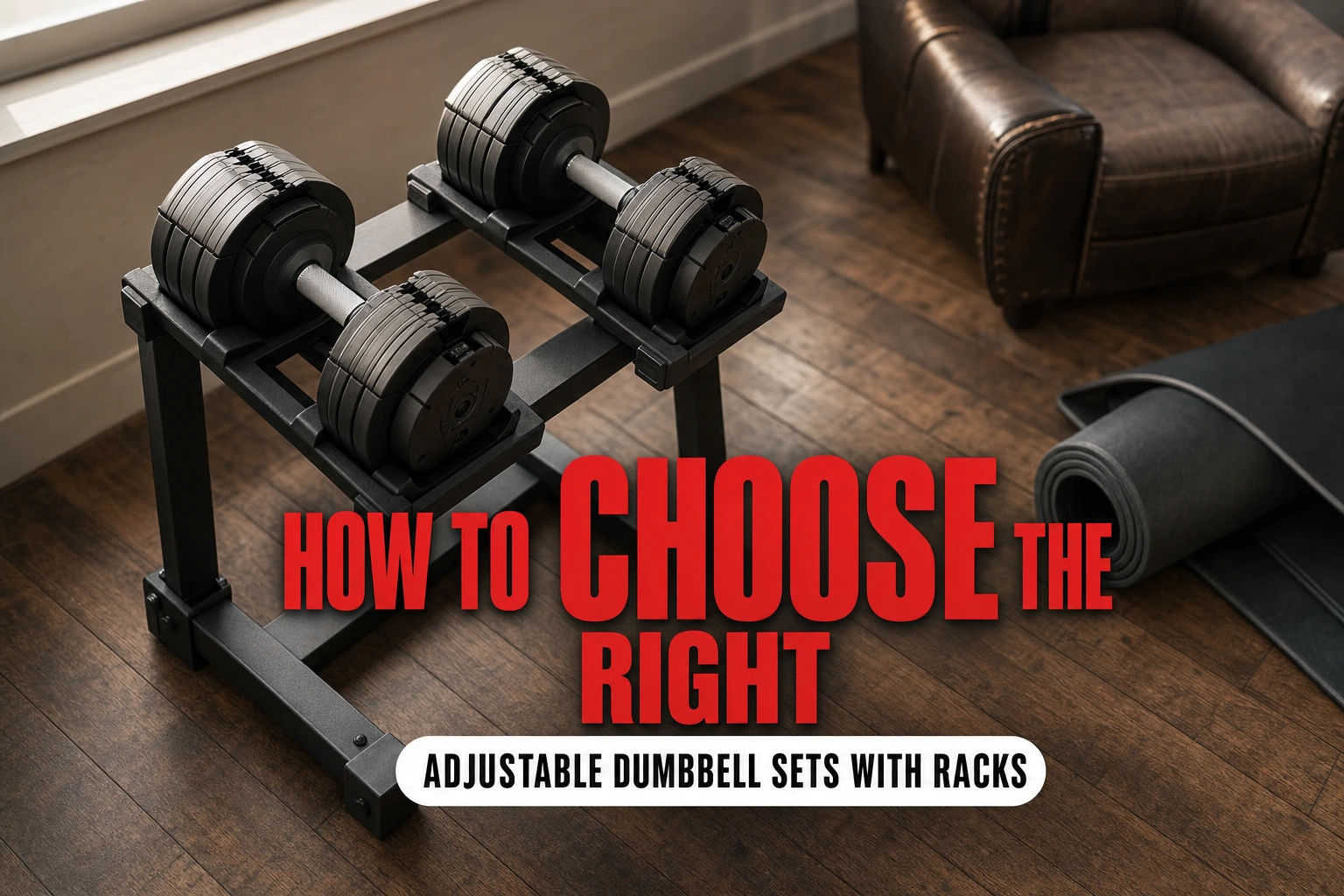
How to Choose the Right Adjustable Dumbbell Sets with Racks
Learn how to select the perfect adjustable dumbbell set with a rack by comparing adjustment styles, weight increments, handle grips, and stand ergonomics.
This article is informational and does not place shopping buttons in the story. Related buying guides may include affiliate links.
As an Amazon Associate I earn from qualifying purchases. This does not affect the price you pay. Affiliate disclosure
On this page8 sections
The short answer
- Focus on the adjustment mechanism to ensure fast, reliable weight transitions during your workouts.
- Choose a rack style that fits your floor space and keeps the weights at hip height.
- Check the minimum and maximum weight limits to match your current and future fitness levels.
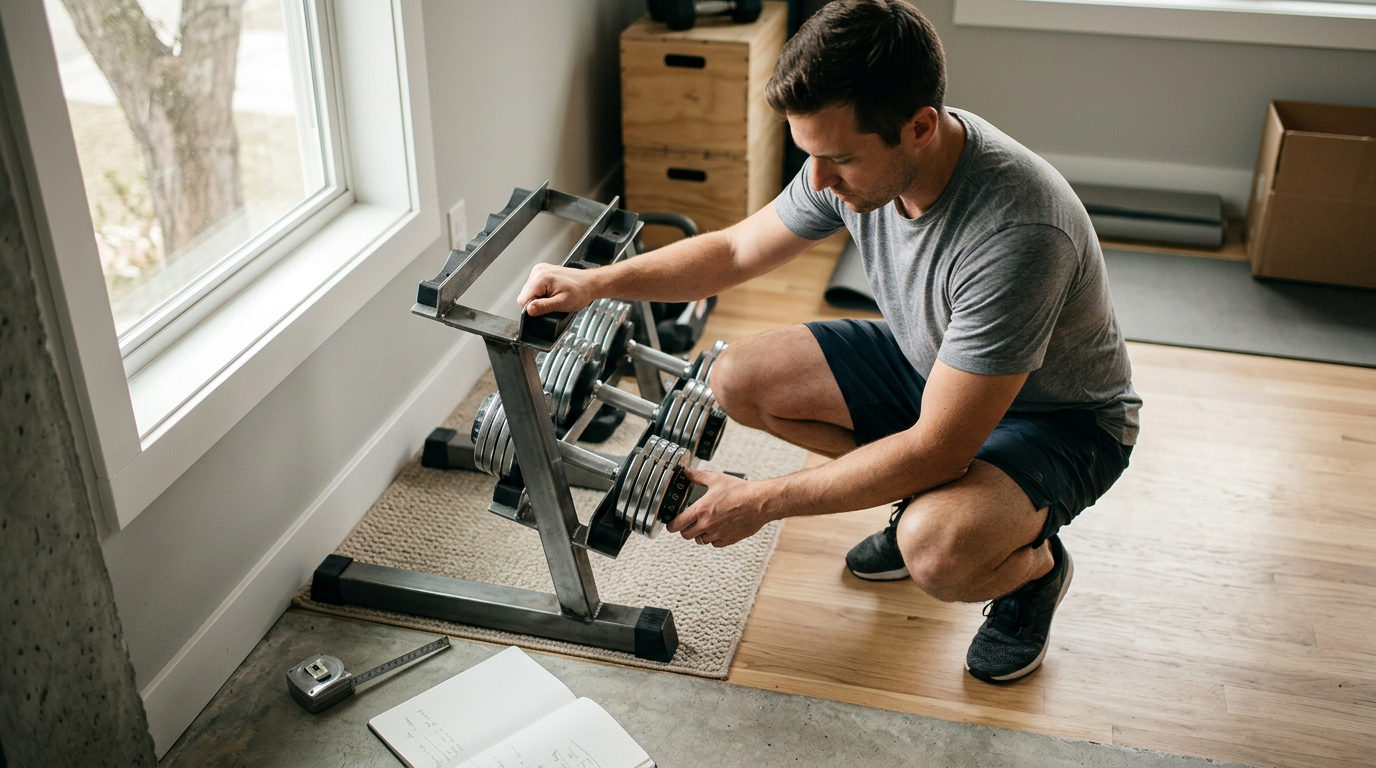
To choose the right adjustable dumbbell set with a rack, evaluate the adjustment mechanism, weight increments, handle grip comfort, and the footprint of the stand. Matching the rack's frame style to your workout space ensures safety and easy access.
Home gym enthusiasts often struggle with the clutter of traditional dumbbell sets. By combining multiple weights into a single pair, adjustable dumbbells save valuable floor space while offering a wide range of resistance. However, because these systems are heavy and require precise docking, buying them alongside a dedicated rack is crucial for both organization and ergonomics.
Choosing the right set involves looking closely at how the weights connect and how the stand supports them during quick-paced workouts. Understanding the mechanical differences and how they affect your training flow will help you make a smart investment.
The quick version
- Assess your current strength and future
- Measure your dedicated workout space
- Evaluate the handle shape and grip
- Check the frame construction of the
- Review the specific weight increment steps
Decoding the Weight Adjustment Mechanisms
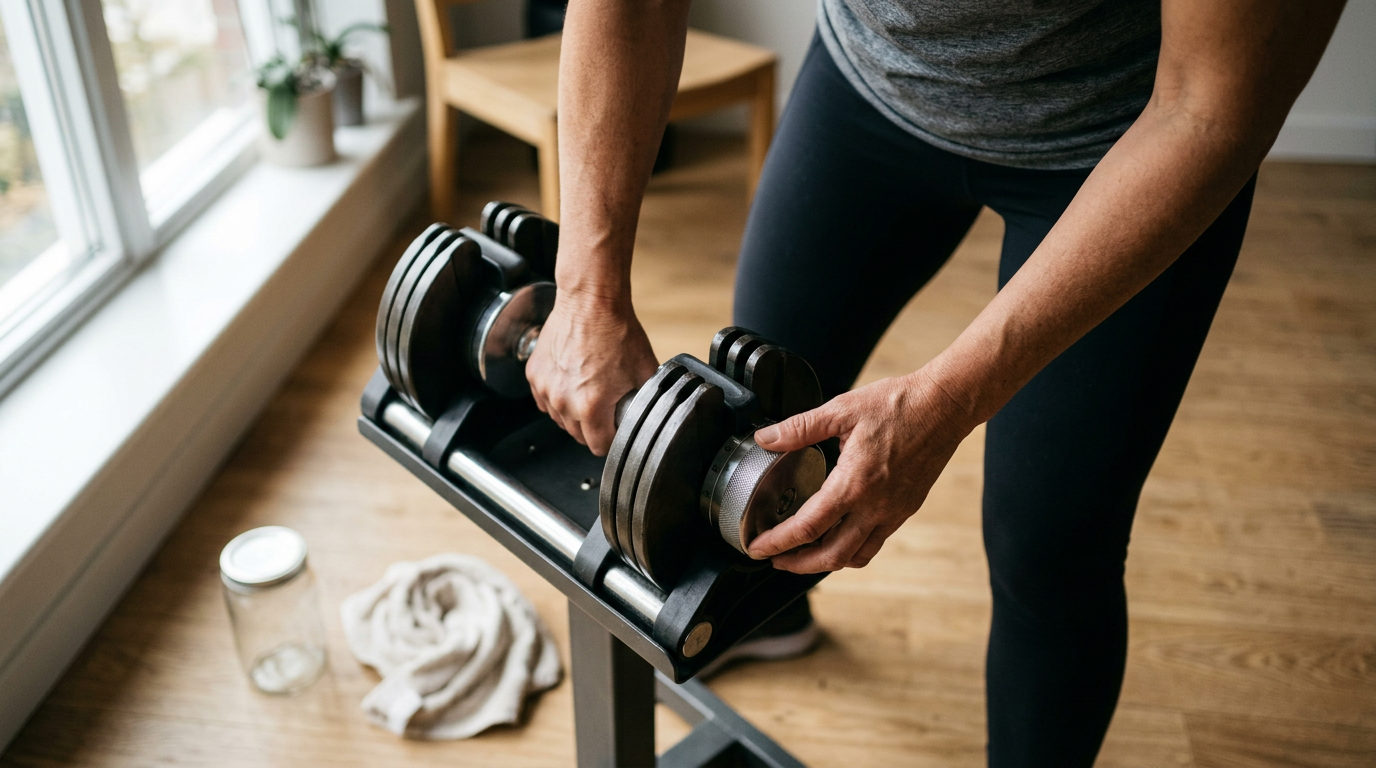
When shopping for these weight systems, the mechanism you use to change the load is the most critical feature. The two most common types are selectorized dial systems and pin-lock mechanisms. Selectorized dials allow you to turn a dial on the end of the dumbbell to click your desired weight into place automatically. This style is exceptionally fast, allowing you to transition between exercises in seconds without manual plate handling.
Alternatively, pin-lock systems require you to pull a pin and slide it into the slot corresponding to your chosen weight. While slightly slower than dial systems, pin-based dumbbells often feel more robust and closer to traditional dumbbells because they contain fewer internal plastic gears. There are also twist-handle systems, where rotating the grip handle itself selects the weight.
Each mechanism changes how you interact with the weights during a high-intensity session. If your workouts rely on quick drop sets where seconds matter, a dial or twist-handle system is usually the superior choice. If you prioritize a traditional, solid metal feel and do not mind taking an extra ten seconds between sets, pin-locked or plate-loaded systems are highly dependable.
Understanding Weight Ranges and Increment Steps
The total weight capacity and the size of the increments between plates dictate how long a set will remain useful as you grow stronger. Standard sets often start at 5 pounds (about 2.2 kg) and go up to 50 or 52.5 pounds (about 24 kg) per hand. Advanced lifters might prefer heavier sets that scale up to 80 or 90 pounds (about 40 kg) per dumbbell.
Equally important is the increment gap, which is the amount of weight added with each step. Standard increments are usually 5 pounds, but some sets offer smaller shifts. If you are focusing on smaller muscle groups like shoulders or biceps, a 5-pound jump can feel like an insurmountable leap. For these exercises, finding a set with 2.5-pound increments at the lower end of the range is essential for steady, safe progress.
Investing in a set that offers expandable weight plates can save money in the long run. Some manufacturers sell base packages that you can later upgrade with add-on plates as your physical strength increases. This modular approach ensures you do not have to purchase an entirely new set of dumbbells and a new rack when you outgrow your initial purchase.
 See the picks in our buying guide
Comparing Stand and Rack Configurations
An adjustable dumbbell set is only as good as the stand that holds it. Because these systems are heavy and complex, lifting them directly from the floor can strain your lower back and increase the risk of dropping a delicate dialing mechanism. A sturdy rack keeps the weight trays at a comfortable hip height, promoting proper lifting posture from the very start of your set.
When setting up your fitness space, choosing the best adjustable dumbbell sets with racks helps you streamline your footprint. Racks generally come in three configurations: A-frame stands, flat cradles, and tilted platforms. Tilted platforms are widely considered the most ergonomic because they angle the dumbbell handles toward your hands, making them easier to lift and replace.
Additionally, you must consider the footprint of the stand. If you are working with a tight space in a spare bedroom or apartment, a compact, vertical stand is ideal. Conversely, if you have a dedicated garage gym, a wider, low-profile rack might offer superior stability. Ensure the stand features rubberized feet to protect your flooring and prevent the rack from sliding during heavy re-racking.
A Step-by-Step Guide to Choosing Your Set
Selecting the perfect system requires a methodical approach to ensure you do not end up with equipment that is too light or too bulky for your training style. Follow these steps to narrow down your choices:
- Assess your current strength and future goals. Determine if a standard fifty-pound limit is sufficient or if you require an expandable set that scales higher.
- Measure your dedicated workout space. Mark out the floor area where the rack will sit, ensuring you have at least two feet of clearance on all sides.
- Evaluate the handle shape and grip texture. Decide whether you prefer a contoured steel handle with knurled grip or a straight, rubber-coated handle.
- Check the frame construction of the rack. Opt for heavy-duty steel stands with wide bases and angled cradles to ensure maximum stability and ease of use.
- Review the specific weight increment steps. Verify that the set offers small enough jumps for your weakest exercises so you can progress smoothly.
By taking the time to analyze these variables, you can confidently invest in a setup that matches both your physical needs and your home environment.
Analyzing Handle Grips and Build Materials
The physical connection between your hand and the weight is defined by the handle grip. Manufacturers generally use either textured steel knurling or molded rubber grips. Metal knurling provides a traditional barbell feel, offering a secure, non-slip grip even when your hands are sweaty. However, aggressive knurling can be rough on soft hands, leading some home fitness enthusiasts to prefer rubber coatings.
Rubber-coated handles are softer and more comfortable for beginners, but they can degrade over time when exposed to sweat and friction. Furthermore, some users find that rubber grips can feel slippery during heavy press or pull movements. If you choose rubber, look for high-density, textured compounds that resist peeling and slipping.
The plates themselves also vary in material composition. High-quality adjustable sets feature steel or cast iron plates coated in thermoplastic rubber or hard plastic. This coating dampens the clanging noise during lifts and protects the plates from rust. Cheaper models may use plastic shells filled with sand or concrete, which are far less durable and prone to cracking under high impacts.
Which Adjustable Dumbbell System Should You Pick?
Your final decision should align with your primary workout style and space limitations. If you prefer high-paced circuit training and need to change weights instantly, a dial-adjusted or twist-handle set is your best option. These systems work seamlessly with compact, tilted stands that keep your transitions fluid. You can view top-rated options in our best adjustable dumbbell sets with racks buying guide.
For powerlifters or those who lift heavy and tend to drop weights, a pin-locked, solid iron system is much more suitable. These sets handle rougher treatment and are less likely to experience internal mechanical failures. They pair well with heavy-gauge steel flat racks that can support substantial weight capacities without wobble.
Ultimately, the right system is one that removes friction from your routine. Prioritize a high-quality stand that positions the weights ergonomically, and choose a handle design that feels natural in your palm. By focusing on these physical touchpoints, you will create a highly efficient, space-saving home gym setup that lasts for years.
Frequently asked
As an Amazon Associate I earn from qualifying purchases. This does not affect the price you pay. Affiliate disclosure