
Choose the Right Canon EOS Camera for Your Needs
Learn how to choose the right Canon EOS camera by comparing mirrorless and DSLR systems, full-frame and APS-C sensors, autofocus, video and handling.
This article is informational and does not place shopping buttons in the story. Related buying guides may include affiliate links.
As an Amazon Associate I earn from qualifying purchases. This does not affect the price you pay. Affiliate disclosure
On this page10 sections
- 1The short answer
- 2How to Choose the Right Canon EOS Camera
- 3Mirrorless RF vs Traditional DSLR EF Systems
- 4Understanding Sensor Sizes: Full-Frame vs APS-C
- 5Compare Full-Frame and APS-C Trade-Offs
- 6Autofocus Capabilities and Subject Tracking
- 7Video Features and Image Stabilization
- 8Ergonomics, Battery Life and Storage
- 9Which Canon EOS Camera Style Should You Pick?
- 10Frequently asked
The short answer
- Determine if mirrorless portability or DSLR battery life fits your personal workflow.
- Select full-frame sensors for low-light performance or APS-C sensors for extra reach.
- Prioritize the latest subject-tracking autofocus systems if you photograph moving action.
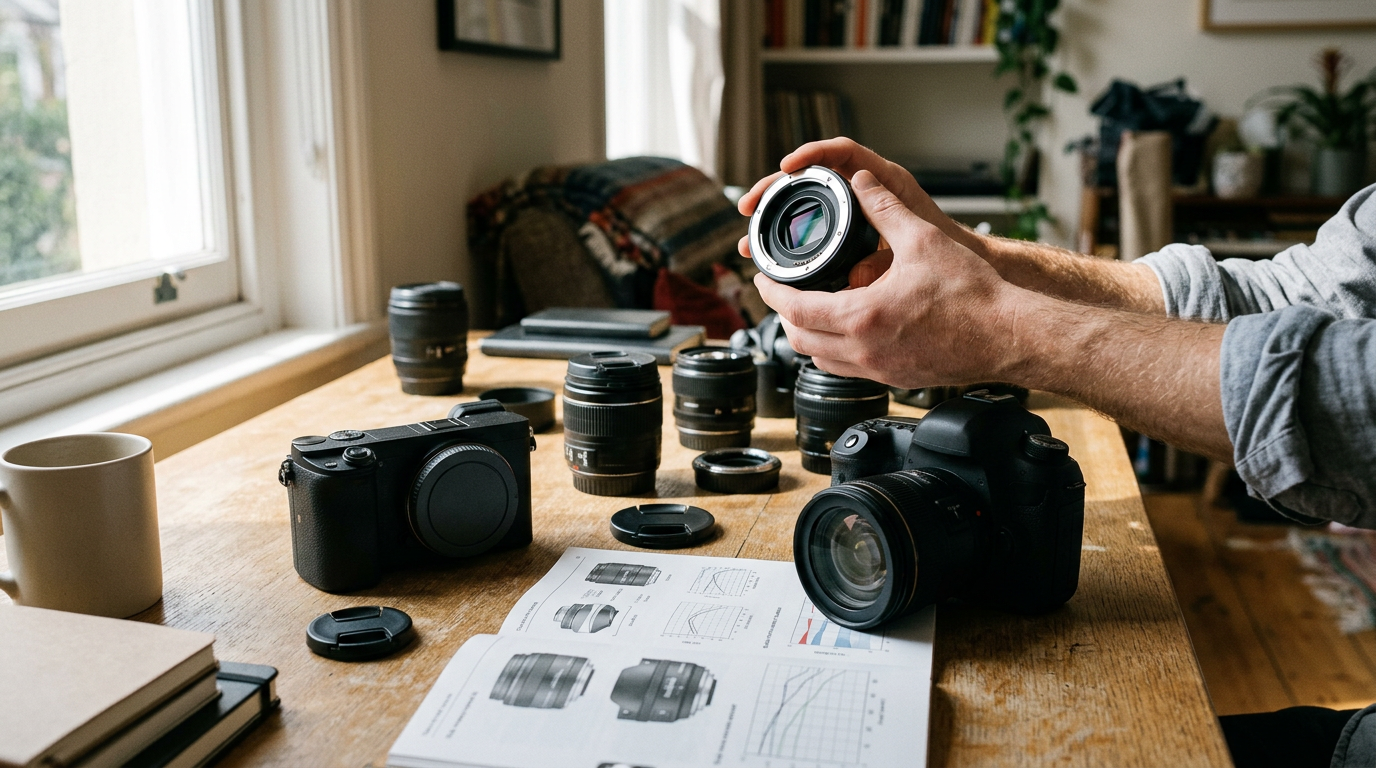
To choose the right Canon EOS camera, start with what you photograph, decide between mirrorless and DSLR, then choose an APS-C or full-frame sensor. After that, compare autofocus, video features, handling, lens compatibility and storage. Your budget should cover the body and the lenses you will actually need.
The Canon EOS lineup includes compact cameras for travel and family photography as well as larger bodies intended for demanding action, portrait and video work. The practical differences lie in how each system handles lenses, low light, moving subjects and extended shooting sessions. Choosing more capability than you need can add cost and weight, while choosing too little can restrict the subjects you photograph.
This guide explains the specifications that affect everyday use rather than concentrating on marketing labels. Once you know which format and features suit you, compare suitable options in Best Canon EOS Cameras: 5 Picks Compared.
How to Choose the Right Canon EOS Camera
Begin by writing down your main subject, typical lighting and preferred way of carrying a camera. A travel or family photographer may value a small body and compact lenses, while a sports or wildlife photographer may care more about subject tracking, burst performance and access to telephoto lenses. Portrait and event photographers should consider low-light performance, controls and backup storage. Video creators need to examine recording modes, stabilization and screen movement.
Next, set a budget for a usable kit rather than the camera body alone. Include at least one suitable lens, memory cards, a spare battery and any adapter you genuinely need. Choose the lens system before comparing minor body features, because lenses influence framing, portability and long-term flexibility. Finally, hold the camera if possible: grip depth, viewfinder comfort and control placement cannot be judged from a specification sheet alone.
Mirrorless RF vs Traditional DSLR EF Systems
Choosing a camera system starts with deciding between mirrorless technology and traditional DSLRs. DSLRs feature a physical mirror mechanism that reflects light into an optical viewfinder, flipping out of the way whenever you click the shutter. Mirrorless cameras omit this mechanism, allowing light to reach the image sensor continuously and supporting a more compact body design.
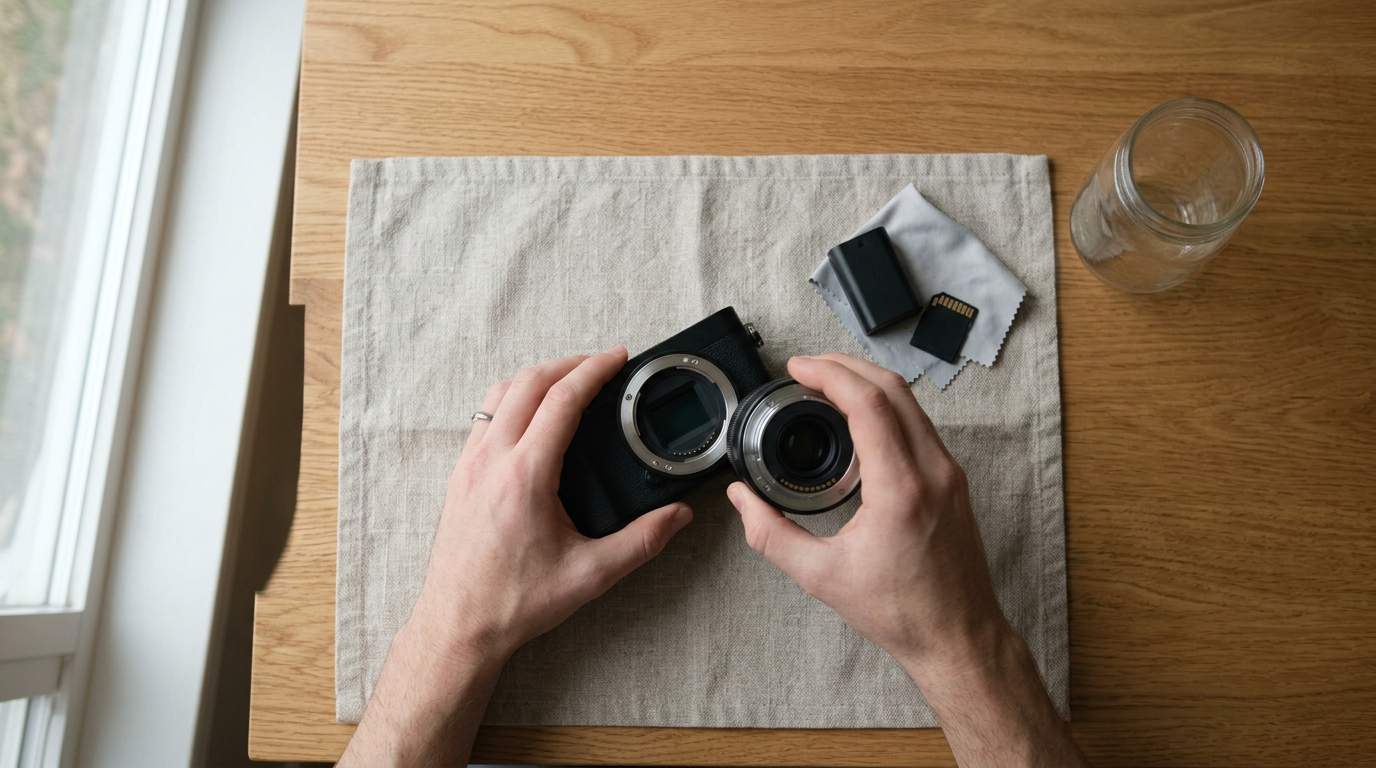
This physical difference dictates your lens options, which are the most important long-term part of the system. Canon DSLRs use EF and EF-S lens mounts, while compatible mirrorless bodies use RF and RF-S mounts. EF and EF-S lenses require a suitable adapter on an RF body, and RF lenses cannot be mounted on an EF DSLR. Check the compatibility of each body, lens and adapter rather than assuming every combination works identically.
The viewfinder experience also changes between these formats. An optical viewfinder gives you a direct view through the lens and uses little battery power while composing. An electronic viewfinder shows a digital preview that can display exposure, white balance and focus aids before you take the picture. Mirrorless is generally the more forward-looking choice for a new system, while a DSLR may still suit someone who owns compatible EF lenses or strongly prefers an optical viewfinder.
 See the picks in our buying guide
Understanding Sensor Sizes: Full-Frame vs APS-C
The sensor inside a camera influences field of view, low-light performance, depth of field, body size and lens choice. Canon EOS cameras are commonly available with full-frame or APS-C sensors. A full-frame sensor is larger and can offer advantages in low light and when a shallow depth of field is important, although the result also depends on the lens, exposure and camera generation.
APS-C sensors are smaller and Canon APS-C bodies apply an approximately 1.6x crop factor to the field of view compared with full frame. A 100mm lens therefore gives a field of view similar to a 160mm lens on full frame; its physical focal length does not change. The narrower view can be useful for distant wildlife or sports, but it can make wide-angle framing harder unless you choose a suitably wide lens.
To make a sensible choice, match the sensor size to your subjects, preferred lenses and carrying limits. Full frame often appeals to portrait, event and low-light photographers. APS-C can provide a smaller kit and extra apparent reach for distant subjects. Neither format automatically produces better photographs in every situation.
Compare Full-Frame and APS-C Trade-Offs
Sensor size should be considered as part of the whole kit rather than as a simple quality ranking. Full-frame systems can make it easier to achieve a shallow depth of field with comparable framing and aperture, and they can perform well at high ISO. Their bodies and suitable lenses may also be larger. APS-C systems can be lighter, particularly when paired with lenses designed for the smaller sensor.
Consider these practical differences:
- Full frame may suit dim venues, environmental portraits and wide-angle work.
- APS-C provides a narrower field of view from the same focal length, which can help with distant subjects.
- Depth of field depends on sensor size, aperture, focal length, focus distance and framing.
- Resolution alone does not determine image quality or suitability.
- Lens size and weight can matter more than the difference between two camera bodies.
If you regularly crop distant subjects, examine both sensor resolution and autofocus performance. If portability matters, compare the weight of the body plus the lenses you intend to carry. Our Canon EOS camera comparison shows how these choices appear in specific models.
Autofocus Capabilities and Subject Tracking
Autofocus matters most when your subject moves unpredictably. Many Canon EOS cameras provide on-sensor phase-detection autofocus, while available recognition modes vary by model. Do not assume that every body recognizes the same subjects or offers identical coverage. Check whether a camera can detect the subjects you photograph, whether that mode works in stills and video, and how much of the frame the autofocus area covers.
If you regularly photograph active subjects such as children, pets or athletes, prioritize reliable subject detection, tracking and burst shooting above headline resolution. A camera that maintains focus can be more useful than one with more pixels but less capable tracking. Also compare low-light autofocus limits, focus-area controls and how quickly you can switch between people, animals or other supported subjects.
DSLR autofocus through the viewfinder commonly uses a separate autofocus module, with points concentrated around part of the frame. Mirrorless autofocus operates on the imaging sensor and can cover a broader area, although exact coverage depends on the body and mode. Test menu access and subject switching if speed is important to your work.
Video Features and Image Stabilization
If you intend to record video, inspect more than the presence of a 4K label. Check whether 4K changes the field of view, which frame rates and recording limits are available, and whether autofocus behaves differently at particular settings. A crop can be inconvenient for vlogging or filming in small rooms because it makes a lens appear tighter. Creators who plan to grade footage should also compare the recording formats and colour profiles supported by each body.
Look for microphone and headphone connections if you need to monitor sound, and consider whether the screen flips or tilts in the direction your work requires. Heat management, battery life and memory-card speed may also affect longer recordings, so consult the camera documentation for the recording mode you plan to use.
In-body image stabilization, or IBIS, moves the sensor to reduce visible camera shake. It can help with handheld stills and video, but it does not freeze a moving subject and cannot replace good camera technique. Lens stabilization can also be useful, and some combinations coordinate body and lens stabilization. Choose stabilization for the way you shoot, not as a substitute for a tripod, gimbal or faster shutter speed where those tools are appropriate.
Ergonomics, Battery Life and Storage
The physical design of a camera body dictates how comfortable it is to use during long shooting sessions. Larger bodies often provide deeper grips and more dedicated controls, while smaller bodies are easier to pack but may feel cramped with large lenses or larger hands. Weather sealing, screen articulation, viewfinder size and button customization can also matter, depending on where and how you work.
You should evaluate battery life and memory-card configuration based on your shooting volume. DSLRs can be power-efficient when the optical viewfinder is used, while mirrorless cameras continuously power a screen or electronic viewfinder during composition. Actual endurance varies with video use, burst shooting, wireless connections, temperature and review habits, so carrying a spare battery is sensible for long sessions.
Dual memory-card slots allow compatible cameras to record a backup or separate file types, but available modes and card standards vary. This redundancy is useful for paid or unrepeatable work, though it does not replace a proper backup after the shoot. A single slot can be sufficient for casual photography if cards are handled carefully and files are copied promptly.
Which Canon EOS Camera Style Should You Pick?
Finding the right camera means matching its features to your shooting style rather than choosing the most advanced specification sheet. Travelers, family photographers and everyday hobbyists may prefer a compact APS-C mirrorless body with a versatile lightweight lens. Wildlife and sports photographers should put autofocus, burst behavior, buffer capacity and telephoto lens options near the top of the list.
Portrait, event and commercial photographers may value full-frame image characteristics, direct controls, low-light capability and dual-card recording. Video-focused users should prioritize recording modes, audio connections, screen design, heat behavior and stabilization. Existing EF lens owners should compare the cost and handling of adapting those lenses with moving to native RF lenses.
Traditional DSLRs remain a practical option for photographers who prefer an optical viewfinder, value battery endurance or already own compatible equipment. For a concise model shortlist, read Best Canon EOS Cameras: 5 Picks Compared. The right Canon EOS camera is the one whose lens system, controls and core features fit the work you do most often.
Frequently asked
As an Amazon Associate I earn from qualifying purchases. This does not affect the price you pay. Affiliate disclosure