How to Choose the Right Diet Dog Dry Food
To choose the right diet dry dog food, balance a low calorie density with high fiber and protein to keep your dog full while losing weight.
This article is informational and does not place shopping buttons in the story. Related buying guides may include affiliate links.
As an Amazon Associate I earn from qualifying purchases. This does not affect the price you pay. Affiliate disclosure
On this page8 sections
The short answer
- Prioritize dry foods with high protein and elevated fiber to promote satiety during weight loss.
- Look for low calorie density per cup to avoid drastically reducing your dog's portion sizes.
- Consult your veterinarian to calculate your dog's specific daily caloric needs before switching foods.
To choose the right diet dog dry food, select a formula that lowers calorie density while maintaining high protein and fiber levels to preserve muscle mass and keep your dog feeling full. Always consult your veterinarian to establish a safe daily calorie target.
Weight management in dogs requires a careful adjustment of nutrients rather than simply feeding them less of their regular kibble. Drastically cutting portions of standard food can lead to nutritional deficiencies, leaving your dog hungry, irritable, and lacking essential vitamins.
By understanding how fiber, protein, and fat ratios differ in specialized weight control formulas, you can select a food that supports healthy weight management. This guide breaks down what to look for on the ingredient label so you can make an informed choice.
The quick version
- Consult your veterinarian first
- Calculate the exact serving size
- Transition the food slowly
- Use a digital kitchen scale
- Monitor weight progress weekly
- Adjust portions based on results
Decoding the Label Metrics
When evaluating weight control diets, the numbers on the back of the bag provide essential clues. The primary metric to look for is the metabolizable energy (ME) value, which represents the actual calories your dog will digest from the food. This value is typically printed as kilocalories per kilogram (kcal/kg) and also per cup.
To support weight loss, you want a dry food with a lower calorie density than standard kibble. If your current food has 400 calories per cup, switching to one with 300 calories per cup allows your dog to eat a similar volume while consuming fewer calories. This volume is critical for maintaining your dog's mood and compliance during a diet.
You must also check the crude protein and crude fiber percentages in the guaranteed analysis. High protein helps protect lean muscle tissue while the body burns fat. Fiber absorbs water in the stomach, promoting satiety and helping your dog feel satisfied between meals. When shopping, evaluate the metabolizable energy (ME) content printed on the back of the packaging to ensure it aligns with your dog's caloric deficit plan.
The Danger of Simply Cutting Portions
Many pet owners attempt to help their dogs lose weight by simply offering smaller scoops of their current, non-diet food. While this does reduce calorie intake, it can inadvertently harm your dog's health. Standard adult maintenance kibble is formulated to deliver essential vitamins, minerals, and fatty acids based on specific serving sizes.
When you significantly reduce those serving sizes, you also reduce the intake of those vital nutrients. Over time, your dog may develop a dull coat, flaky skin, or lethargy due to these dietary gaps. Furthermore, a suddenly empty stomach triggers the release of hunger hormones, leading to begging, scrounging, and behavioral changes.
Specialized weight management formulas solve this issue by concentrating essential vitamins and minerals. This design ensures that even with fewer calories, your dog still receives 100 percent of their daily nutritional requirements. By choosing a product from our guide on Best Diet Dog Dry: 4 Picks Compared, you can confidently reduce energy intake without risking nutrient starvation. Ultimately, switching to a dedicated weight management dry food allows you to feed a satisfying volume while maintaining nutritional safety.
 See the picks in our buying guide
Key Ingredients to Look For
The ingredient list of a high-quality weight management dry food should start with high-quality animal proteins. Look for identifiable meats like chicken, turkey, or lamb as the first ingredient. These proteins are highly digestible and support the retention of lean muscle mass, which is crucial because muscle tissue burns more calories at rest than fat tissue does.
Fiber sources also play a starring role in diet kibble. Look for wholesome fiber ingredients such as beet pulp, pea fiber, powdered cellulose, or miscanthus grass. These fibers pass through the digestive system relatively unchanged, adding bulk to the stool and slowing down digestion. This slow transit time helps stabilize blood sugar levels and prevents sudden spikes in hunger after eating.
Many manufacturers also include specific functional nutrients like L-carnitine to aid weight loss. According to manufacturers, L-carnitine helps support the transport of fatty acids into cells, where they can be burned as energy. Additionally, look for glucosamine and chondroitin, which help support joint health, as carrying excess body weight puts additional strain on a dog's skeletal structure.
Steps to Safely Transition Your Dog
- Consult your veterinarian first. Request a thorough body condition assessment to determine your dog's target weight and daily calorie requirements.
- Calculate the exact serving size. Use the calorie content of the new diet food to determine the exact weight of kibble required per day.
- Transition the food slowly. Over a seven to ten day period, gradually replace a portion of the old food with the new diet kibble over seven to ten days to prevent gastrointestinal upset.
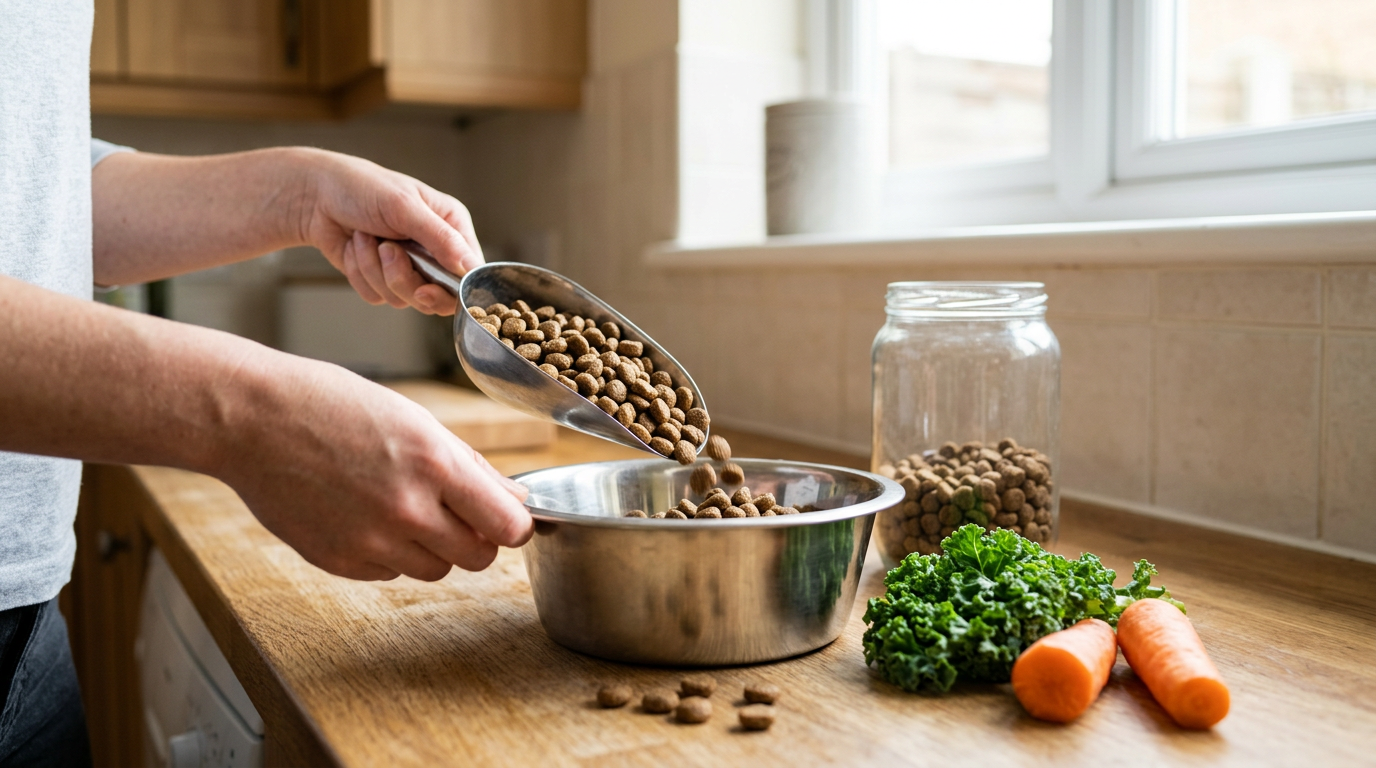
- Use a digital kitchen scale. Weighing the food in ounces or grams is far more accurate than using a plastic measuring cup, which can vary by up to twenty percent.
- Monitor weight progress weekly. Weigh your dog at the same time each week and record the progress to ensure the weight loss is steady but not too rapid.
- Adjust portions based on results. If your dog is not losing weight after three weeks, consult your vet to safely adjust the daily calorie target.
Prescription Diets vs Over-the-Counter Options
Understanding the differences between over-the-counter (OTC) weight control foods and veterinary prescription diets is essential when making your decision.
- Calorie Restriction: OTC weight management diets typically offer moderate calorie reductions, whereas veterinary prescription diets are formulated with much lower calorie densities to address significant weight issues.
- Fiber and Protein Ratios: Prescription formulas contain highly specialized, therapeutic ratios of fiber and protein to manage severe hunger, while OTC options rely on standard fiber levels suitable for mild weight maintenance.
- Medical Testing: Prescription options are backed by clinical trials for efficacy in treating canine obesity, whereas OTC formulas must only meet general nutritional maintenance guidelines.
- Purchase Requirements: You can purchase OTC weight management dry food at any pet supply store, while prescription diets require a written authorization from your veterinarian.
If your dog only needs to lose a few pounds to regain their shape, a high-quality OTC formula from our curated list of Best Diet Dog Dry: 4 Picks Compared is often the most practical and cost-effective choice. However, if your dog is clinically obese or has underlying health issues like joint pain or diabetes, a prescription diet may be necessary.
Which Diet Dog Dry Food Should You Pick?
To make the final decision, assess your dog's current physical condition and overall health profile. If your dog is slightly overweight or highly prone to gaining weight easily, a premium retail weight-control kibble will help keep their weight stable while keeping them fully satisfied. These formulas are readily available and provide a balanced approach for long-term feeding.
On the other hand, if your dog is carrying significant excess weight that impacts their mobility or breathing, you should seek a veterinary prescription formula. These therapeutic diets are designed for rapid, controlled weight loss under professional supervision. Always choose a retail weight control formula for minor adjustments and a veterinary prescription diet for severe obesity to protect your pet's overall well-being. To explore highly rated options that cater to different breeds and sizes, consult our guide on Best Diet Dog Dry: 4 Picks Compared before making your final selection.
Frequently asked
As an Amazon Associate I earn from qualifying purchases. This does not affect the price you pay. Affiliate disclosure