
How to Choose the Right Full Bed Breathable Sheets
To choose the right full bed breathable sheets, prioritize natural fibers like bamboo, linen, or long-staple cotton paired with a lightweight weave.
This article is informational and does not place shopping buttons in the story. Related buying guides may include affiliate links.
As an Amazon Associate I earn from qualifying purchases. This does not affect the price you pay. Affiliate disclosure
On this page8 sections
The short answer
- Select lightweight natural fibers such as linen, eucalyptus Tencel, or long-staple cotton to promote airflow.
- Avoid high thread counts above 400, which create dense, heat-trapping fabrics instead of breathable surfaces.
- Check pocket depth measurements to ensure the sheets fit a 54 by 75-inch full mattress securely.
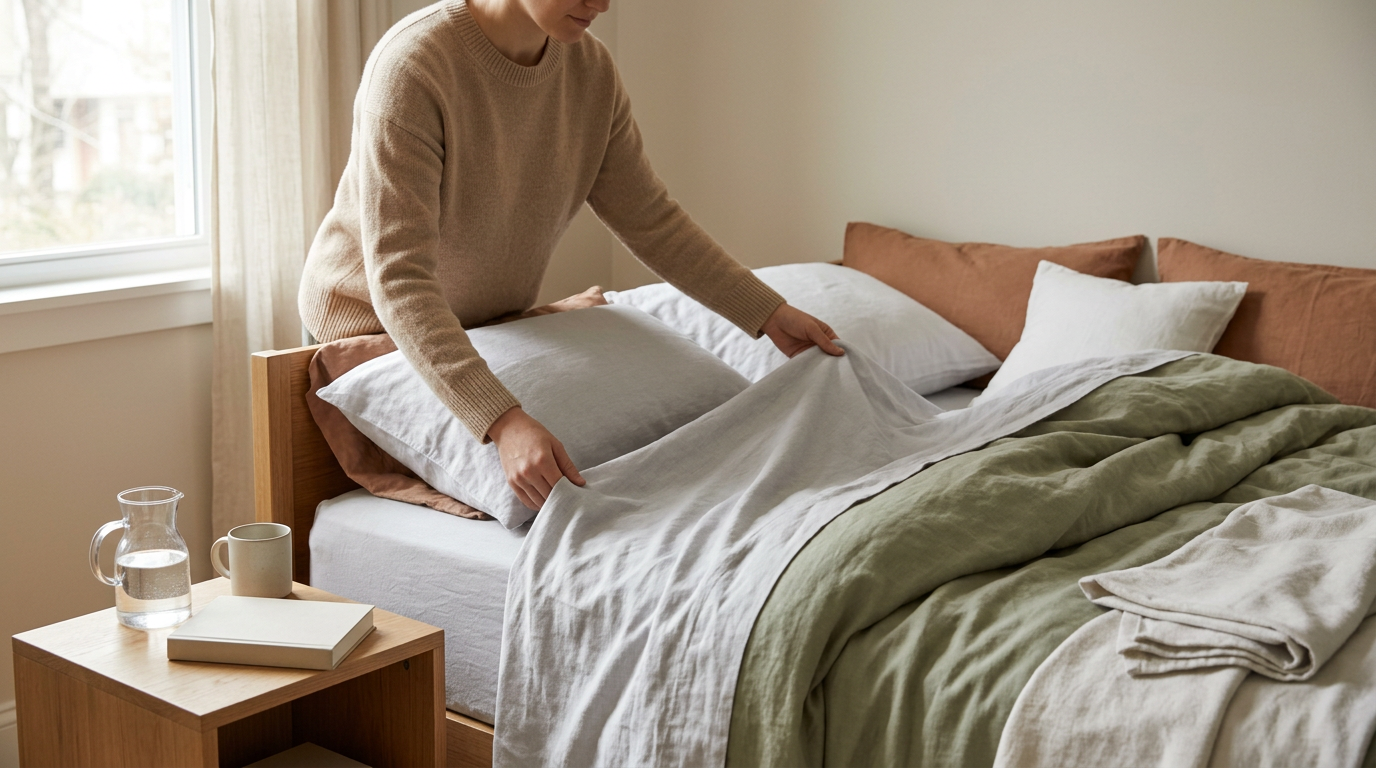
Choosing the right full bed breathable sheets requires focusing on natural fiber content, a lightweight weave structure, and a thread count under 400. Avoid synthetic materials that trap body heat and moisture during the night. While a full-size mattress measures 54 inches by 75 inches [137 cm by 191 cm], finding the correct sheets involves looking beyond dimensions. Sleep temperature is directly controlled by how air flows through the fabric structure. If air cannot circulate, heat builds up, resulting in a restless, sweaty night. Different fabrics and weaves manage heat and humidity in highly distinct ways. Understanding these differences allows you to choose a sheet set that keeps you cool, fits your mattress snugly, and lasts through years of regular laundering. According to the Sleep Foundation, natural materials like cotton and linen are generally more breathable than synthetic alternatives.
Demystifying Fabric Types and Fiber Content
The raw material of your sheets dictates their inherent moisture-wicking and thermal properties. Natural fibers are generally superior to synthetics because their organic structures allow moisture to evaporate rather than accumulate on your skin. Synthetic sheets tend to trap body heat, transforming your bed into a small oven over the course of the night. Cotton remains the classic choice, but the specific type matters. Long-staple cotton, such as Egyptian or Supima, features longer fibers that can be spun into fine, strong yarns. This results in a lighter, thinner fabric that breathes exceptionally well, allowing heat to pass through rather than staying trapped against your mattress. Linen, made from the flax plant, is another premium cooling fabric. Its fibers are naturally thick and hollow, allowing air and moisture to pass through effortlessly. It possesses a textured feel that softens with each wash, offering unmatched breathability for hot climates. Rayon-derived fibers like bamboo viscose or Tencel (lyocell) are highly praised for their moisture-wicking capabilities. These semi-synthetic fibers feel silky cool to the touch and drape smoothly over the bed, pulling humidity away from hot sleepers and facilitating rapid evaporation.
Decoding Weaves and Thread Counts
The way threads are interlaced drastically changes how much air can pass through a sheet set. A common misconception is that a higher thread count always means better sheets, but for hot sleepers, the opposite is often true. High thread counts require packing threads together tightly, which suffocates the fabric's ability to breathe. A thread count over 400 usually indicates a dense weave that blocks airflow, whereas a thread count between 200 and 400 is ideal for maintaining structural integrity while allowing heat to escape. Sheets with thread counts of 800 or 1000 are often made by twisting cheap, multi-ply threads together, resulting in a heavy blanket-like sheet. The two primary weaves you will encounter are percale and sateen. A percale weave uses a classic one-over-one-under pattern, resulting in a crisp, matte fabric resembling a high-end hotel sheet. This grid-like structure is highly breathable, lightweight, and cool against the skin. A sateen weave utilizes a four-over-one-under pattern, which exposes more thread surface. This creates a lustrous, silky sheen and a heavier weight. While soft and luxurious, sateen is warmer and less breathable than percale, making it less suitable for those who overheat.
Sizing and Mattress Fit for Full Beds
A standard full-size mattress measures 54 inches wide by 75 inches long [137 cm by 191 cm]. However, depth varies wildly depending on whether you use a mattress topper, a pillow-top model, or a thin memory foam slab. Purchasing sheets that do not match these physical realities can disrupt your sleep. When sheets do not fit properly, they shift and bunch up during the night. This excess fabric can trap pockets of warm air underneath you, negating the cooling benefits of breathable fibers. You need a secure fit to maintain a flat, cool sleeping surface. Measure the height of your mattress before buying to prevent sizing mistakes. Standard pocket sheets typically accommodate depths up to 12 inches [30 cm], while deep-pocket options fit mattresses up to 16 or 18 inches [41 or 46 cm] deep. Adding a mattress protector or topper can push a standard mattress into deep-pocket territory. Ensure the fitted sheet features strong, continuous elastic around the entire perimeter rather than just on the corners. This prevents the corners from popping off during the night, especially if you toss and turn, which keeps the sleep surface tight and breathable.
Key Differences: Percale vs. Sateen vs. Linen
To find your ideal bedding, you must compare how different styles perform across crucial categories. Each fabric brings a different texture, weight, and thermal performance to your bed. - Breathability: Percale offers excellent, breezy airflow due to its simple weave; Sateen is denser and warmer; Linen provides the highest airflow of all due to its loose, thick fibers. - Texture: Percale feels crisp, smooth, and matte like a classic button-down shirt; Sateen feels silky, heavy, and exceptionally smooth; Linen has a textured, slightly slubby feel that becomes softer over time. - Maintenance: Percale wrinkles easily but washes beautifully; Sateen resists wrinkles better but can pill over time; Linen requires gentle washing and embraces a naturally relaxed, wrinkled aesthetic. - Durability: Percale is highly durable and resists tearing; Sateen is more prone to snagging because of its exposed threads; Linen is incredibly strong and often outlasts both cotton options. - Moisture Management: Percale absorbs moisture well but dries slowly; Sateen retains moisture longer; Linen absorbs and evaporates moisture rapidly, keeping you dry. Understanding these trade-offs is vital before exploring curated lists like the Best Full Bed Breathable Sheets for 2026: Top Sets Compared. It helps you align your budget with the exact sleep experience you want to achieve.
Step-by-Step Guide to Maintaining Sheet Breathability
Over time, fabric softeners, skin oils, and improper washing techniques can clog the pores of breathable fabrics. Maintaining your sheet set correctly ensures the fibers remain open to airflow for years. Neglecting care can turn a cooling sheet set into a stiff, heat-trapping barrier. Follow these washing steps to preserve the cooling properties of your investment: 1. Wash in cool or warm water. High temperatures can shrink natural fibers and weaken the weave, reducing the lifespan of your sheets. 2. Use a mild, liquid detergent. Avoid harsh powder detergents or bleach, which can leave residues that clog the tiny spaces between threads. 3. Skip the liquid fabric softener. Fabric softeners coat fibers in a thin chemical film that prevents moisture-wicking and traps body heat. 4. Dry on a low-heat setting. Excessive heat in the dryer damages delicate linen and bamboo fibers, leading to premature tearing and lint buildup. 5. Remove sheets promptly from the dryer. Shaking them out while slightly damp helps minimize wrinkles naturally without requiring a hot iron.
Which Breathable Sheet Type Should You Choose?
Your ultimate selection depends on your personal sleep style, budget, and sensory preferences. There is no single sheet set that suits everyone, but identifying your primary needs simplifies the decision process. If you sleep hot and prefer a traditional, crisp hotel feel, pick cotton percale sheets. They are affordable, widely available, and offer reliable cooling through their simple weave structure. If you suffer from night sweats and prefer a silky, smooth drape, choose bamboo viscose or Tencel lyocell sheets. These materials excel at pulling moisture away from the skin and feel cool to the touch. If you want the maximum possible airflow, do not mind a textured feel, and view bedding as a long-term investment, opt for French or Belgian linen. For a detailed breakdown of specific brands and configurations, consult our guide to the Best Full Bed Breathable Sheets for 2026: Top Sets Compared.
Frequently asked
As an Amazon Associate I earn from qualifying purchases. This does not affect the price you pay. Affiliate disclosure