
How to Tell If Fish Oil Has Gone Bad
Check fish oil for a sharp rancid odor, an unpleasant bitter or sour taste, leaking capsules, or obvious changes in appearance. If you are unsure, discard it rather than relying on the expiration date alone.
This article is informational and does not place shopping buttons in the story. Related buying guides may include affiliate links.
As an Amazon Associate I earn from qualifying purchases. This does not affect the price you pay. Affiliate disclosure
On this page9 sections
The short answer
- A sharp sour, rotten, or paint-like odor is a stronger warning sign than a mild marine smell.
- A bitter, sour, or unusually harsh taste can indicate rancidity, but tasting is optional and unnecessary when the smell is clearly bad.
- Leaking, sticky, discolored, or badly clumped softgels indicate damage or poor storage; discard them if their condition or odor is questionable.
- Keep fish oil tightly closed and away from heat, light, and moisture, following the label’s storage and after-opening instructions.
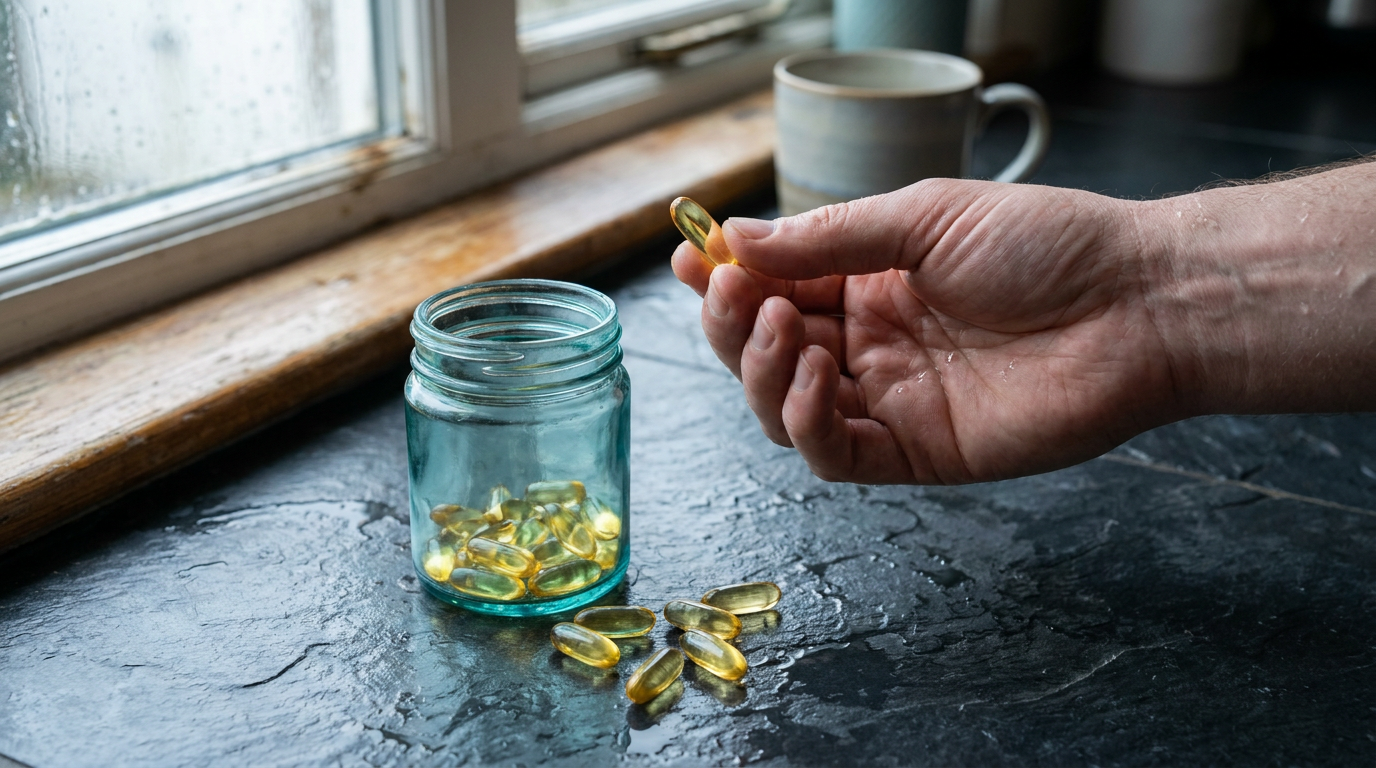
To tell if fish oil has gone bad, smell it first. Discard oil that smells sharply sour, rotten, or rancid, especially if the odor is much stronger than when the bottle was opened. Also check for a bitter or sour taste, leaking softgels, discoloration, or damaged packaging. When several warning signs appear—or you remain unsure—replace the product.
Fish oil contains omega-3 fats that can undergo oxidation when exposed to oxygen, heat, and light. That process creates the odors and flavors commonly associated with rancidity. An expiration date is useful, but it cannot show whether an opened bottle was stored badly, so a quick check of the oil and its container matters too.
1. How to tell if fish oil has gone bad
Start with the bottle rather than the oil. Check the expiration or best-before date and any instruction telling you how soon to use the product after opening. Do not assume that an in-date bottle is fresh: dates generally apply to a product kept under the stated storage conditions, and repeated exposure to heat, light, or air may shorten its useful life.
Look for a broken safety seal, a loose cap, cracks, leaks, or residue around the opening. If the bottle arrived unsealed or damaged, do not use it. For an opened product, consider where it has been kept. A bottle left in a hot car, beside a cooker, in direct sun, or in a humid bathroom deserves closer inspection even if its date has not passed.
The label takes priority over generic storage rules. Some liquid oils require refrigeration after opening, while other products specify a cool, dry place. If you cannot tell when the bottle was opened or how it was stored, use the smell and appearance checks below and discard it if there is any doubt.
2. Smell the fish oil
Open the bottle and smell near the opening without putting your nose inside it. A fresh product may have little odor or a mild marine scent, depending on its source and added flavoring. The important question is whether the smell is sharp, sour, rotten, or unusually strong. Rancid oils may also have an odor described as paint-like or similar to old cooking oil.
For softgels, the closed bottle may not reveal much because the gelatin shell contains the oil. If the capsules look intact but you still suspect spoilage, place one in a clean dish and pierce it with a clean pin or cut it open carefully. Smell the released oil. Wash the dish and your hands afterward, and do not return that capsule to the bottle.
Citrus, mint, or other flavorings can cover some of the natural odor, so compare the product with how it smelled when newly opened if possible. A clearly offensive rancid smell is enough reason to discard it; there is no need to proceed to a taste test.
 See the picks in our buying guide
3. Inspect the oil, capsules, and bottle
Pour liquid fish oil into a clean spoon or clear glass and view it under good light. Look for an unexpected change in color, unusual cloudiness, particles, or separation that does not resolve when the bottle is handled as its label directs. Appearance varies by product, so compare it with the description on the label or with its appearance when first opened. A visual change alone does not always prove rancidity, but it is a reason to check the smell carefully.
Softgels should be intact. Discard capsules that are leaking, split, badly misshapen, or coated with oil. Sticky or fused capsules can indicate exposure to heat or moisture and may mean the shell has been compromised. A few capsules touching each other is not, by itself, a chemical test for rancidity, but extensive clumping combined with odor, leaks, or discoloration is a practical reason to replace the bottle.
Also inspect the container for moisture, damaged lining, or residue under the cap. Do not try to salvage apparently good capsules from a bottle contaminated by a leak.
4. Use taste only as an optional final check
Taste can expose rancidity that a flavored bottle partly masks, but it should be an optional final check—not the first step. Do not taste oil that smells bad, comes from damaged packaging, is past its stated date, or has an unknown storage history. If the product passes those checks and you still need to assess it, sample only a tiny amount of liquid oil or oil released from one softgel.
Fresh fish oil is generally mild and oily, though flavor differs among products. A distinctly bitter, sour, acrid, or harsh aftertaste is a warning that the oil may have oxidized. Spit it out and discard the bottle if the taste is clearly unpleasant. Do not keep sampling in an attempt to reach certainty.
Fishy burps are not a dependable freshness test. They can occur for reasons unrelated to rancidity, including the formulation and how the supplement is taken. Use the oil’s odor and condition—not aftertaste alone—to judge spoilage.
5. Decide whether to keep or discard it
Use the signs together. One minor observation, such as a mild marine scent, does not necessarily mean the oil is bad. Several changes—an offensive odor, bitter taste, leaking capsules, discoloration, and a history of heat exposure—make spoilage more likely. Laboratory tests such as peroxide value can measure aspects of oxidation, but they are not practical for checking a bottle at home.
Discard the product when the evidence is unclear but concerning. Fish oil is not worth keeping when you cannot verify its age, the seal is broken, the bottle has been overheated, or its smell has changed substantially. Do not mix questionable oil with a new bottle or transfer it into another container, because that removes useful date and storage information.
If you replace it, choose a package size you can finish within the manufacturer’s after-opening period. The High Potency Omega 3 Supplements: 2026 Guide explains factors to compare across formats, but freshness still depends on intact packaging and correct storage after purchase.
6. Store fish oil to slow oxidation
Keep the cap tightly closed and open the bottle only long enough to remove a dose. This limits contact with oxygen, one of the main drivers of rancidity. Store the container away from direct sunlight and heat sources such as ovens, radiators, sunny windows, and vehicles. Avoid humid locations, especially bathrooms, because moisture can damage softgel shells and packaging.
Follow the product label on refrigeration. Liquid fish oils are often more exposed to air after opening than sealed softgels, and some labels instruct users to refrigerate them and finish them within a stated period. Do not impose a universal 30-, 60-, or 90-day rule when the manufacturer gives different directions. Write the opening date on the bottle if the label sets an after-opening limit.
Keep the oil in its original container, which preserves the lot, date, and instructions and may help shield it from light. Buy a quantity you can use within the label’s timeframe rather than keeping an opened bottle for an uncertain period. If you are considering another format, consult the guide to high-potency omega-3 supplements before choosing a replacement.
Frequently asked
Sources

As an Amazon Associate I earn from qualifying purchases. This does not affect the price you pay. Affiliate disclosure