
Is a Front Dash Cam Worth Buying in 2026?
A front dash cam can be worth buying in 2026 if you want a straightforward record of the road ahead, especially for collisions, disputed events and insurance claims.
This article is informational and does not place shopping buttons in the story. Related buying guides may include affiliate links.
As an Amazon Associate I earn from qualifying purchases. This does not affect the price you pay. Affiliate disclosure
On this page9 sections
The short answer
- A front-facing camera provides crucial, court-admissible evidence during disputed traffic accidents.
- Modern sensors ensure clear video capture during low-light driving and severe weather conditions.
- Front-only setups are easier to install and more budget-friendly than complex multi-camera systems.
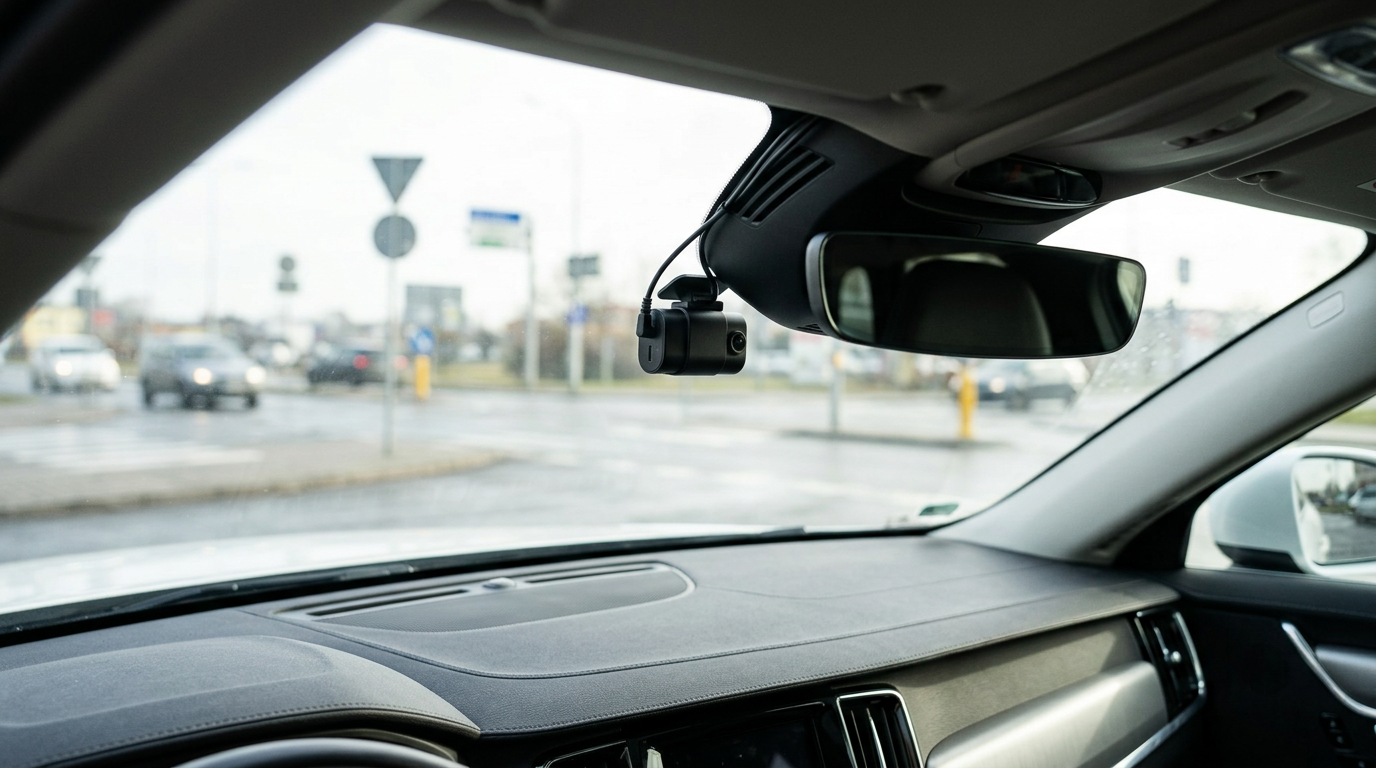
Yes, a front dash cam is worth buying in 2026 for many drivers because it creates an independent video record of the road ahead. That footage may clarify what happened during a collision, support an insurance claim or document a disputed traffic event.
Modern units commonly offer high-resolution recording, improved low-light performance and wireless file transfer, making them easier to use than older generations. Their practical value still depends on image quality, installation, storage reliability and whether front-only coverage suits your driving.
While some drivers prefer multi-camera setups, a simple front-facing model remains a cost-effective and straightforward starting point. It records the direction you travel most often and avoids the added wiring and storage demands of a second camera.
The quick version
- Choose a high, central position
- Clean and dry the glass
- Route the cable safely
- Connect the approved power supply
- Set the camera angle
- Format a compatible high-endurance memory card
Why a Front Dash Cam Is Worth Buying in 2026
Traffic incidents can become disputes when drivers remember events differently or physical damage does not reveal the full sequence. A front-facing camera provides a time-stamped visual record of the road ahead, including lane position, traffic signals, vehicle movements and conditions before an impact. Depending on the incident and applicable rules, that footage may help an insurer, police officer or court understand what occurred.
The camera is also useful for documenting hazards that do not end in a collision, such as debris falling from another vehicle or dangerous manoeuvres nearby. It cannot prevent crashes or ensure that a claim succeeds, and footage may not capture events outside the lens. However, it can add evidence that a written statement alone cannot provide.
Front-only models are particularly suitable for drivers who want simple installation and focused coverage. Current 2026 buying guides from Trusted Buyer Report, Nexar, MotorJudge, My Car Planet and Damn Technology all continue to treat forward-facing recording as a core dash-cam configuration, although their recommended features and models vary.
Decoding Video Quality and Camera Specifications
When shopping for a camera, navigating the technical specifications can feel overwhelming. The most critical metric to analyze is the camera's resolution, which determines the overall clarity of your footage. Higher resolution can preserve more detail, but it does not by itself ensure that a moving licence plate will be readable. Sensor quality, lens focus, shutter behaviour, lighting and bitrate also affect the result.
Another essential technological feature to look for is dynamic range, which helps manage challenging lighting environments. Driving directly into sunset glare or entering a dark underpass can overwhelm a basic sensor. A capable system should retain useful detail across bright and dark parts of the frame rather than overexposing the sky or losing the road in shadow.
Finally, pay close attention to the field of view, which dictates how much of the surrounding lanes the camera can see. A very narrow angle might miss a vehicle merging from the side, while an excessively wide angle can distort distances and make distant details appear smaller. Look beyond the headline resolution and examine daytime and low-light sample footage where available.
 See the picks in our buying guide
Front-Only Versus Front-and-Rear Dash Cams
Many buyers wonder whether they should invest in a single front camera or a comprehensive front-and-rear dual system. A front-facing camera covers the direction of travel, including many events involving intersections, lane changes, sudden braking and vehicles entering your path. It also keeps installation relatively simple because only one camera and its power cable need to be positioned.
A dual-channel system adds evidence from behind and may record a rear impact, a vehicle following closely or activity around the back of the car. The trade-offs are extra wiring, more files to manage and greater demand on the memory card. A rear camera can also be harder to position in vehicles with small rear windows, opening tailgates or privacy glass.
Front footage may still provide useful context during a rear impact by showing that your vehicle was stationary or moving with traffic, but it will not show the striking vehicle itself. If simplicity is the priority, compare the best front dash cams and their key features. Drivers who regularly want evidence from both directions should consider whether the additional coverage justifies the installation effort.
Features That Matter Beyond Resolution
Modern dashboard cameras do more than record continuous loops of video. A G-sensor detects abrupt movement associated with hard braking or an impact and can mark the current recording as protected. Locked event files are less likely to be overwritten by normal loop recording, although users should still copy important clips promptly because storage behaviour varies by device.
GPS can record location and speed data alongside the video. This context may be helpful, but drivers should check how the information is displayed, exported and shared. Built-in Wi-Fi can make it easier to review and transfer clips to a phone without removing the memory card. It should be treated as a convenience feature rather than an indication of image quality.
Parking mode is useful only if it matches where and how the vehicle is parked. Depending on the model, it may record continuously, begin after motion or save buffered footage around an event. It commonly requires hardwiring or another dedicated power arrangement. The front dash cam buying guide can help you compare these features without assuming every driver needs all of them.
How to Install a Front Dash Cam Correctly
Proper installation supports a clear view and limits driver distraction. Before mounting anything, check local rules governing windshield obstructions, recording and audio capture. Vehicle manuals may also identify areas around driver-assistance cameras, sensors or airbags that should remain clear.
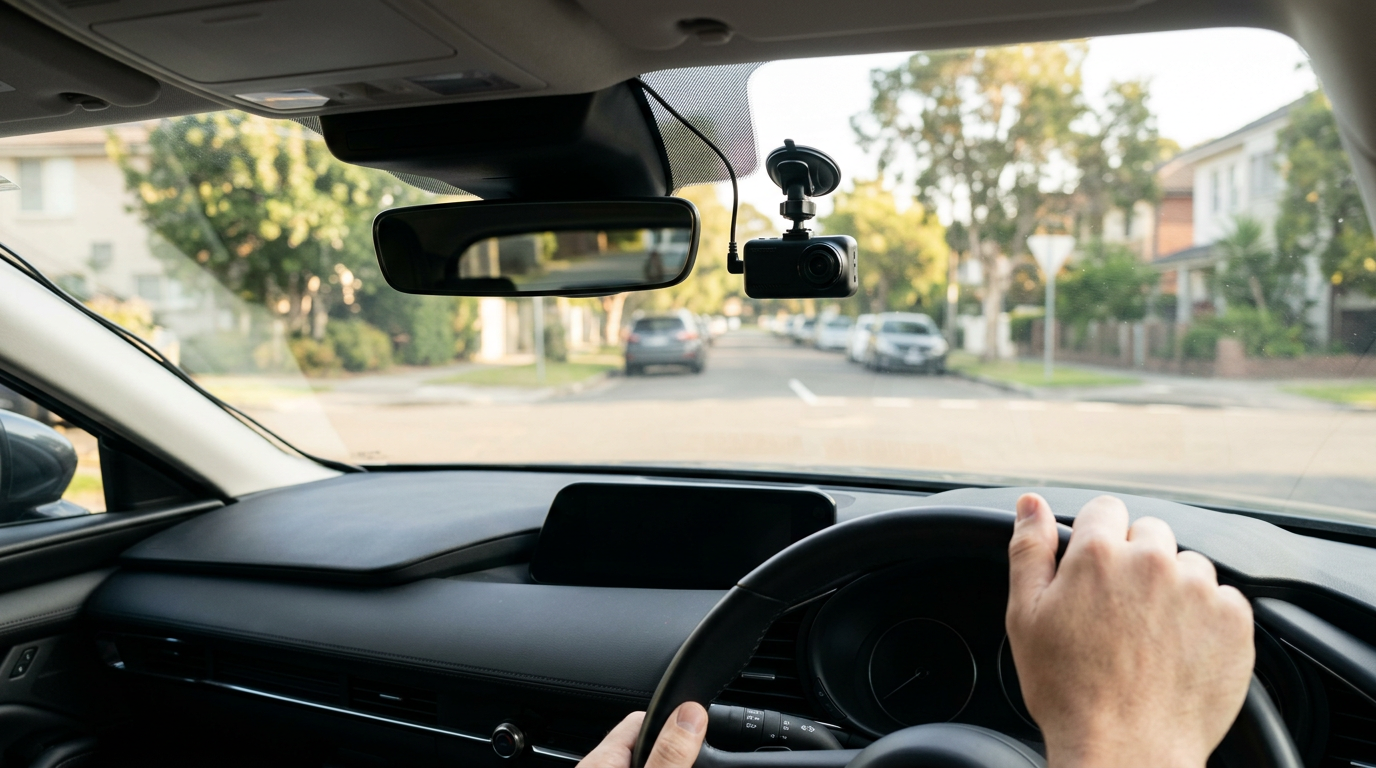
- Choose a high, central position. Place the camera behind or close to the rear-view mirror where it can see the road without obstructing the driver.
- Clean and dry the glass. Follow the mount manufacturer's preparation instructions so the adhesive can bond properly.
- Route the cable safely. Keep it away from pedals, controls and airbag deployment paths. Do not push a cable behind trim unless the route is known to be safe.
- Connect the approved power supply. Use the supplied adapter or a compatible hardwire kit. Professional fitting may be preferable if fuse-box access or trim removal is required.
- Set the camera angle. Include enough road to document traffic while avoiding a frame dominated by sky or dashboard.
- Format a compatible high-endurance memory card. Follow the camera maker's capacity and formatting guidance.
Review a sample clip after installation, then check the date, time, lens position and recording indicator periodically. A dash cam provides little value if it has stopped recording unnoticed.
Who Should Buy a Front Dash Cam?
A front dash cam is a sensible fit for frequent commuters, drivers who spend time in dense traffic, people who travel on unfamiliar roads and anyone who wants an independent record of forward-facing incidents. Night drivers should prioritise low-light footage and exposure control rather than relying on resolution alone. Drivers who park on the street may value parking mode, provided they understand its power and coverage limitations.
Occasional drivers can still benefit, but they may prefer a simpler model with reliable loop recording, a clear status indicator and few app-dependent features. Reliability and readable footage matter more than a long feature list. A high-endurance memory card and periodic checks are part of ownership, not optional extras.
A front-only camera may be insufficient if your main concern is rear impacts, vandalism around the whole vehicle or recording passengers. In those cases, rear, cabin or multi-channel coverage may be more appropriate. If front coverage matches your needs, use our comparison of top dashboard cameras to understand the available formats and features before choosing a model.
Frequently asked
Sources
As an Amazon Associate I earn from qualifying purchases. This does not affect the price you pay. Affiliate disclosure