
How Good Does Noise Cancelling Need to Be?
The right noise-cancelling strength depends on your surroundings: frequent travel benefits from strong ANC, while offices and quiet rooms need less.
This article is informational and does not place shopping buttons in the story. Related buying guides may include affiliate links.
As an Amazon Associate I earn from qualifying purchases. This does not affect the price you pay. Affiliate disclosure
On this page9 sections
- 1The short answer
- 2How Good Does Noise Cancelling Need to Be for Your Routine?
- 3How Active Noise Cancellation and Passive Isolation Differ
- 4Strong ANC for Flights and Noisy Commutes
- 5Moderate Noise Cancelling for Offices and Study
- 6When Passive Isolation May Be Enough
- 7Trade-Offs of More Aggressive Noise Cancelling
- 8A Practical Checklist Before You Choose
- 9Frequently asked
The short answer
- - Match your noise cancellation to your environment rather than buying the most expensive option automatically.
- - Frequent flyers and long commuters genuinely benefit from premium, adaptive active noise cancellation systems.
- - Quiet office spaces and study areas only require moderate active cancellation or strong passive isolation.
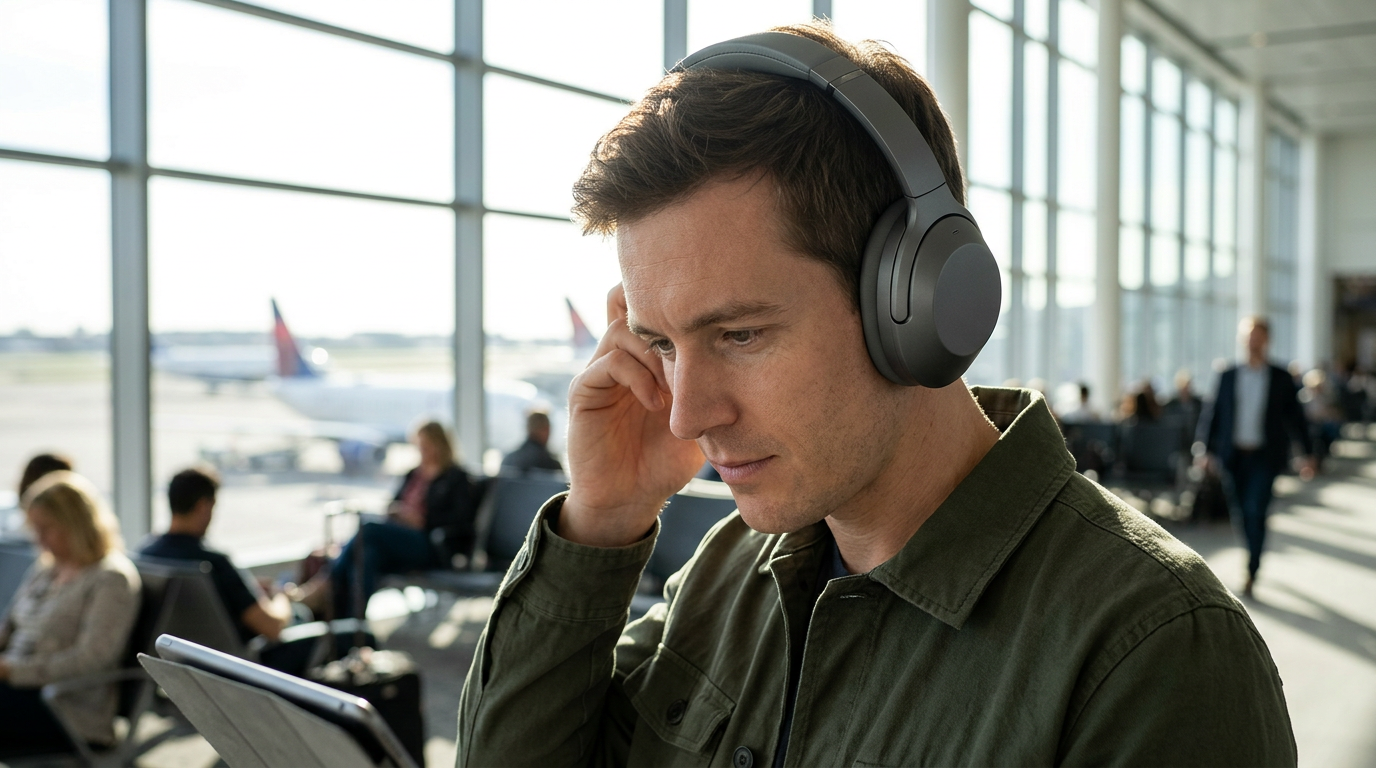
Noise cancelling needs to be strong enough to reduce the steady background noise in your usual listening environment without causing discomfort or hiding sounds you need to hear. Frequent flyers and daily rail commuters benefit most from strong active noise cancellation, while office workers and home listeners can usually choose moderate ANC or good passive isolation.
The goal is not complete silence. Fit, comfort, passive isolation, transparency controls and sound quality also matter. Choosing for your routine can help you avoid paying for more cancellation than you will use. For examples across different needs, see our wireless headphones comparison.
How Good Does Noise Cancelling Need to Be for Your Routine?
The required level depends mainly on the type, volume and consistency of the noise around you. Strong ANC is most useful for sustained low-frequency sounds, including aircraft cabin noise, rail noise, bus engines and ventilation systems. These sounds are relatively steady, which makes them well suited to electronic cancellation.
Moderate ANC is usually sufficient for offices, libraries, homes and quieter cafés. In these places, fit and ear-cup materials may be just as important because conversations, keyboard taps and clattering dishes are less predictable. If you listen mainly in a quiet room, active cancellation may add little beyond what a well-fitting over-ear design already provides.
Use comfort as a limit. If stronger cancellation causes a pressure-like sensation, hiss or fatigue, reduce the setting or turn ANC off. Also check whether the headphones let you adjust cancellation and activate an ambient mode quickly. The right level is the lowest setting that makes your surroundings unobtrusive while keeping you comfortable and aware when necessary.
How Active Noise Cancellation and Passive Isolation Differ
Wireless headphones reduce outside sound in two complementary ways. Passive isolation uses the ear cups, cushions and clamping force to form a physical barrier. A secure seal can reduce a broad range of sounds without microphones, processing or additional battery use. Fit matters greatly: gaps around glasses, hair or the jaw can weaken that seal.
Active Noise Cancellation (ANC) uses microphones to monitor surrounding sound and produces an opposing signal intended to reduce what reaches your ears. It generally works most effectively on continuous, lower-frequency noise. Speech, alarms, keyboard clicks and other abrupt or higher-frequency sounds are harder to address electronically, so passive isolation remains important even in advanced ANC headphones.
Neither approach should be judged only by how silent a showroom demonstration feels. Move your head, wear your glasses and listen for changes in the seal. Check whether ANC introduces audible hiss or changes the tonal balance. Effective noise cancelling is a combination of electronic reduction, physical fit and long-term comfort.
 See the picks in our buying guide
Strong ANC for Flights and Noisy Commutes
Frequent travellers encounter the conditions where capable ANC is most valuable. Aircraft cabins, trains, buses and busy roads create persistent low-frequency sound that passive padding alone may not reduce enough. If travel is a weekly part of your routine, strong and consistent ANC is a sensible priority. It can make spoken audio and music easier to hear without competing as heavily with the background.
Consistency matters more than an impressive moment of silence. Try to assess how the system handles changing engine tones, station announcements, rough sections of track and airflow around the microphones. Some headphones become distracting when wind reaches an external microphone, so commuters who wait on exposed platforms should pay attention to wind behaviour.
Controls also matter during travel. You should be able to switch quickly to an ambient or transparency setting for announcements and conversations. For a shortlist covering broader wireless-headphone considerations as well as cancellation, consult our Best Wireless Headphones in 2026: 3 Top Picks Compared.
Moderate Noise Cancelling for Offices and Study
In an office or university library, you are not fighting the roar of an aircraft cabin. Instead, your main distractions are mid-to-high-frequency sounds such as keyboard clicks, coffee machines and nearby conversations. Because active cancellation is less effective against unpredictable speech, paying extra solely for maximum electronic reduction may not provide the improvement you expect.
For desk work, a comfortable fit and reliable passive seal can matter more than maximum ANC strength. Moderate cancellation can soften air conditioning and distant room noise, while the cushions help muffle sharper sounds. Playing audio quietly may further mask remaining speech, but volume should stay at a comfortable level.
Office workers may also value a natural-sounding transparency mode. It uses the microphones to feed outside sound into the headphones, allowing brief conversations or announcements without removing them. Check whether voices sound clear and whether the setting is easy to activate. If powerful ANC creates pressure-like discomfort or hiss in a quiet room, a lower setting is the better choice.
When Passive Isolation May Be Enough
If you listen mostly at home, in a private office or in another quiet indoor space, standard passive isolation may meet your needs. Over-ear cushions that seal evenly can soften household sounds and reduce minor distractions without electronic processing. This also lets you use the headphones with ANC disabled, which avoids the extra power draw associated with microphones and cancellation processing.
Passive isolation is not automatically comfortable. A tight clamp may improve the seal but become tiring, while soft cushions may trap heat during long sessions. Glasses can create a small gap that admits outside sound. A stable, comfortable fit is more useful than a strong seal you cannot tolerate for long.
Consider moderate ANC if your environment includes a persistent fan, air conditioner, appliance or traffic hum. Otherwise, put fit, controls and sound quality first. Our guide to three wireless headphone options can help place noise cancelling alongside the other features that affect everyday use.
Trade-Offs of More Aggressive Noise Cancelling
Many buyers assume that more noise cancellation is always better, but stronger processing can involve trade-offs. Some listeners notice a pressure-like sensation even though ANC does not change the physical air pressure inside the ear cup. Others hear a faint hiss in very quiet rooms. Either response is a valid reason to lower the setting or choose a less aggressive system.
ANC may also change the sound of the headphones. Compare familiar audio with cancellation on and off, listening for changes in bass, vocal clarity or spaciousness. Wireless headphones also use additional battery power while ANC and ambient modes are active, although the practical effect varies by model and settings.
Awareness is the more important limitation. Do not use strong isolation where hearing traffic, alarms, announcements or other people is necessary. Transparency mode can help, but it should not be treated as a substitute for paying attention. Remove the headphones if the setting requires full awareness.
A Practical Checklist Before You Choose
Start with your noisiest regular environment, not an unusual trip you take once a year. Frequent flights and long rail journeys justify prioritising powerful ANC. Shared offices, study spaces and cafés generally call for a balanced system with good passive isolation. Quiet home use rarely requires maximum cancellation.
Next, check fit with your normal accessories, including glasses. Listen for seal changes as you turn your head or move your jaw. Compare ANC levels rather than judging only the strongest mode, and spend enough time wearing the headphones to notice heat, clamp pressure or a pressure-like sensation.
Finally, test speech, wind and control access. Confirm that transparency mode is easy to reach and that it sounds natural enough for short conversations. Choose the headphones that make your routine less distracting at a comfortable setting—not the pair that produces the most dramatic silence. If you want to compare complete headphone packages, continue to our wireless headphones buying guide.
Frequently asked
As an Amazon Associate I earn from qualifying purchases. This does not affect the price you pay. Affiliate disclosure