
How Many Pampers Swaddlers Do You Need Per Day?
Most parents should plan for roughly 10 to 12 Pampers Swaddlers per day for a newborn, 7 to 9 for a younger infant, and 5 to 8 for an older baby or toddler.
This article is informational and does not place shopping buttons in the story. Related buying guides may include affiliate links.
As an Amazon Associate I earn from qualifying purchases. This does not affect the price you pay. Affiliate disclosure
On this page8 sections
- 1The short answer
- 2How Many Pampers Swaddlers Do You Need Per Day by Age?
- 3Why Newborns Usually Need More Diaper Changes
- 4How to Calculate a Reliable Weekly Diaper Supply
- 5How to Monitor and Manage Daily Diaper Inventory
- 6Signs That It Is Time to Change the Diaper
- 7Knowing When to Move to a Larger Diaper Size
- 8Frequently asked
The short answer
- Newborns require 10 to 12 diapers daily, while older infants need 5 to 8 per day.
- Wetness indicators change color from yellow to blue to show when a diaper is full.
- Avoid overstocking smaller sizes because babies grow out of newborn sizes within weeks.
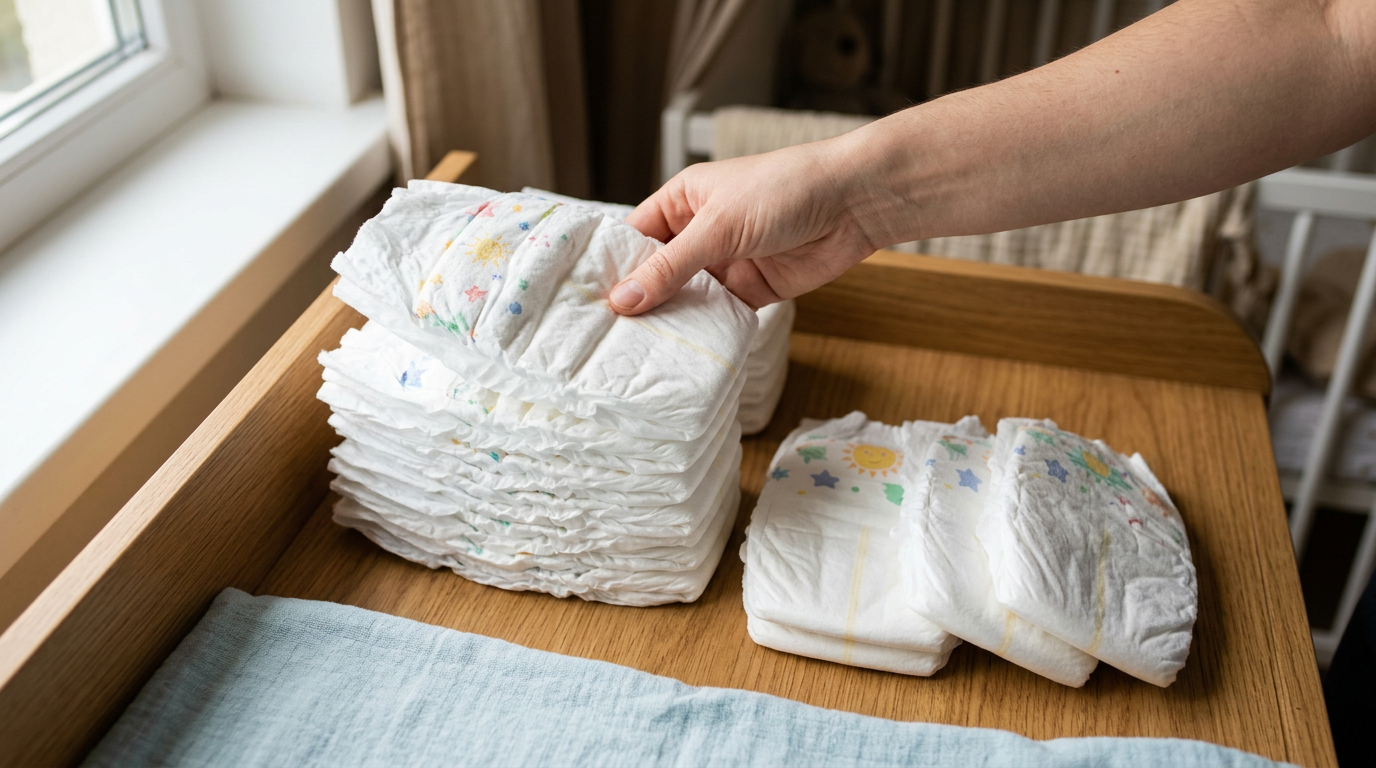
Plan for about 10 to 12 Pampers Swaddlers per day for a newborn, 7 to 9 for a baby aged three to six months, and 5 to 8 for an older baby or toddler. These are practical planning estimates rather than fixed requirements. Your actual total depends on feeding patterns, bowel movements, overnight changes, and how often you check for wetness.
Managing diaper inventory is one of the most practical challenges for new parents. While larger boxes reduce shopping trips, infants may outgrow a specific size before you finish the box. Understanding the daily usage pattern helps you avoid overstocking sizes your baby will soon leave behind.
Use your baby's normal routine as the deciding factor. A simple seven-day count gives you a more reliable household estimate than any age-based average. Change a soiled diaper promptly, check wet diapers regularly, and adjust your stock as feeding and sleep patterns change.
The quick version
- Record each change for a week
- Check the ==wetness indicator== where the
- Count your remaining diapers on the
- Keep a small travel stash and
- Store one unopened backup pack, but
How Many Pampers Swaddlers Do You Need Per Day by Age?
The number of diapers you use each day depends heavily on your child's age and routine. For initial planning, allow about 10 to 12 diapers per 24 hours for a newborn. A baby aged roughly three to six months may use around 7 to 9, while an older baby or toddler may need about 5 to 8. Treat these ranges as stocking estimates, not a required schedule. Some days will be above or below the range.
Newborns feed frequently and may wet or soil diapers throughout the day and night. As babies grow, they often use fewer diapers because their routines become less frequent and more predictable. Solid foods, longer sleep periods, illness, travel, and changes in feeding can all affect the count.
The simplest way to refine the estimate is to record every change for one week. Divide the total by seven, then add a small buffer for unusually busy days. This approach reflects your baby's habits and makes it easier to decide whether a small pack or larger box suits the current size.
Why Newborns Usually Need More Diaper Changes
Newborns generally need more changes because they feed frequently and have little control over bladder or bowel emptying. A bowel movement may happen during or shortly after a feed because of the gastrocolic reflex, the body's normal response to food entering the stomach. This can make the early weeks feel like a continuous cycle of feeding and changing.
A dirty diaper should be changed promptly, even if the previous change was recent. Wet diapers should also be checked regularly rather than left until they are visibly swollen. Newborn skin can be sensitive to prolonged contact with moisture and stool, so a practical routine is to check before or after feeds and whenever the baby wakes or seems uncomfortable.
The higher count usually becomes easier to manage once you recognise the daily pattern. Keep diapers and wipes in more than one frequently used room, and restock the changing area before bedtime. Avoid assuming every newborn will use exactly the same number: feeding method, sleep stretches, and bowel frequency vary between babies.
 See the picks in our buying guide
How to Calculate a Reliable Weekly Diaper Supply
Daily averages are useful, but a weekly estimate is better for shopping and storage. Start by counting changes for seven ordinary days. Include daytime, overnight, and immediately repeated changes after unexpected stool. Add the seven totals and use that number as your baseline for the following week. Add a modest backup supply rather than buying several boxes in an untested size.
For example, if your own log averages eight changes per day, multiply that personal average by the number of days until your next planned shop. Keep a separate small reserve for travel, childcare, or delayed shopping. This calculation avoids relying on a generic figure once you have real household data.
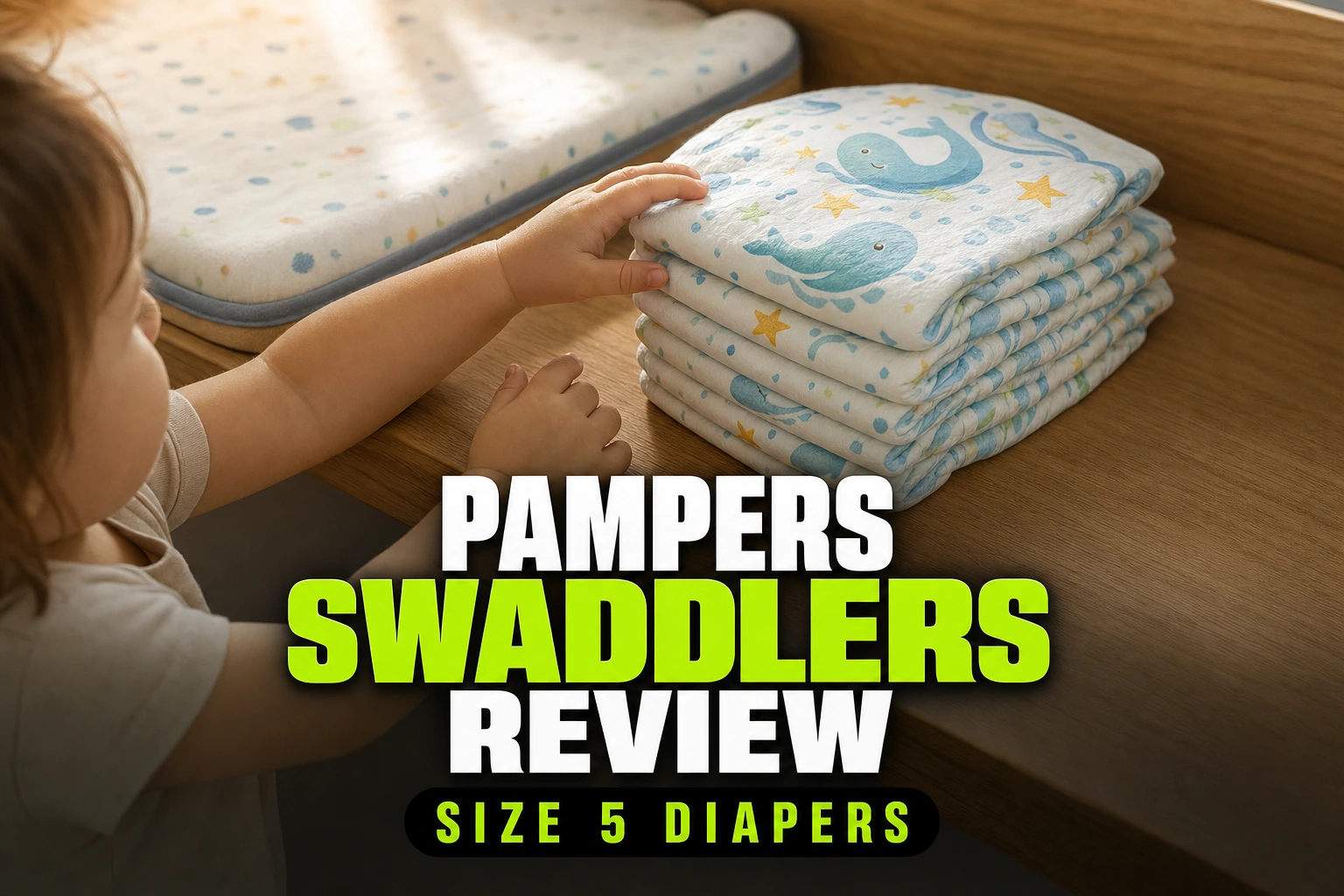
Review the total whenever feeding, sleep, childcare, or diaper size changes. A larger diaper is not a reason to delay a necessary change, and a smaller daily count does not mean you should ignore stool or signs of discomfort. Parents considering a larger toddler size can consult the Pampers Swaddlers Size 5 review for more detail about that specific size and fit.
How to Monitor and Manage Daily Diaper Inventory
Managing your home inventory of Pampers Swaddlers requires a simple routine so that you can see when supplies are running low. Use these practical steps:
- Record each change for a week rather than estimating from memory.
- Check the wetness indicator where the diaper size and design include one.
- Count your remaining diapers on the same day each week.
- Keep a small travel stash and replace it after every outing.
- Store one unopened backup pack, but avoid accumulating several packs of a size your baby may soon outgrow.
Buy cautiously when your baby is near a size transition. If the current diaper is becoming tight or leaks are increasing, a large stock of that size may go unused. Keep opened packs together and use the oldest first. If more than one caregiver changes the baby, place a simple tally sheet beside the changing area so the weekly count remains accurate.
Once you know your usual daily total, compare it with the number of diapers left rather than relying on how full the package appears. This makes it easier to plan the next shop without turning a rough age-based estimate into an inflexible changing schedule.
Signs That It Is Time to Change the Diaper
A fixed timetable cannot replace checking the diaper itself. Many parents use the wetness strip as a quick cue, but babies do not always cry or show obvious discomfort when wet. Where present, the strip can help confirm moisture without fully removing clothing. You can also feel the outside of the diaper for added weight or fullness.
The absorbent core contains superabsorbent polymers that hold liquid, so a used diaper may feel heavier or more gel-like than a fresh one. Any stool is a reason to change the diaper promptly, regardless of how recently the previous change occurred. For wet diapers, consider the baby's age, fullness of the diaper, skin condition, and whether a nap or long trip is approaching.
A sagging or bulky fit can indicate that the diaper is full, but visible sagging should not be your only cue. Check regularly during waking hours and after sleep. If irritation persists, becomes severe, or concerns you, seek advice from a qualified healthcare professional rather than relying on a different diaper schedule alone.
Knowing When to Move to a Larger Diaper Size
Choosing the right diaper size helps with comfort and containment. Diaper sizes use weight ranges, but fit can still vary with body shape. Repeated leaks, difficult fastening, or persistent red marks can indicate that the current size is too small. A diaper that gaps around the legs or waist may instead be too large or may need to be refastened.
Check that the waistband sits evenly and the leg cuffs are turned outward rather than tucked inside. The tabs should fasten without excessive stretching, and the diaper should allow normal movement. Do not move up solely to extend the time between changes; a larger absorbent core does not remove the need to check for wetness and stool.
If your baby is approaching a larger toddler size, read the review of Pampers Swaddlers Size 5 diapers before stocking up. Buy a smaller quantity first, observe the fit over several changes, and then decide whether a larger box makes sense. Keeping the next size available can be useful, but several unopened boxes may be excessive during rapid growth.
Frequently asked
As an Amazon Associate I earn from qualifying purchases. This does not affect the price you pay. Affiliate disclosure