
Pampers Swaddlers Size Guide: When to Size Up
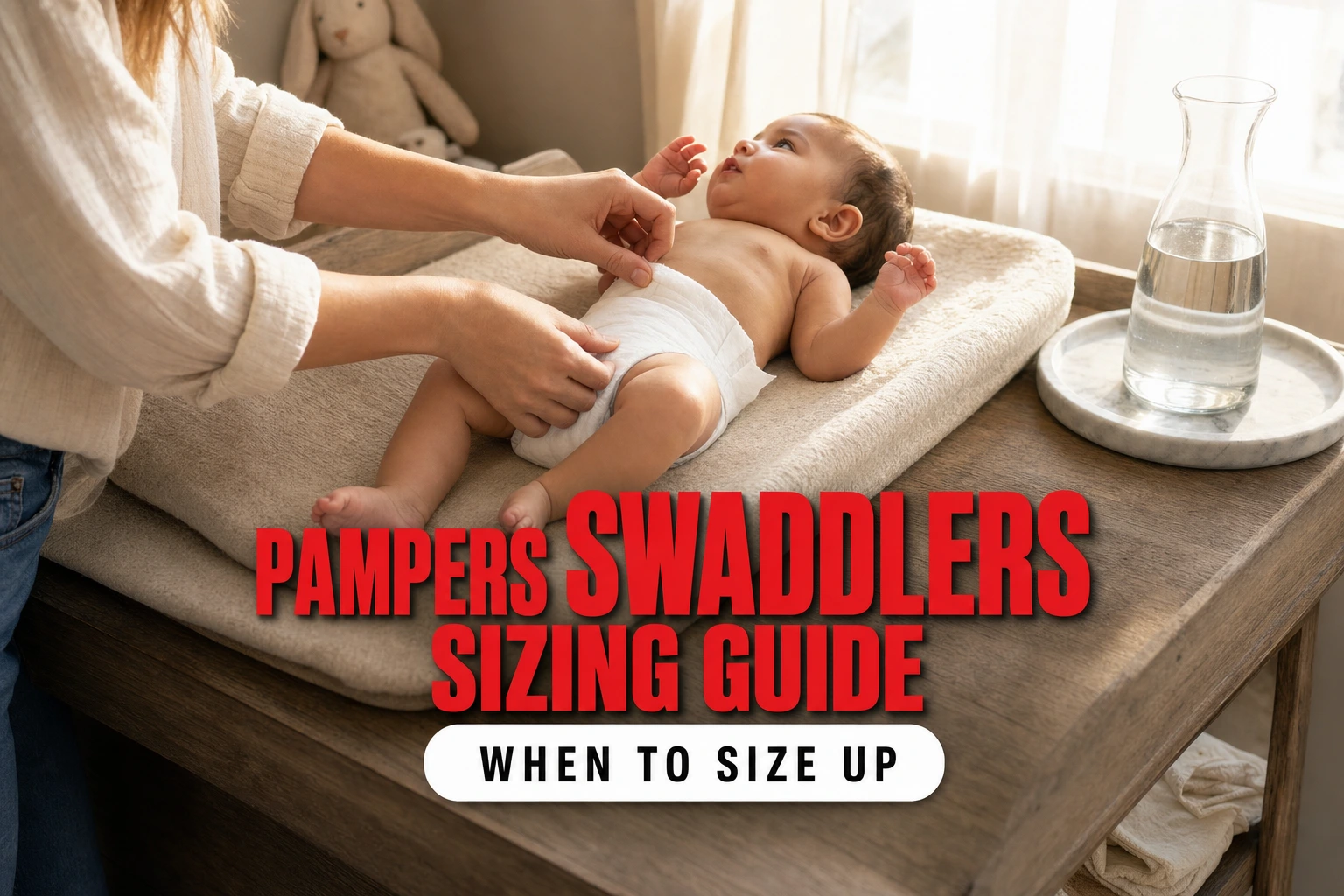
Choose a Pampers Swaddlers size by matching your baby’s weight to the manufacturer’s chart, then confirm the fit at the waist, legs and back. Size up if the diaper leaves persistent red marks, no longer provides full coverage or repeatedly leaks despite being positioned correctly.
This article is informational and does not place shopping buttons in the story. Related buying guides may include affiliate links.
As an Amazon Associate I earn from qualifying purchases. This does not affect the price you pay. Affiliate disclosure
On this page10 sections
- 1The short answer
- 2Which Pampers Swaddlers Size Should You Buy?
- 3Why Pampers Diaper Weight Ranges Overlap
- 4When to Size Up Pampers Swaddlers
- 5How to Perform a Quick Diaper Fit Check
- 6How to Choose Between Two Overlapping Sizes
- 7Leaks, Blowouts and Overnight Fit
- 8Growth Spurts and Diaper Stocking
- 9Frequently asked
- 10Sources
The short answer
- Choose diaper sizes based on actual baby weight overlap rather than age.
- Size up immediately if you experience frequent blowouts or red leg marks.
- Transition sizes when fastening tabs sit too far apart on the waist.

You should buy the Pampers Swaddlers size that corresponds to your baby's current weight, and size up when you notice frequent leaks, persistent red marks, reduced coverage, or tabs that no longer fasten comfortably. If two weight ranges overlap, use the smaller size only while its waist and leg seals still fit securely.
Pampers bases its diaper sizes on baby weight rather than age. The ranges can overlap because babies at the same weight may have different builds, including different waist, thigh and torso proportions. That makes the Pampers weight chart a starting point rather than the only test of fit.
Choosing the correct fit helps the leg cuffs and waistband contain wetness without pinching. When your baby falls between two sizes, inspect the diaper while it is fastened and again after removal. Fit and recurring leaks are more useful tie-breakers than weight alone.
The quick version
- Check the waistband
- Inspect the ==leg cuffs==
- Observe the skin closely
- Verify rear coverage
- Watch the diaper in motion
Which Pampers Swaddlers Size Should You Buy?
Start with the Pampers Baby Diaper Size Chart and choose the size that includes your baby’s current weight. Do not choose by age: babies of the same age can differ substantially in weight and build. Pampers lists Swaddlers in sizes from Newborn through Size 8, although the relevant options depend on your baby’s weight.
If your baby’s weight appears in two ranges, begin by assessing the current size. A suitable diaper should cover the backside, sit securely at the waist and form a seal around both thighs without obvious gaps. The fastening tabs should attach without needing to be pulled forcefully. Choose the larger overlapping size when the smaller diaper is tight, low at the back or repeatedly leaking. Stay with the smaller size if the larger option leaves leg gaps or sags even after correct fastening.
Parents considering a later-stage size can also read our Pampers Swaddlers Size 5 review for a focused look at that specific option.
Why Pampers Diaper Weight Ranges Overlap
Diaper manufacturers categorize their sizes using weight brackets rather than developmental ages. This approach accounts for the fact that a three-month-old infant might wear a completely different size than another baby of the exact same age. Because infant growth is highly individualized, weight provides a more reliable metric for fit than calendar age.
The weight chart on the packaging features overlap between some sizes. This overlap can leave parents unsure of which box to purchase when a baby qualifies for both.
These overlapping ranges help accommodate different infant body shapes rather than just raw weight. A larger diaper has a larger absorbent core and broader dimensions, but if it is too large, the leg openings may not seal around slimmer thighs. A smaller diaper may seal at the legs yet provide too little rise or rear coverage for a longer torso. The correct choice is the eligible size that seals securely without constricting.
 See the picks in our buying guide
When to Size Up Pampers Swaddlers
Even if your baby remains within the listed weight range, physical cues can show that the current diaper no longer fits well. Check the rise first. The diaper should provide full front and rear coverage; if the waistband has shifted noticeably lower or the backside is not fully covered, the current size may be too short.
Next, inspect the fastening tabs. They should secure without force. If you have to stretch them firmly, or they attach only near the outer edges, try the next size. Also look for persistent red marks or indentations around the thighs, waist or lower back. Brief impressions from elastic are not necessarily decisive, so consider whether the marks recur alongside tightness or discomfort.
Finally, track performance. An isolated leak can result from a folded cuff, loose fastening or delayed change. Repeated leaks or blowouts after correcting those issues can indicate that it is time to size up. For older babies nearing Size 5, the full Pampers Swaddlers Size 5 diaper review provides additional size-specific context.
How to Perform a Quick Diaper Fit Check
Before you purchase your next box, you can perform a quick fit assessment during your next diaper change. This check ensures you do not mistake a structural design element for a size issue.
Run through these checkpoints during your routine to evaluate the overall comfort and performance of the diaper on your baby.
- Check the waistband. Secure the diaper and confirm that it is snug without digging into the skin. Pampers advises that two fingers should fit under the waistband.
- Inspect the leg cuffs. Run your finger around the elastic edges and pull the cuffs outward so they can form a barrier around the thighs.
- Observe the skin closely. Look for recurring deep red marks or indentations around your baby's thighs or lower back when you remove the diaper.
- Verify rear coverage. Ensure the back of the diaper fully covers the baby's backside and sits high enough to contain messes.
- Watch the diaper in motion. Crawling, rolling and walking can expose gaps that are not visible while your baby is lying still.
If several checkpoints fail, compare the next size rather than relying on weight alone.
How to Choose Between Two Overlapping Sizes
When your baby's weight falls into an overlapping zone, deciding which size to buy can feel like a guessing game. The Seventh Generation fit guide recommends checking for a snug fit around the waist and legs, while What to Expect likewise identifies red marks, leaks and blowouts as signs that a diaper may be too small.
Compare both sizes during ordinary movement if possible. The smaller option may be preferable when it still fastens comfortably, covers the back and contains wetness without leaving marks. Move to the larger size if the smaller one has become tight or its coverage is inadequate. A larger diaper can also offer more room within the absorbent core, but added capacity will not compensate for gaps at the thighs.
If the larger diaper sags, shifts or leaves visible spaces around the legs, it is probably too large for the current build. There is no need to size up merely because your baby has entered an overlapping weight range. Body shape and functional fit should settle the decision.
Leaks, Blowouts and Overnight Fit
Leaks do not automatically mean the diaper is too small. First check whether the diaper was centered, the tabs were fastened evenly and the leg cuffs were pulled out rather than tucked inward. A diaper that has been worn for a long interval can also leak even when its dimensions fit correctly.
The location of the leak can provide a useful clue. Gaps at the thighs or a sagging seat suggest that the diaper may be too large. Tight leg openings, low rear coverage or recurring blowouts up the back can suggest that it is too small. A pattern matters more than one incident. Note whether failures recur at the same time or in the same place after you correct the positioning.
Long sleep periods can place different demands on a diaper than daytime wear. If the current size fits properly during the day but repeatedly leaks during sleep, reassess fit and changing timing before assuming a larger size is required. Older babies using or approaching Size 5 may find relevant fit details in our review of Pampers Swaddlers Size 5.
Growth Spurts and Diaper Stocking
Infants and toddlers do not grow at a steady, linear rate. Sudden growth spurts can mean that a diaper size that recently fit well becomes restrictive over a short period.
During active developmental milestones, such as crawling or walking, baby body shapes can also change. Thigh and waist proportions may shift, and an active child can reveal fit problems as the diaper moves during play. Bunching, repeated shifting or exposed areas around the hips are reasons to repeat the fit check rather than automatically choosing a particular size.
It is tempting to stock up, but buying too far in advance can leave unused packages after a size change. Limit advance purchases when your baby is close to a weight boundary or already showing fit concerns. The wetness indicator can help show when the diaper is wet, but it does not by itself determine whether the size is correct. Base a size change on the manufacturer’s chart plus recurring evidence from coverage, fastening, skin marks and leaks.
Frequently asked
Sources
As an Amazon Associate I earn from qualifying purchases. This does not affect the price you pay. Affiliate disclosure