
What to Know Before Buying a Robot Vacuum
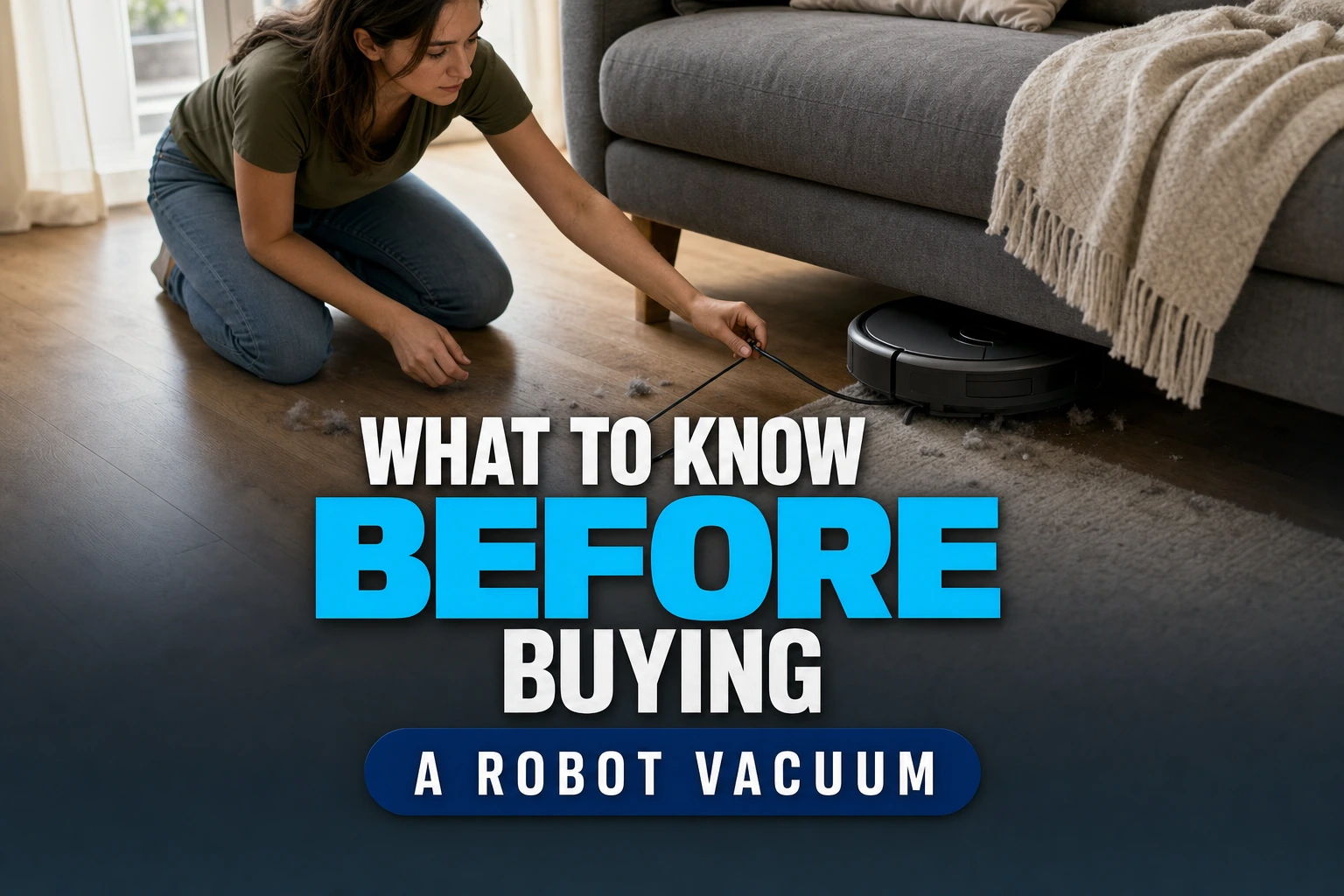
Before buying a robot vacuum, assess your flooring, layout, obstacles, maintenance needs, navigation, brush design, mopping system and dock size.
This article is informational and does not place shopping buttons in the story. Related buying guides may include affiliate links.
As an Amazon Associate I earn from qualifying purchases. This does not affect the price you pay. Affiliate disclosure
On this page10 sections
- 1The short answer
- 2What Should You Know Before Buying a Robot Vacuum?
- 3Navigation Systems, Mapping and Obstacle Avoidance
- 4Suction Power, Floor Contact and Brush Rollers
- 5Dock Types, Dimensions and Ongoing Maintenance
- 6Mopping Systems and Carpet Protection
- 7How to Evaluate Your Home Before Buying
- 8Apps, Privacy, Parts and Long-Term Ownership
- 9Frequently asked
- 10Sources
The short answer
- Match the vacuum's navigation system to your home's layout complexity and furniture density.
- Decide if you want a self-emptying dock to minimize hands-on dirt handling.
- Prioritize physical brush design over inflated suction power numbers for better pet hair cleanup.
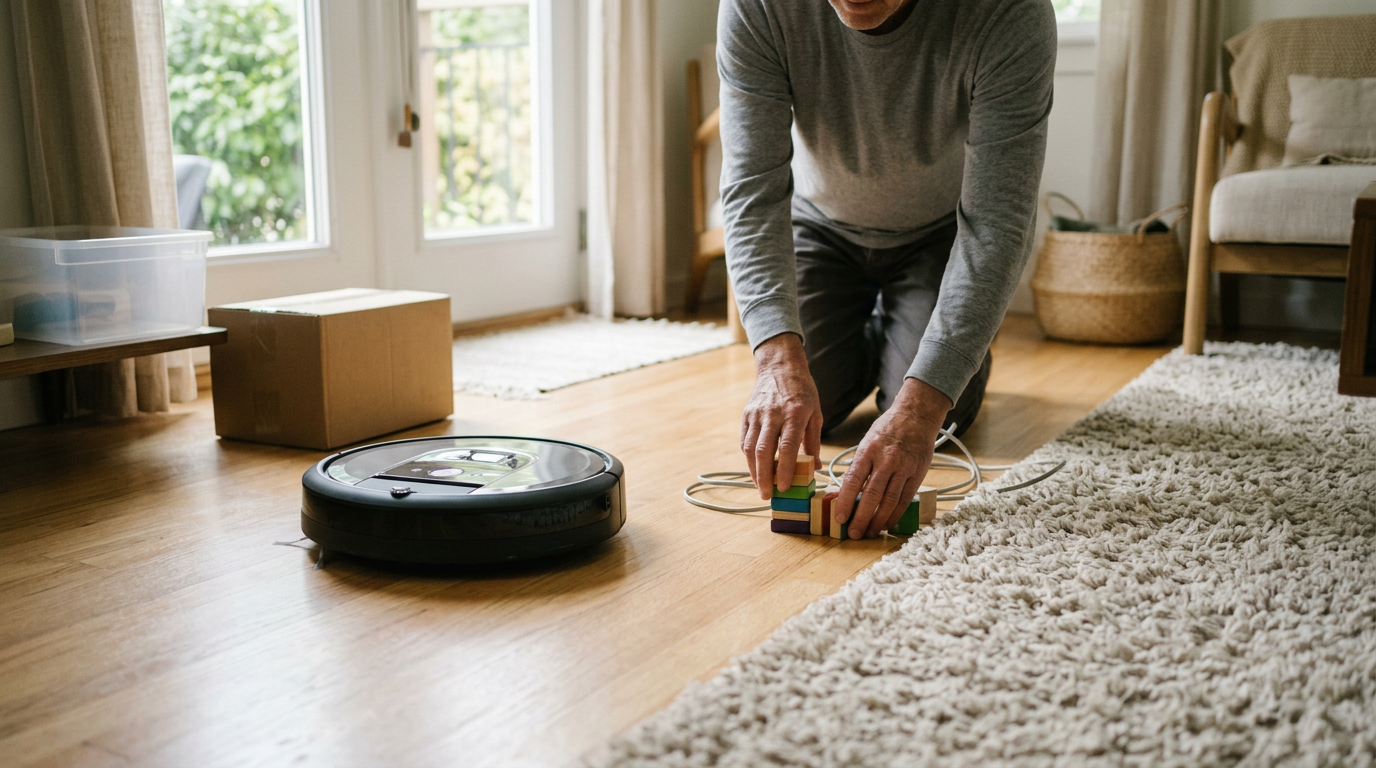
Before buying a robot vacuum, you should assess your floor types, room layout, carpet height, common obstacles and willingness to perform maintenance. Navigation and brush design often matter more than headline suction figures, while mopping features and automated docks add convenience but require space and upkeep. Measure your home first, then choose features that solve its specific cleaning problems.
The market is filled with confusing specifications like massive suction ratings and complex dock configurations. Understanding how these features translate to real-world performance will save you from overpaying for capabilities your home does not require.
This guide translates the technical jargon into practical advice. We will explore the vital hardware differences, map out the maintenance realities, and help you decide which features genuinely matter for your specific living space.
The quick version
- Measure the clearance beneath couches, beds
- Measure floor transitions and threshold strips
- Note the proportion of carpet and
- Check likely traps
- Choose a dock location near a
- Consider stairs and multiple floors
What Should You Know Before Buying a Robot Vacuum?
Start with your home rather than a list of specifications. The right robot vacuum depends on your flooring, layout, clutter level and maintenance preferences. Hard floors, low-pile rugs and open rooms present fewer challenges than thick carpets, raised thresholds or crowded spaces. Homes with pets may also benefit from rollers designed to resist hair tangles and navigation that can avoid small objects.
Decide whether you want vacuuming alone or vacuuming plus mopping. A hybrid can maintain hard floors, but its value depends on how it handles carpets and whether you are prepared to wash pads and manage water tanks. Also choose how much dock automation you need. A basic charger takes less space, while self-emptying and mop-servicing docks reduce routine handling but are larger and still require supplies and cleaning.
Do not assume a large suction number identifies the stronger cleaner. Brush construction, floor contact, airflow and navigation all affect results. Before comparing models in our robot vacuum buying guide, write down your essential requirements and the physical limits of the intended docking area.
Navigation Systems, Mapping and Obstacle Avoidance
The way a robotic cleaner moves around your rooms directly determines its cleaning efficiency and runtime. Budget-friendly models typically rely on basic bump sensors, moving in a random pattern and bouncing off walls until they eventually cover the space. Conversely, modern midrange and premium units rely on LiDAR or camera sensors to build virtual maps of your home. This allows them to clean in neat, efficient parallel lines.
LiDAR systems use laser-based distance measurements to create floor plans and can navigate without relying on room lighting. Camera-based systems may use visual information for navigation or object recognition, although performance varies by model and available light. Mapping can support room-by-room cleaning, scheduled zones and virtual boundaries, but the exact controls depend on the accompanying app.
To complement basic mapping, some models feature front-mounted cameras, structured light or other sensors dedicated to obstacle avoidance. These systems are intended to identify and steer around items such as charging cables, shoes and pet waste. They reduce preparation work, but no detection system removes the need to pick up hazardous or fragile objects.
Choosing the correct navigation system can reduce missed areas and repeated rescues. Compare the mapping and object-detection features of the best robot vacuums for different home layouts.
 See the picks in our buying guide
Suction Power, Floor Contact and Brush Rollers
Vacuum manufacturers advertise suction strength using Pascals, abbreviated as Pa on specification sheets. While these numbers can provide limited context within a product line, raw suction is only one part of the cleaning equation. Brush design, airflow and contact with the floor also influence how effectively debris is collected. Results cannot be predicted reliably from a Pascal figure alone.
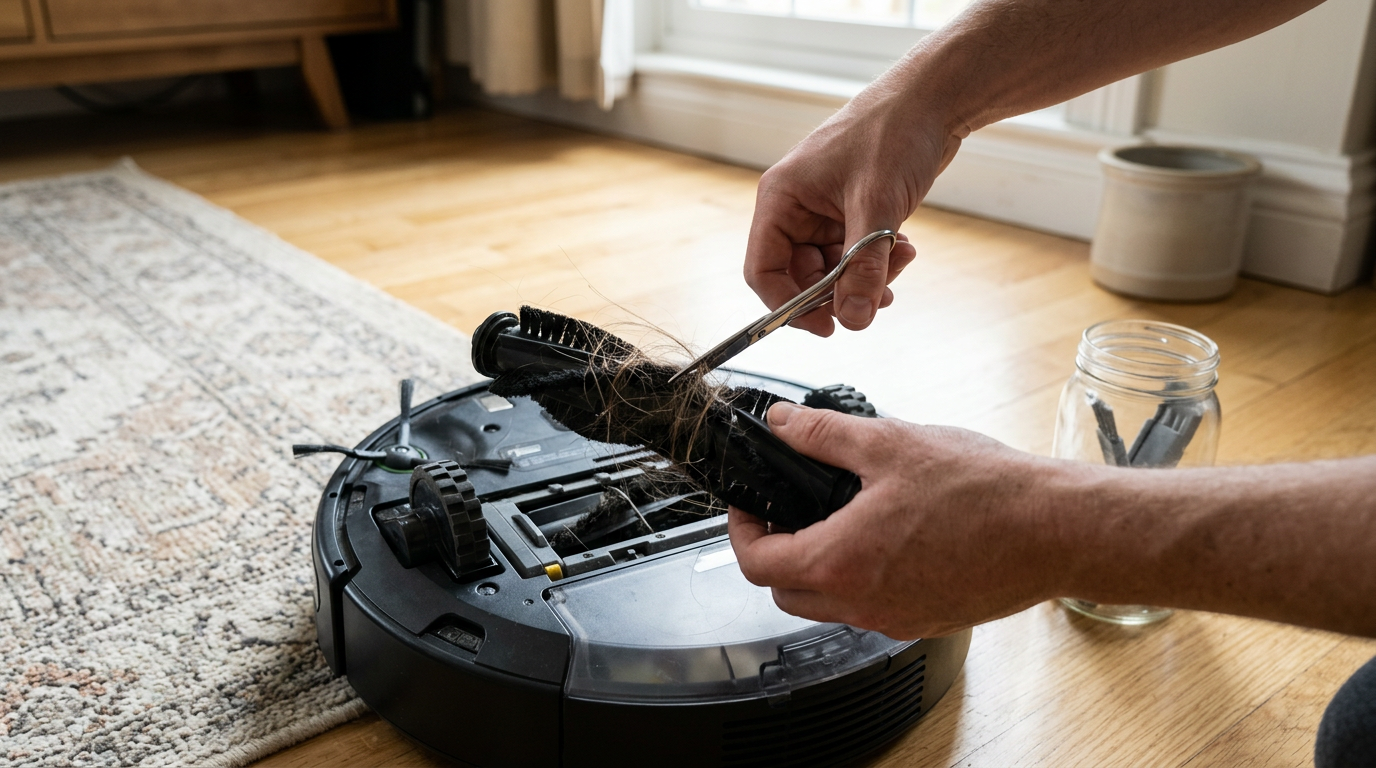
Traditional bristled rollers can sweep up fine debris, but human hair and pet fur may wrap around the bristles. Rubber rollers and tangle-resistant designs can reduce this problem, although every roller still needs inspection and occasional cleaning. Side brushes help move debris away from edges and toward the intake, but they may scatter light particles if they rotate too quickly.
Hard floors generally place different demands on a robot than carpets. Carpet cleaning depends on airflow, agitation and the robot's ability to travel across the pile without becoming stuck. Automatic suction adjustment can increase power after the robot detects carpet, while a well-sealed intake helps direct airflow through the cleaning path.
Check the complete cleaning system rather than choosing the highest advertised number. Pet owners should pay particular attention to roller removal, accessible end caps and whether replacement brushes and filters are available from the manufacturer.
Dock Types, Dimensions and Ongoing Maintenance
The docking station is no longer just a simple plastic plate where the robot parks to recharge its battery. Modern docks can empty debris, wash mop pads, refill water reservoirs or dry pads, depending on the model. These automated features reduce routine handling, but they increase the system's footprint and add components that require care.
A standard self-emptying dock transfers debris from the robot's onboard bin into a larger bag or container. The emptying cycle can be noticeably loud, so consider where the dock will sit and whether scheduled cleaning might disturb anyone. Bagged docks require replacement bags, while bagless designs require the collection chamber and filters to be cleaned.
Premium omni stations may combine debris emptying with clean-water storage, dirty-water collection, pad washing and pad drying. They still need regular attention: users must refill and empty tanks, remove residue from the wash tray, replace consumable parts where required and prevent damp pads or stagnant water from developing odours.
Measure the complete dock before choosing a model. Allow room above it to remove tanks or bags and enough open floor area for the robot to approach and leave. A basic charging dock may suit someone comfortable emptying the onboard bin, while an automated station can be useful in homes that run the robot frequently.
Mopping Systems and Carpet Protection
Many modern robot vacuums pull double duty as motorized floor mops to tackle surface marks and spills. Basic hybrid models drag a damp microfiber pad across hard floors, which is mainly useful for light maintenance. They do not scrub with the same force as an active mopping mechanism, and dried residue may still need manual cleaning.
Advanced hybrid models feature active scrubbing pads that vibrate or spin to loosen stuck-on grime. These systems require a suitable method for protecting carpets. Some robots detect carpet and lift their mop pads, but the available lift height may not clear every rug. Others avoid mapped carpet zones while mopping.
Some units can detach and leave their mopping pads at the docking station before vacuuming carpeted rooms. This separates wet pads from carpet but can make a whole-home routine more complex. Whichever design you choose, review how the robot handles rug edges, washable mats and rooms that combine hard flooring with carpet.
Mopping also adds maintenance. Pads need washing or replacement, water tanks need attention, and dock trays can collect residue. If most of your home is carpeted, a vacuum-only model may be simpler. For mixed floors, compare carpet-management systems in our guide to leading robot vacuums.
How to Evaluate Your Home Before Buying
Before browsing retail listings, systematically evaluate your living space. Not every home is suitable for every robot. Taking a few measurements can prevent you from choosing a device that is incompatible with your furniture, thresholds or docking area.
- Measure the clearance beneath couches, beds and cabinets. Compare the lowest height with the robot's full height, including any raised sensor housing.
- Measure floor transitions and threshold strips. Climbing ability varies, so compare your measurements with the manufacturer's stated limit.
- Note the proportion of carpet and hard flooring. Decide whether you need carpet detection, mop lifting, no-mop zones or a vacuum-only design.
- Check likely traps. Loose cables, rug tassels, lightweight mats, floor-length curtains and narrow furniture gaps can interrupt a cleaning run.
- Choose a dock location near a power outlet. Follow the manufacturer's clearance requirements and leave access for bins, bags and water tanks.
- Consider stairs and multiple floors. Drop sensors help detect edges, but the robot must usually be carried between levels, and map support differs by model.
A large, complex home may benefit from systematic mapping, longer runtime and automatic recharging before a cleaning run resumes. A smaller open-plan space may not need the same level of navigation or dock automation. Use these requirements to narrow the top robot vacuum options for 2026 rather than paying for features your floor plan cannot use.
Apps, Privacy, Parts and Long-Term Ownership
Connected features can make a robot easier to schedule and control, but the quality of the app matters as much as the number of features listed. Check whether the software supports room labels, no-go zones, cleaning sequences, multiple maps and separate vacuuming or mopping settings. If several people will control the robot, confirm that household sharing is supported.
A camera-equipped robot may process images to recognise obstacles. Review the manufacturer's privacy information to understand whether images remain on the device, are uploaded for processing or can be viewed remotely. Also check whether essential cleaning can begin from physical buttons if the internet connection or app is unavailable.
Consumable and replacement-part support affects long-term ownership. Filters, side brushes, rollers, mop pads, dust bags and batteries wear over time. Before buying, confirm that compatible parts are documented and obtainable through the manufacturer. Look at how easily rollers, bins and filters can be removed without tools.
Finally, consider routine maintenance honestly. A robot vacuum automates floor coverage, not every part of floor care. Sensors need wiping, rollers need clearing, filters need cleaning or replacement, and docks need attention. A simpler model that you can maintain consistently may be a better fit than a more complex system whose water tanks and wash trays go unused.
Frequently asked
Sources
As an Amazon Associate I earn from qualifying purchases. This does not affect the price you pay. Affiliate disclosure