
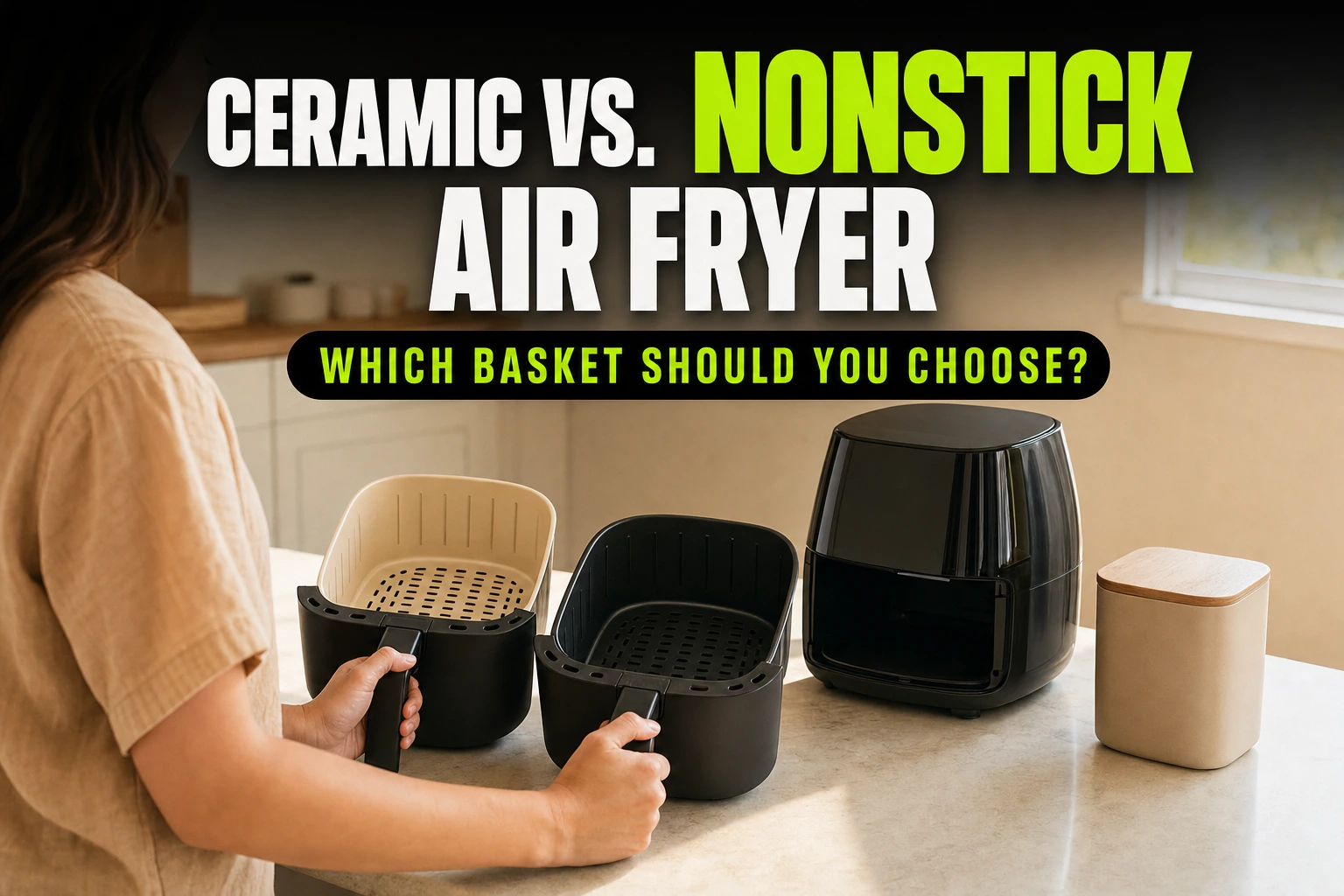
Ceramic vs. Nonstick Air Fryer: Which Basket Should You Choose?
Ceramic coatings suit shoppers who want to avoid PTFE, while traditional nonstick usually offers more durable food release. Check the model’s coating disclosure and care instructions before buying.
This article is informational and does not place shopping buttons in the story. Related buying guides may include affiliate links.
As an Amazon Associate I earn from qualifying purchases. This does not affect the price you pay. Affiliate disclosure
On this page9 sections
The short answer
- Ceramic is the better fit for avoiding PTFE, but confirm the manufacturer explicitly identifies the coating as PFAS-free.
- Traditional nonstick generally retains its food-release performance longer, provided it is not overheated, scratched, or cleaned abrasively.
- Neither coating is maintenance-free: use nonmetal utensils, avoid abrasive cleaners, and follow the appliance’s dishwasher guidance.
- Replace a basket whose coating is peeling, flaking, or deeply scratched rather than continuing to cook on the damaged surface.
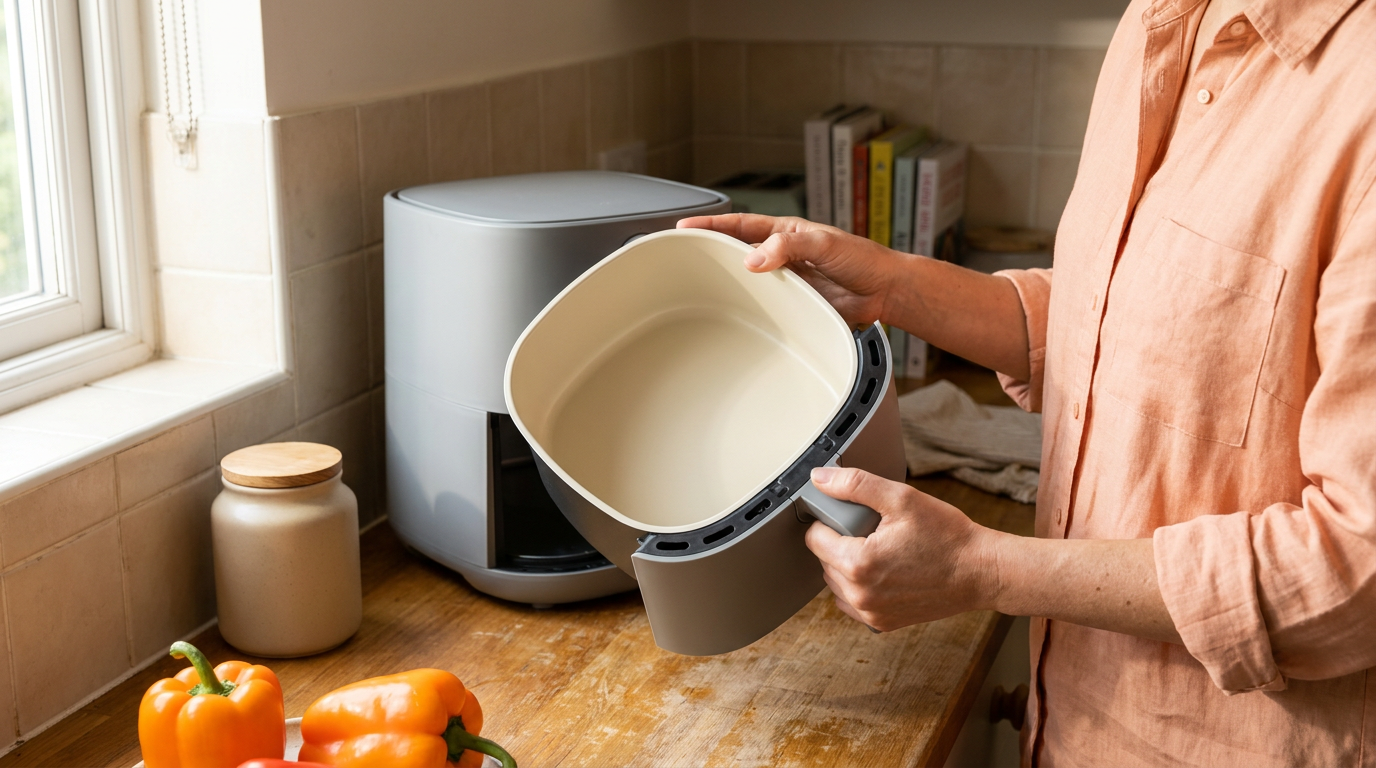
Choose a ceramic-coated air fryer if avoiding PTFE is your priority and the manufacturer confirms the basket is PFAS-free. Choose traditional nonstick if you value durable food release and easier cleanup. Both coatings can wear, so the model’s stated materials, replacement-basket options, and care instructions matter as much as the coating label.
What “ceramic” and “nonstick” mean
Air-fryer baskets are usually metal underneath; “ceramic” and “nonstick” describe the cooking-surface coating. A ceramic-coated basket commonly uses a silica-based layer applied through a sol-gel process, which turns a liquid formulation into a hard, smooth finish. It is not a solid piece of fired pottery.
Traditional nonstick usually refers to polytetrafluoroethylene, or PTFE, a fluoropolymer valued for low-friction food release. Ceramic coatings are commonly marketed as PTFE-free, but “ceramic” alone does not disclose every ingredient. Check for an explicit PFAS-free or PTFE-free statement from the appliance maker if that distinction drives your purchase.
“PFOA-free” is also not the same as “PFAS-free.” PFOA was historically associated with PTFE manufacturing, while PFAS is a broader chemical category. Read the full coating description rather than relying on a single badge on the box.
Food release and cooking performance
Both surfaces are designed to reduce sticking, and both can work with little added oil when new. Traditional PTFE nonstick is known for a consistently slick surface, which can make sticky marinades, cheese, fish, and breaded foods easier to release. Ceramic coatings also start smooth, but their release performance may decline sooner as residue accumulates and the surface wears.
That difference should not be confused with the air fryer’s overall cooking ability. Browning and crisping depend heavily on airflow, basket shape, food spacing, temperature control, and whether food is turned during cooking. The coating alone does not establish that one appliance heats faster or cooks more evenly. For a broader explanation of fan-driven cooking, see Air Fryer vs. Convection Oven: What’s the Difference?.
Whichever coating you choose, avoid crowding the basket. Leaving room around food lets hot air circulate and usually matters more than the surface material.
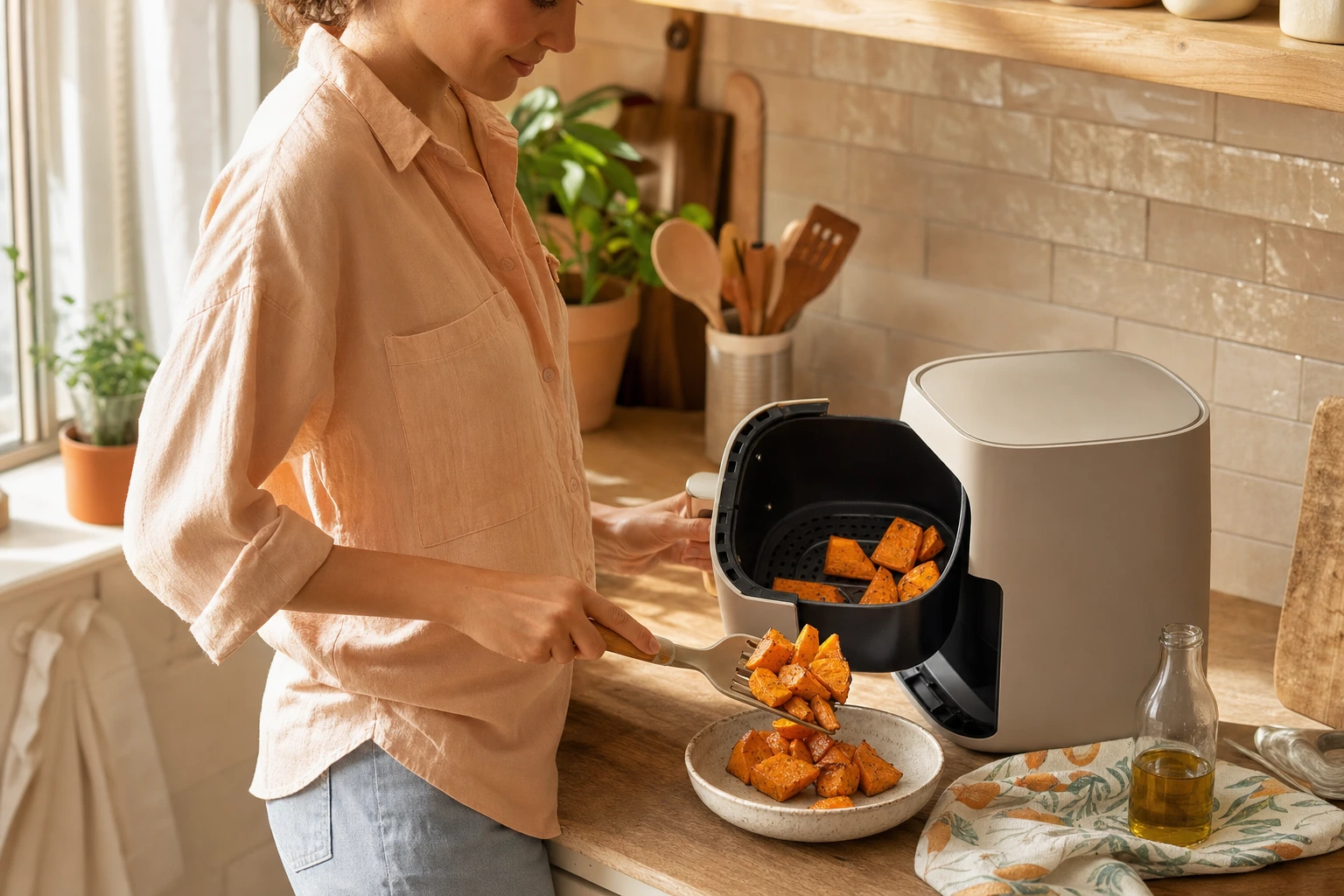 See the picks in our buying guide
Heat and coating safety
A properly functioning air fryer operates within its designed temperature range, and its manual should be the first authority on maximum heat and approved accessories. PTFE coatings can deteriorate if severely overheated, so do not exceed the appliance’s settings, modify it for higher heat, or leave it running empty unless the instructions specifically require an empty preheat. Stop using a basket if its coating is peeling or flaking.
Ceramic coatings avoid PTFE when they are genuinely PTFE-free, which is the main reason some shoppers prefer them. That does not make every ceramic product automatically free of all substances a buyer may wish to avoid; the manufacturer’s material disclosure still matters. According to some manufacturers, these coatings are marketed as "toxin-free," but consumers should verify specific chemical disclosures as no coating is universally risk-free.
Also inspect the basket before each use. Small cosmetic marks are different from exposed base metal, lifting coating, or loose flakes. If the surface is materially damaged, ask the manufacturer about a compatible replacement basket rather than applying a home repair coating.
Durability: what shortens each coating’s life
Traditional nonstick usually has the advantage in long-term food release, but it is still vulnerable to sharp tools, abrasive pads, and overheating. Ceramic is hard but can lose slickness as cooking residue builds up, and impacts or rough stacking may damage its finish. There is no reliable universal lifespan for either type because coating quality, cooking frequency, temperatures, and cleaning habits vary by product and household.
Use silicone, wood, or other utensils approved by the manufacturer. Do not cut food in the basket, scrape stuck crumbs with a knife, or stack metal accessories directly against the coating. Let the basket cool before washing; sudden temperature changes and aggressive handling are unnecessary stresses.
Replacement availability can matter more than a small coating advantage. Before buying, check whether the basket or crisper plate can be purchased separately. A replaceable worn part can extend the useful life of an otherwise functioning appliance. Our Best Air Fryers of 2026: 4 Research-Backed Picks explains other specifications worth comparing.
Cleaning ceramic and traditional nonstick
Start with the appliance manual because dishwasher guidance differs by model. Even when a basket is labeled dishwasher-safe, hand-washing with warm water, mild dish soap, and a soft sponge is the gentler approach for either coating. Avoid steel wool, scouring powders, oven cleaner, and abrasive sponges unless the manufacturer expressly approves them.
If grease has baked onto the surface, soak the cooled basket before wiping it rather than scraping. Repeatedly heated oil can form a stubborn film through polymerization, and that buildup can make ceramic feel less nonstick. Use only cleaning methods approved for the model; homemade abrasive pastes can dull or scratch some finishes.
Oil-spray rules also vary. Some nonstick-care guidance warns that aerosol sprays can leave residue, but that is not a universal prohibition for every basket. Follow the maker’s oil and spray instructions, and apply a small amount of ordinary cooking oil with a brush or refillable mister when permitted.
Which air-fryer basket should you buy?
Buy ceramic-coated if your main requirement is avoiding PTFE and the manufacturer clearly documents the basket as PTFE-free or PFAS-free. Accept that its easy-release performance may fade earlier, and favor a model with a replaceable basket. Ceramic also suits cooks willing to hand-wash and remove residue promptly rather than letting oil bake on repeatedly.
Buy traditional nonstick if easy release and durable slickness are your priorities. It is the practical choice for frequent cooking of foods that tend to cling, provided you will stay within the stated temperature range and protect the surface from scratches. If you already own a sound PTFE-coated air fryer, the comparison alone is not a reason to discard it; use and maintain it according to its manual.
If you want to avoid coatings altogether, look for a model that identifies its food-contact basket or rack as uncoated stainless steel. Confirm all food-contact parts, not just the exterior. Stainless steel may need more oil and scrubbing, but it removes coating wear from the decision.
Frequently asked
Sources
As an Amazon Associate I earn from qualifying purchases. This does not affect the price you pay. Affiliate disclosure